CLOSING SUMMARY
The day began with hopes of a Greek debt breakthrough but, as the history of these debt talks shows, there’s a long way to go between the germ of a deal and the signing on the dotted line.
What is certain, for sure, is that Warren Buffett’s Berkshire Hathaway, is on its way to consummating its record takeover, a $37bn bid for an aerospace parts supplier. The sage of Omaha has been busy justifiying the high multiple he is paying for that not so well known company, Precision Castparts.
On the UK stock markets, miners had a torrid time following a bearish note from Investec. Meanwhile oil prices hit an eight month low, putting the Russian economy, among others, under strain.
That’s all for today.
Warren Buffett has revealed details on CNBC of his company’s $37bn takeover of Precision Castparts, which is not exactly a household name. And he’s admitted that he’s paying a “very high multiple” for the aerospace industry supplier.
Buffett told CNBC’s Squawk Box he made a bid for Precision during the Allen & Co. Sun Valley conference last month.
This is right up there at the top of expensive deals. This a very high multiple for us to pay,” said Buffett.
He’s also told the financial news station that he’s planning some further small deals over the next few months.
The New York Times points out that not many people will have heard of Buffett’s latest acquisition.
One of Warren Buffett's biggest deals, for a company you may never have heard of http://t.co/7sbZ0e3Kee
— NYT Business (@nytimesbusiness) August 10, 2015
Updated
OPEC has no plans for emergency meeting as prices hit 8-month low
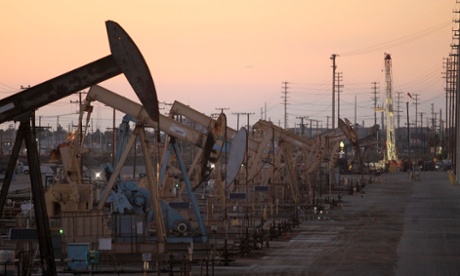
Turning away from Greece to another story that has dominated financial news over the past year: the plunge in oil prices.
Members of the OPEC oil exporters group have insisted they have no plans for an emergency meeting, as oil prices fell to their lowest level since January.
A barrel of Brent crude - the industry benchmark - is hovering at just under $49, slightly up from an earlier low of $48, but a far cry from the $100 plus level of June 2014.
Algeria’s energy minister Salah Khebri said discussions about holding a meeting were ongoing, although other unnamed OPEC officials said there was no suggestion of a meeting before a scheduled December gathering.
OPEC is split over how to respond to the fall in oil prices: Algeria favours supply cuts to defend prices, while dominant Saudi Arabia and the Gulf members want to protect market share, even if that means taking a hit on lower prices.
Further reading: this Guardian analysis explains why the US oil book lies behind Opec’s reluctance to cut supplies.
Further further reading: Energy expert Nick Butler has written an informative piece for the Financial Times (£) on how low oil prices and falling gas revenues are putting the Russian economy under severe strain.
Here is the problem with oil prices:
As a result of the fall in oil prices, the Russian economy is predicted to decline by 3.5% this year, with oil export revenue down by $95bn, after suffering a fall of $174bn in 2013.
Gas isn’t helping the Kremlin either:
Gazprom is set to produce less gas this year than at any time since the fall of the Soviet Union.
The troubles with the Russian economy are systemic:
Russia’s immediate problem is not sanctions imposed by the west or the continuing conflict in Ukraine. The issue is economic.
Updated
Not the first outing for this comment and probably not the last...
French economy forecast to grow a little faster
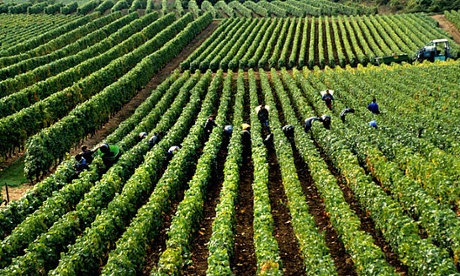
It is hardly a statistic to merit breaking out the Burgundy, but official forecasts are predicting that the French economy will grow slightly faster over the summer.
The Bank of France estimates that the economy will expand by 0.3% in the third quarter, compared to 0.2% growth in the second.
Agri-food industries and pharmaceuticals were expanding in July, while chemicals, machinery and automotive declined, the bank said. Activity in the service sector also picked up, especially in transport, consulting and IT.
Updated
Greece’s banks are the country’s Achilles heel, or so says columnist Hugo Dixon, who always has interesting things to say about the Greek debt crisis.
In his latest column he sets out his throughts on how to fix Greece’s banks, which have been hammered by the return of capital flight and the renewed recession.
Dixon argues that forcing Greek creditors to take a hit on the bank’s losses is fine in theory, but not desirable in the current context because depositors would lost out. Instead he would like to see the eurozone bailout fund, the European Stability Mechanism, take direct stakes in banks.
Here is a flavour of the column:
A direct recapitalisation would be preferable because it would cut the link between the government and the country’s lenders. Athens would no longer be able to meddle with their management. Nor would the state, which is already virtually bust, be loaded up with up to 25 billion euros in extra loans. A further advantage is that, if the euro zone directly owned the banks, depositor confidence would be immediately boosted and capital controls could be swiftly lifted.
One reason this option has not been favoured is because the ESM guidelines require a bail-in before it can inject equity. What’s more, Germany has never been keen on the idea of banks being directly recapitalised. However, if the euro zone wished, it could change these guidelines.
Updated
Capital controls curb Greek spending
Impose strict limits on money that can be withdrawn from banks and... surprise, surprise... people buy fewer expensive items.
That economic lesson was made clear on Monday by data showing that Greeks were driving fewer new cars and motorbikes off the forecourts in July, a month of strict capital controls.
Nearly 8,200 cars and 3,100 motorbikes were put on the road for the first time in July 2015, a decrease of 24% and 39% respectively compared to the same month in 2014, according to number crunchers at the Hellenic Statistical Authority.
Greece’s economy was already slowing even before capital controls came into force on 29 June. Other Elstat data released on Monday showed a 4.5% year-on-year fall in factory production in June.
Warren Buffett closes in on record deal
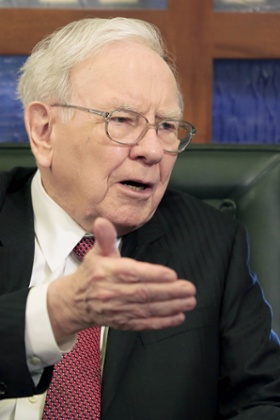
Warren Buffett, the legendary American investor known as the Sage of Omaha, is set to clinch one of his biggest deals ever, a more than $30bn takeover of Precision Castparts. Buffett’s investment group Berkshire Hathaway already owns a 3 per cent stake in the company, which is a supplier to General Electric, Boeing and Airbus.
Precision Castparts, headquartered in Portland, Oregon, was valued at $26.7bn on Friday.
Read more here: Warren Buffett lines up his biggest buy yet with $30bn acquisition
Updated
Greece given leeway on targets as economy shrinks
Hot off the wires, Greece’s economy could shrink by 2.3% in 2015, after a year of chaotic bailout talks.
Here are the snaps, courtesy of Reuters
- Greece, creditors estimate economy will shrink between 2.1%-2.3% in 2015, primary surplus target set to zero - gov official.
- EU Commission says deal with Greece can be reached in the month of August.
The first statement is especially interesting, suggesting that creditors are prepared to give Greece more leeway on budget targets, because of the dire state of the economy.
JR
Updated
Greek centre-right leader rules out coalition
Greece’s centre-right party New Democracy will not join forces with other opposition groups to form a pro-European centre party in the event of snap elections this autumn, its leader has said.
New Democracy leader Evangelos Meimarakis told Kathimerini there was no scope for coalition in the event of snap elections. Athens has been buzzing with speculation about early elections since prime minister Alexis Tispras lost the support of almost 40 of his MPs in a vote on the Greek bailout deal last month.
Meimarakis, who replaced former prime minister Antonis Samaras in the wake of the 5 July referendum, said New Democracy would not be dissolved in favour of a united European party, adding that electoral law made a coalition “very difficult”.
He also contended that “labels such as centre-right or centre-left have to a great degree disappeared”.
I would say the main distinction is between common sense and irrationality, between who is responsible and irresponsible, who is European or not.
JR
Updated
Merkel ally concern about size of bailout
Better to be careful than hasty. That is the gist of the view on Greece from the German government.
At a regular government press conference, spokesman Steffen Seibert said a swift Greek bailout deal was desirable, but added that it was more important to be reach a thorough agreement.
Germany’s concerns about the smallprint of the bailout were highlighted on Monday by one ally of chancellor Angela Merkel.
Ralph Brinkhaus, deputy parliamentary floor leader for Merkel’s conservatives, told Deutschlandfunk radio that a lot of questions remained open.
He would prefer Greece to get a smaller sum of bailout aid than the €30bn proposed by the International Monetary Fund.
The more money is handed out in one stroke, the less leverage one has to stop payments if the reform process in Greece does not pan out as planned and as promised.
Via Reuters
Updated
Greek bond yields fall on bailout deal hopes
Bond traders are feeling pretty optimistic about the prospects of a deal on Greece’s third international bailout.
Yields on Greece’s two-year bonds have fallen 43 basis points to 20.69% on Monday, with 10-year yields 12 bps lower at 11.77%.
For comparison, 10-year yields hit 19% in early July when Greece and its international creditors were on the brink of divorce.
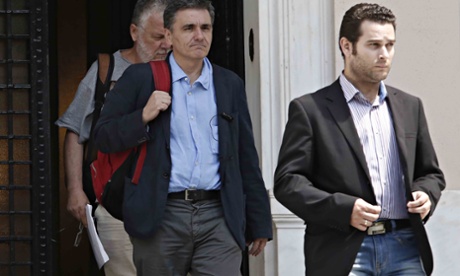
The next ten days will be critical if Greece is to get a proposed €86bn loan.
Here is how events might unfold, although any timetable comes with a health warning. Officials on the creditor side are sounding more cautious than the Greek government.
But these are the key dates to watch over the next 10 days:
Tuesday 11
The Greek government hopes to conclude talks with European officials in Athens by Tuesday morning.
As one anonymous Greek government official told Reuters:
Efforts are being made to conclude the negotiations, the horizon is by Monday night or early Tuesday.
Friday 14
Possible meeting of eurozone finance ministers to review the deal - a Memorandum of Understanding setting out the detailed terms of the bailout.
An unnamed EU official:
Until the MoU is on the table and signed, we are still cautious.
Tue 18
Greek parliament to vote on bailout package. A Greek government spokeswoman said:
There is a good climate in the talks and in the mood of the institutions showing that this timeframe will be met.
Thu 20
Greece must repay €3.5bn to the European Central Bank. Missing this deadline would result in the ECB pulling support for Greek banks, although that is an unlikely outcome. Greece would be more likely to get another emergency loan if the timetable slips.
Updated
Britain's milk price wards: farming unions due to hold emergency summit
The farming unions are protesting about discounts at most of the major supermarket groups that they claim result in them producing milk at a loss. Protests have included farmers buying up all the milk at some stores. Cows have also been paraded through the aisles of Asda, one of the chief culprits in the eyes of the farmers. Here is a video of the cow protest.
Updated
Miners take the shine off London markets
So the cautiously positive opening on the London markets hasn’t lasted, with shares now in negative territory. The FTSE 100 is off more than 50 points at 6665 as mining stocks, both in the top index and below the top tier of companies, lose ground on a broker’s downgrade. Broker Investec downgraded several stocks in the sector and lowered its commodity price forecast due to China weakness. Aside from the problems at Dixons Carphone, down 1.2% on the data breach issues, insurance group Esure dropped 9.3% after its interim results missed analysts’ forecasts.
FTSE 350 miners off the back of that China data... -1.85% pic.twitter.com/SxEHEe8ejF
— Jonathan Ferro (@FerroTV) August 10, 2015
Here are the headlines from the Investec note on mining, which is doing damage to the sector this morning.
Mining: Commodity prices in the “New Normal”
The increasing problems in China have caused us to reassess our commodity price outlook., says a note from the South African-based bank.
- Our price profile is designed to reflect our conviction that the super cycle, driven by a structural shift in the demand curve resulting from China’s industrialisation and a protracted lag in the supply response, is now well and truly over.
- Mining shares have reflected further weakness in underlying commodities and appear set for a fifth straight year of underperformance relative to wider equity markets.
- Our earnings adjustments have meant downgrades for nearly all of the companies under our coverage.
- While Glencore moves to a Sell, we retain Hold recommendations on the other three majors: Rio Tinto, BHP Billiton and Anglo American.
- We retain our view that the sector is unlikely to recover anytime soon, especially as signals from China appear to be deteriorating.
Updated
Financial markets react favourably to hopes of a Greek deal
Financial markets are opening cautiously higher, with the FTSE up 0.5%. One stock falling though is Dixons Carphone, whose shares are the third largest faller, down 0.8%, after the personal data breach of 2.4m of the group’s customers.
Not everybody sees a Greek deal as inevitable, though.
Senior German conservative sees open questions on Greek bailout http://t.co/dVDnAhrCwH pic.twitter.com/7gBCJnHIeE
— Kathimerini English (@ekathimerini) August 10, 2015
Updated
Summary
Welcome to our rolling coverage of the business and economics world. Once again, Greece is in the spotlight after overnight talks took a definitely positive step forwards.
Greece is inching towards a deal with its international creditors, according to reports out of Athens this morning. Sources are confidently predicting that a deal on the €86bn bailout plan will be now be reached after significant concessions have been made by Greek Prime Minister Alexis Tsipras which seem to have won over even the hawkish Finns.
The main concessions of the proposed deal include spending cuts, public sector reforms and privatisations.
An official told Reuters:
From midnight the two sides started the final stretch - combing through the final text, sentence by sentence, word by word.
Even previously sceptical EU diplomats now say that a full agreement could be reached by the August 20 deadline ~@FinancialTimes #Greece
— Yannis Koutsomitis (@YanniKouts) August 9, 2015
In London the defections keep coming at the spread betting company IG Group. Weeks after Tim Howkins, IG Group’s chief executive, said he was retiring after nine years comes news today that the group’s chief financial officer Chris Hill is on his way to Hargreaves Lansdown.
We’ll be checking for reaction to Greece throughout the morning.
Updated

.jpg?w=600)