Brussels and brinkmanship. It’s a familiar mix. The EU has been there many times before. The latest episode involves the standoff between Greece and the other 18 eurozone members over whether the new Syriza-led government should be forced to stick to the terms of its bailout, despite the Greek people voting for an end to austerity in last month’s general election.
The assumption, both in European capitals and the financial markets, is that a deal will be done. That, after all, is what normally happens. An honest broker proposes the outlines of a deal, both sides give a little and a compromise is reached in the early hours of the morning.
But there’s always a first time, an occasion when precedent is broken. Europe has 72 hours to find a solution to the Greek crisis. The possible outcomes are limited.
Option one is that Greece is forced to kowtow to its European partners. It is made clear to Athens that its banks will collapse without the continued support of the European Central Bank, and that support will be cut off unless the Greek government accepts it needs to continue with its bailout on the existing terms. Unless Germany and the other hardline countries want to force a Greek departure from the eurozone, this looks unlikely.
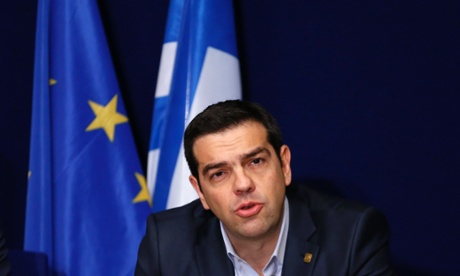
Option two is that the rest of the eurozone offers Greece something, but not nearly as much as the prime minister, Alexis Tsipras, and his finance minister, Yanis Varoufakis, have been demanding. There is scope in the current bailout agreement for the terms of the deal to be revisited if it is clear that Greece’s debt is unsustainable. There is a strong argument that it is. Greece’s national debt is 175% of its annual national output, and despite seeing its economy contract by 25% over the past five years it is being told to run a primary budget surplus of 4.5% of gross domestic product next year. A primary budget surplus is the balance between government tax receipts and spending, excluding interest payments on the national debt. For a country that has been through an economic contraction equivalent to the scale of the Great Depression in the US, this is excessive.
Greece will be offered a deal. The question is whether it will be enough to save Tsipras’s face. At the moment, it is not. What the rest of the eurozone envisage is a modest cut in Greece’s projected primary budget surplus to around 4% next year. This would be coupled with a re-profiling of Greek debt that would take account of the lower financing costs possible because interest rates are lower than when the original bailout was organised. What’s more, Greece will have to stick to the programme of reforms agreed to by the previous government.
For Tsipras, this is not nearly good enough. Option three, which is probably the most likely, is a fudge. Greece agrees that it has to continue with its bailout for a limited period of, say, six months in return for some limited upfront concessions and an agreement to look at the austerity programme in the future.
If this proves unacceptable, the crisis can only really end in one of two high-risk ways. The first involves Tsipras putting what he considers the unacceptable demands of the rest of the eurozone to a referendum, a course of action that could either lead to capitulation and a new government in Athens or to Greece deciding to leave the euro.
The second sees the rest of the eurozone losing patience with Greece. By withdrawing ECB assistance, Greece would be forced to leave the euro so that its own central bank could print the money to support its own banks. This path leads not just to euro exit, but to default and devaluation. It would also risk the fragmentation of the euro and reverse more than half a century of closer integration.