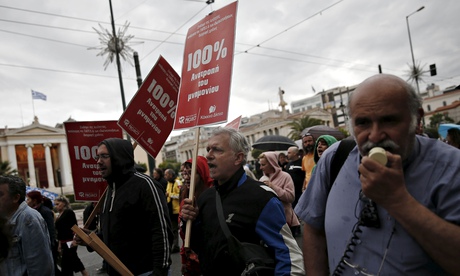
The choices before Greece are stark: either to accept the demands of the Eurogroup and its allies, or implement its government’s radical programmes and stick to them. If there is any real prospect of real change, the people must be willing to fight for it. It won’t happen by itself.
Despite its economic woes, the government still enjoys considerable popular support, both in its programmes and its efforts to negotiate an economic settlement. It is trying to negotiate a loosening of the noose around the country’s neck. But to really be free, it would need to cut the rope entirely. Radical? Yes. Painful? Definitely. Dangerous? Certainly, but it is the only way of achieving a level of autonomy that would allow a people to choose its government and the way in which it is governed. So which is it to be: rule by unelected European technocrats and the IMF, or rule by the people? Most people are not willing to make sacrifices but the alternative is perpetual slavery.
George Hadjipateras
London
• Larry Elliott (18 May) says: “Germany should not underestimate how strongly resentment burns in Greece about how the country suffered when it was occupied during the second world war.” Indeed. After all, Germany experienced similar emotions after the first world war. As Keynes, who in 1919 in The Economic Consequences of the Peace had indicted the Allies for their treatment of Germany, wrote two years later in his Revision of the Treaty: “It has not been understood in England and America how deep a wound has been inflicted on Germany’s self-respect by compelling her not merely to perform acts but to subscribe to beliefs which she did not in fact accept.” He went on to laud “the victory for good sense” when the Allies in 1921 “did not call on Germany to do immediately ... anything incapable of performance” but, instead, “wiped out the impossible liability under which she lay of paying forthwith a balance of £600,000,000 (gold) due under the treaty on May 1”. If only the troika headed by Germany displayed the magnanimity and good sense towards Greece today.
Benedict Birnberg
London