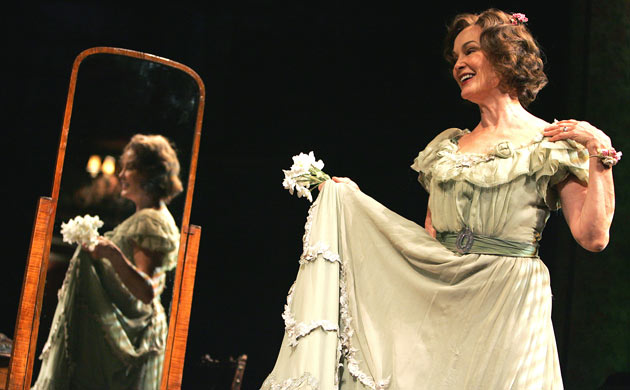
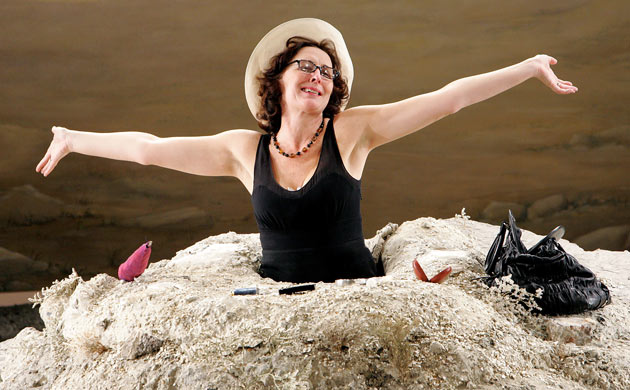
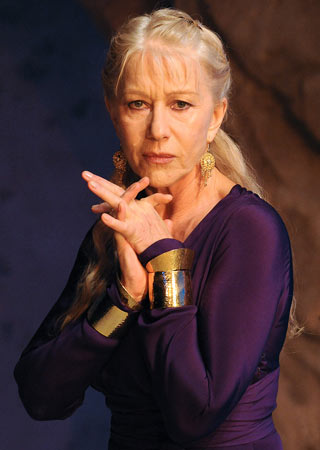
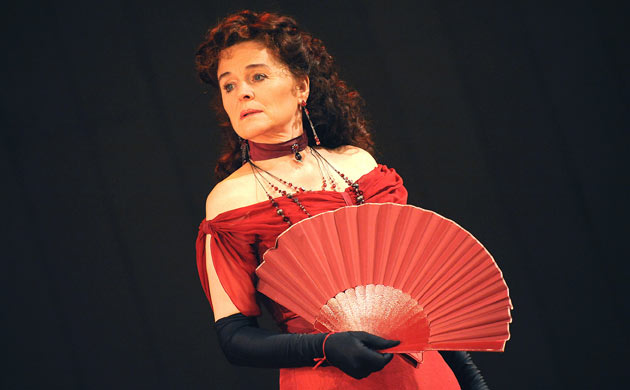
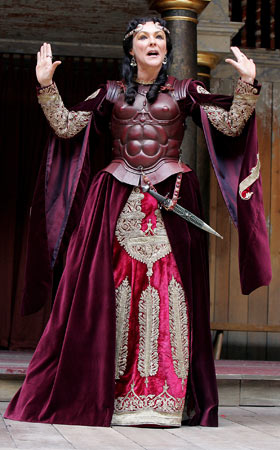
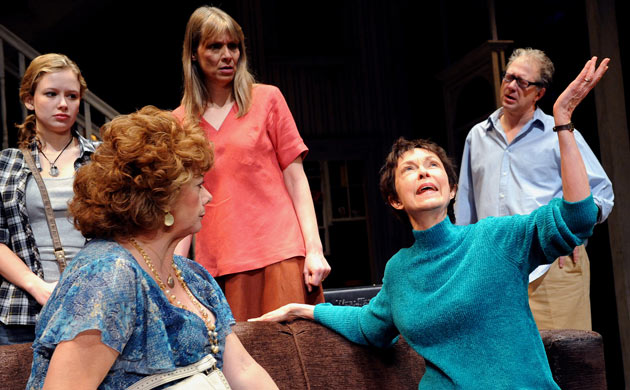
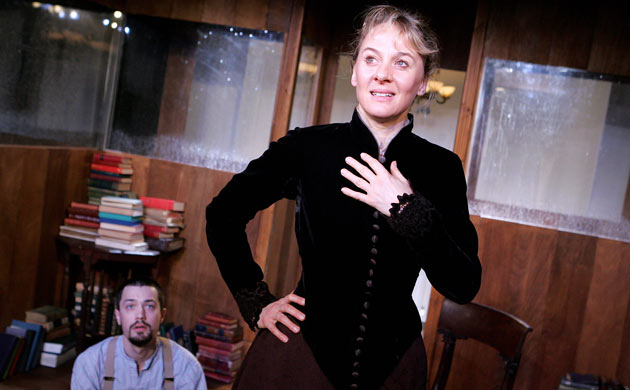
Jessica Lange as Amanda Wingfield in The Glass Menagerie at the Apollo, Shaftesbury Avenue, in 2007. Tennessee Williams extended a tradition as old as theatre itself – the Bad Mommy play (think Medea and work forward) – in his creation of Amanda, a deserted single mother whose inability to move on from her difficult past results in the domination and emotional stunting of her two adult childrenPhotograph: Tristram KentonFiona Shaw as Winnie in Happy Days at the National in 2007. Particularly as he aged, Samuel Beckett wrote some extraordinary roles for women – none more so than in this almost-one-woman show, in which a senior performer must enact the human tragicomedy while buried first to her waist, then to her neck in sandPhotograph: Tristram KentonHelen Mirren as Phèdre. The role is limited by the terrible misogyny of the play itself, in both its Greek and French incarnations, and the Racine version is too talky. But there are few juicier challenges than a woman driven mad by sexual desire for her stepson (particularly when he’s played by Dominic Cooper)Photograph: Tristram Kenton
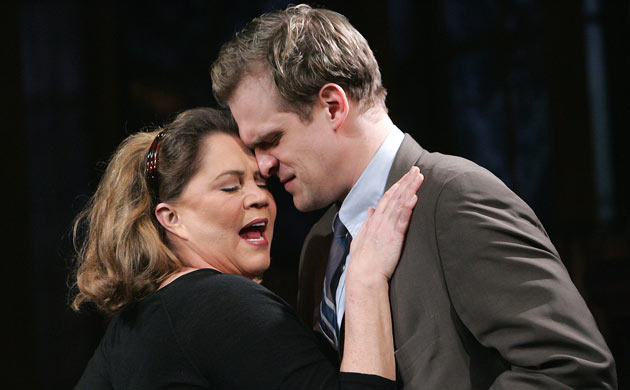
Kathleen Turner as Martha in Who's Afraid of Virginia Woolf? at the Apollo, Shaftesbury Avenue, in 2006. Edward Albee hangs the scenery of the American dream and then leaves Martha to chew it to bits for two deliciously enjoyable hours. Sexuality, power and gender roles are all up for grabs in a role immortalised on screen by Elizabeth Taylor, but always open for reinvention on the stage – as Kathleen Turner so brilliantly provedPhotograph: Tristram KentonSinead Cusack as Ranevskaya in The Cherry Orchard. One of several great Chekhovian roles for ladies in middle age: she’s gorgeous, self-deluded, has plenty of suitors and excellent frocks, and is a metaphor for the decline of the great Russian empire itself. Cusack adds to the tradition of great Ranevskayas at the Old VicPhotograph: Tristram KentonFrances Barber as Cleopatra in Antony and Cleopatra at the Globe in 2006. Ian McKellen is right: Shakespeare didn't really give older female actors a lot to work with. Gertrude in Hamlet is the obvious choice, but she doesn’t have much stage time and exists only in relation to the men in the play. The Queen of the Nile, however, gets to run a country and be vain, histrionic, sexualised – and, arguably, heroicPhotograph: Tristram KentonDeanna Dunagan, seated on the right, as Violet in August: Osage County at the National in 2008. Tracy Letts’s recent Pulitzer-winner rewrites the American family drama from a matriarchial perspective. There are six other strong female roles alongside Violet, including oldest daughter Barbara (Amy Morton, third from left) whose triumphant standoff against her horrific mother (“Eat the fish, fucker”) was one of my standout theatre moments of the last 10 yearsPhotograph: Tristram KentonNiamh Cusack as Mrs Alving in Ghosts at the Gate in London in 2007. A widow, like so many of these characters, Mrs Alving is one of Ibsen’s great vessels of social commentary, grappling with the legacy of a drunken and philandering husband, a syphilitic and incest-prone son and a complex relationship with the local priestPhotograph: Tristram Kenton
Sign up to read this article
Read news from 100’s of titles, curated specifically for you.