A nine-seat aircraft smoothly took off from Wilson Airport in Nairobi. The view gradually changed from the urban area with jam-packed roads, tall buildings and a large ghetto to farmlands, bushy and red land without any homes or tall trees.
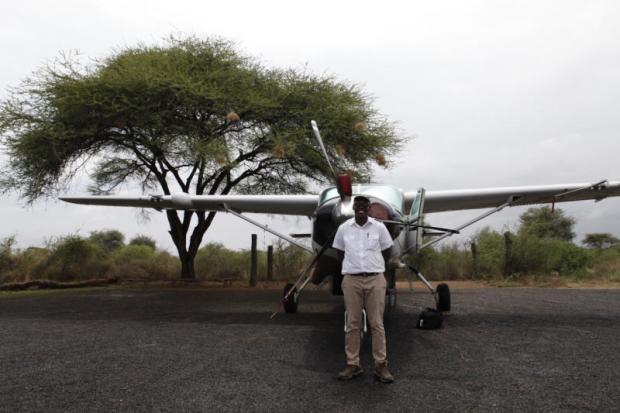
We were at 35,000 feet. Our plane may look like a small dot in the vast cloudy sky of Kenya. Sometimes our aircraft shuddered when it entered some turbulence. Another time, we couldn't see anything due to heavy rain. When the sky was clear, our captain, Peter Wachira, announced that we were close to our destination, Meru National Park.
"Look to your left. You can see Mount Kenya. It is the highest mountain in the country [at 5,199m above sea level] and the second-highest peak in Africa [after Mount Kilimanjaro in Tanzania, standing at 5,895m]," said the captain.
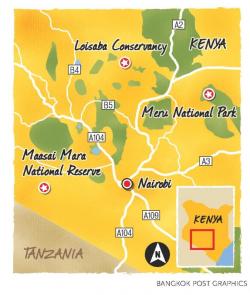
We flew for 50 minutes and landed at Kinna Airstrip. Our safari journey, arranged by SkySafari by Elewana and Kenya Airways, would go from Meru National Park to Loisaba Conservancy and end in Maasai Mara National Reserve.
AUTHENTIC SAFARI EXPERIENCE

From the airstrip, we took a 4x4 vehicle for a 45-minute ride to our place at Elsa's Kopje lodge, the only accommodation inside Meru National Park. Along the way, we were told by our guide Mohamed that we would have a chance to see wildlife.
Located to the northeast of Mount Kenya, the national park is home to more than 400 bird species and numerous animals, including the Big Five of lion, elephant, buffalo, leopard and rhinoceros. The park was founded in 1968 and covers 870km² of forests, including rivers and savannah grasslands. The park was a popular safari destination during the 1970s and 80s. This was thanks in large part to the award-winning movie Born Free (1966), based on the nonfiction bestseller of the same name (1960), which told the story of Joy and George Adamson, who raised an orphaned lion cub to adulthood before training her to survive in the wilderness of Kenya.
Today the park is quieter than in its glory years, but the beauty of its nature is second to none.
While driving to our hotel, Mohamed made a welcome surprise for us, as first-timers on a Kenyan safari. With his sharp eyes, he spotted something in the dry grassland and quickly drove the six-passenger Land Cruiser in its direction.
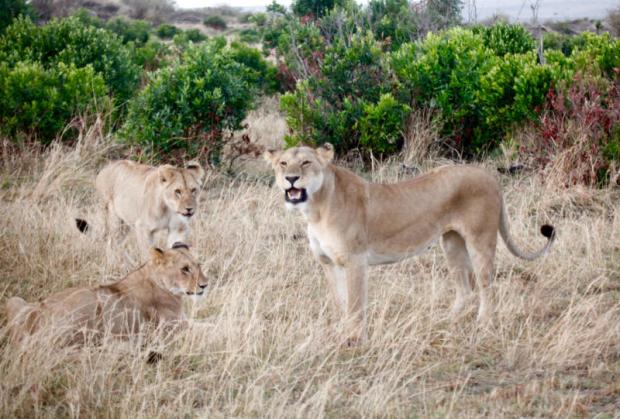
"Don't go further. Stop! Stop!" I shouted in alarm when I saw a pride of sleeping lions. Mohamed knew what he was doing. He kept going and killed the engine only when we were in the middle of the pride. There were one lion, a couple of lionesses and cubs. The lion did not even bother to lift his head. Only some young ones looked at us with curiosity. The 4WD did not have a window. It was an open jeep with a roof, meaning we can clearly see the animals without a barrier, and in turn the animals could jump into passenger seats anytime.
"As long as we stay in the car, we are safe," he assured us. "We have never had any incidents with lions attacking visitors during any game drives so far. They might think that we are a big animal," he said.
Game driving is the most popular activity for visitors. It was like a photo hunt during which you sit in a 4WD to observe and take pictures of wild animals in their habitats. The suitable time for the game drives are from 6.30-11am, and 4.30-6.30pm, when the sunlight is not too strong. Every time we were out for a game drive during our two-night stay, we saw different kinds of animals like waterbucks, warthogs, buffaloes, zebras, giraffes, hippopotamuses, impalas, lesser kudu, gerenuk antelope, dik-diks, grey crowned cranes, yellow-necked spurfowl, vulturine guineafowl and red-billed hornbills.
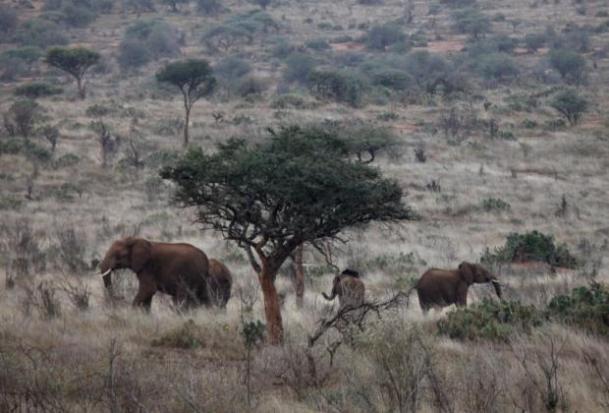
During one evening game drive, we came across a large herd of elephants. They were about to cross the dirt road while our jeep was approaching. Mohamed switched off the engine. The one that looked like the matriarch stopped walking and other elephants held the line.
The matriarch seemed to analyse the situation before moving further. I saw the herd walking a couple of meters away from the front and the back of our jeep. The leader kept looking in our direction until all the calves passed by. They were pretty close to our car.
"There are 36 of them. That's a very big herd," said Mohamed.
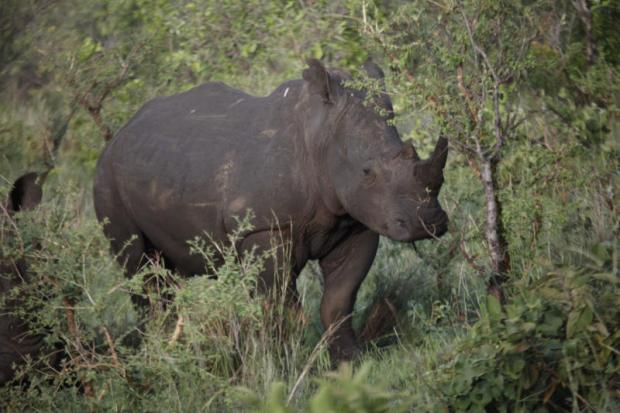
Another highlight of the park was a visit to the rhino sanctuary. It covered an area of 84km² with an electric fence. Rangers guarded the entrance and were always on patrol to prevent poachers. During the past five years, the number of rhinos, both white and black, has increased from 70 to 130, said the guide.
Since the sanctuary is also big, driving inside to find the rhinos was also a game-driving challenge.
THE BIG FIVE
We left Meru National Park and took a 40-minute flight to Loisaba Conservancy. We hoped to complete our checklist for seeing all of the Big Five. When another Mohamed, a guide of Loisaba Tented Camp, asked what we saw in Meru National Park, the list was long, but we saw only four of the species.
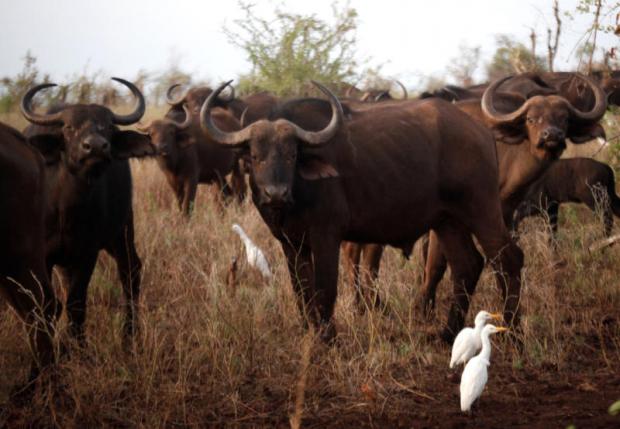
"We saw African elephants up-close, sleepy lions, gangs of Cape buffaloes, two rhinos, but not yet a leopard," I replied. Mohamed told us that we might have a chance to spot a leopard in Loisaba.
"It is a shy animal and a hard one to find," he noted.
Loisaba Conservancy covers a 226km² (166,250 rai) site in Laikipia, northwest of Meru National Park. The conservancy is home to 260 species of birds and 50 species of mammals, including the endangered Grevy's zebra, the largest of all zebra species. The zebra has larger ears and narrower stripes than common zebras. The black and white stripes cover most of the body except the belly, which is white.
During game drives on our two-night stay, we frequently spotted a dik-dik, the smallest antelope, until someone in our trip wanted to adopt it as a pet. It had a cute appearance with big eyes and ears.
While Mohamed was slowly driving us back to our accommodation before the dusk, he looked at one dik-dik on his left side. It looked alert and made an alarm call. Mohamed was about to explain the sound to us, but I interrupted him and shouted his name to stop the car and put our jeep in reverse. My eyes met those of a large cat.
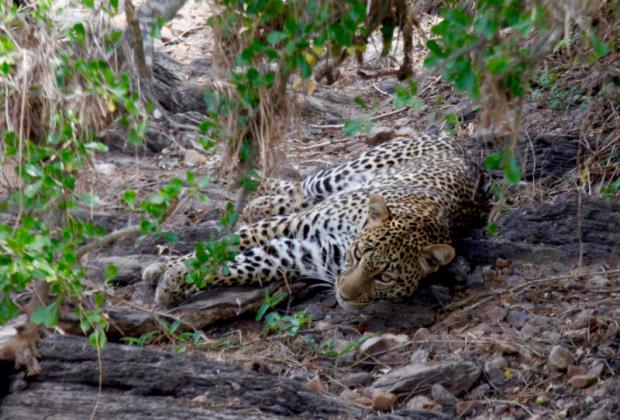
"It's either a leopard or a cheetah in the bush," I quickly said with excitement while pointing to our right side.
But after our jeep stopped in front of the wildcat, it quickly ran away. "It's a leopard because there is no tear lines," said one of our travel companion. Mohamed drove the jeep in the bushy area to find the animal. But it left without a trace.
Mohamed said that explained why the dik-dik was alarmed. He consoled us by telling us we would have more chances to see one or more leopards on our next stop, at Maasai Mara National Reserve.
IN SEARCH OF A LEOPARD
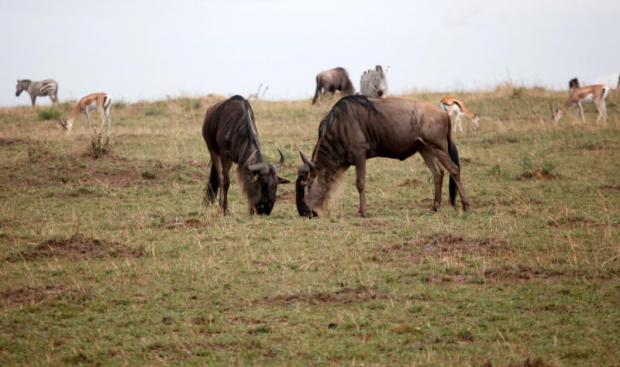
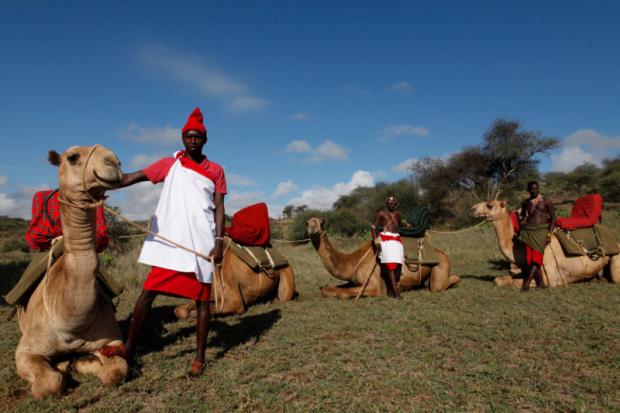
Our aircraft headed from Loisaba to Maasai Mara, a 1,510km² national reserve in southwestern Kenya. I spotted a herd of elephants and a zeal of zebras roaming the savannah while our plane was about to land at Keekorok Airstrip. I thought I would meet another guide, named Mohamed. But this time our guide was Dennis. He was a Maasai, a seminomadic ethnic, and employed by Maasai Mara Sand River, where we would spend two nights.
Like our two previous guides, Dennis had keen eyes. He spotted a lion sleeping under a shade of bushes. He drove the jeep closer to it. Then I saw that it was two lions.
"We call him Scar because the scar on his right eye. He also has a brother called Brown. Look at him." He pointed to the one behind the bush. "He has light brown hair," said our guide. Both lions lived together in a big pride, including the four young lions and the lioness we had seen crossing Sand River not far from our accommodations during lunch time, he said.
As Maasai Mara was a renowned destination, we always found several safari vehicles sharing the sights with us. For example, when Dennis drove us to a spot where a black rhino was eating leaves, there were four vehicles ahead of us.
Our guide used a walkie-talkie to share and find those rare animals, including the one we were looking for -- the leopard.
The big cat was comfortably lying under the shade. I wished to see its face. Then luck came when one jeep started its engine, the leopard lifting her head. She glanced at us before returning to her peaceful sleep.
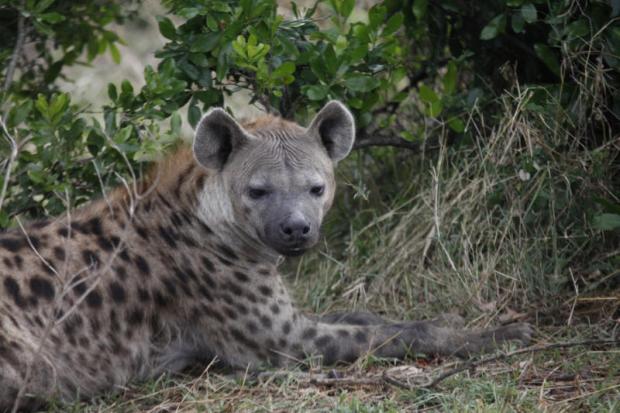
Our wish to see the Big Five was then fulfilled. If I had to choose only one place to visit for a safari in Kenya, I would definitely go for Maasai Mara National Reserve because animals were abundant, although I also liked the cool morning mist in Loisaba Conservancy and the exotic atmosphere of Meru National Park. In Maasai Mara, I even had the chance to see wildlife from my tented room, like a troop of baboons, a zeal of zebras, giraffes, a herd of buffaloes and dik-diks. At night, I also heard a hyena calling and saw the dung of an elephant at the back of my room in the morning. The nature was so rich.
When we flew back to Nairobi, it seemed to me that the eight-day journey in the Kenya wilderness was not enough.
"If you want to come back, you should do it during the migration season, from July to October," said our guide. "It is considered the best time of year to visit the Maasai Mara."
TRAVEL INFO
- Kenya Airways provides a daily direct flight from Bangkok to Nairobi. The departure time from Suvarnabhumi International airport is 1am and the arrival time in Nairobi is 6.05am. The flying time is about nine hours. Visit kenya-airways.com/th/en or call 02-630-4545 for more details.
- My trip was an eight-day programme of SkySafari Kenya Connoisseur. The prices run from US$6,170 (197,440 baht) to $7,400 (236,800 baht) per person for a sharing room. The package includes all domestic flights, accommodations, food and drinks, game drives, guides, safari activities like sundowners, Maasai village visit and walking safari and laundry. For more details, visit skysafari.com.
- For more information about tourism in Kenya, visit the website of the Kenya Tourism Board at magicalkenya.com.