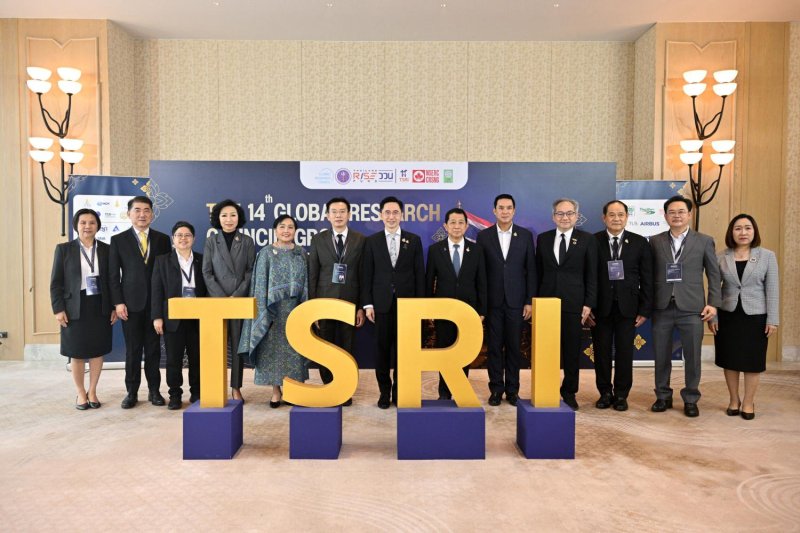
The Thailand RISE Fund under Thailand Science Research and Innovation (TSRI) and the Natural Sciences and Engineering Research Council of Canada (NSERC) co-hosted the 14th Global Research Council annual forum in Bangkok during May 18-22.
The meeting gathered delegates from more than 70 countries to adopt a joint call to action on frameworks for "open science" and "research for sustainable communities".
The Global Research Council (GRC) is the international network of research funding organisations that promotes the exchange of knowledge, good practice and perspectives on research support and international collaboration, helping to shape the future direction of global research systems.
More than 300 heads of research councils from over 70 funding agencies worldwide attended the forum.
The annual meeting aims to align global research priorities, share cross-border discoveries and establish policies for international collaboration, said Prof Yodchanan Wongsawat, deputy prime minister and higher education, science, research and innovation minister.
"This international meeting aims to adapt knowledge and international standards to help optimise Thailand's research scholarship integrating international evaluation criteria to ensure Thai research output is recognised on a global scale," said Prof Yodchanan.
The world is facing new challenges from geopolitical conflicts, technological disruption and social disruption, which means the development of technology such as artificial intelligence should be conducted with responsibility, morality, ethics and concern for the impact on society and communities, he noted.
Policymakers should push for changes to policies that can connect research with real-world applications, said Prof Yodchanan.
Those who drive research systems should realise how it can be developed and utilised to benefit the industrial sector, communities and society, he said.
Prof Sompong Klaynongsruang, president of TSRI, said the forum offers a crucial push for international cooperation on science, research and innovation strategies and plans.
She said the GRC highlights the importance of global collaboration in advancing research, innovation and sustainable solutions for the shared future under the themes of open science and research for sustainable communities.
Prof Alejandro Adem, chair of the GRC's governing board and president of NSERC, said the GRC aims to promote multilateral research collaboration to strengthen research systems worldwide.
He noted that science remains a neutral platform that enables countries to work together, even in the context of ongoing geopolitical tensions.
The meeting concluded with the endorsement of statements of principles on open science and research for sustainable communities, which can serve as important frameworks for future research collaboration.
For Thailand, the GRC 2026 platform was an opportunity to exchange global research directions and a reflection that research rooted in local knowledge and community needs further development for meaningful contributions to grassroots economies, quality of life and sustainability.
The next challenge is to ensure open science and research for sustainable communities frameworks are extended beyond the conference, resulting in real-world implementation so Thai research can play a greater role in addressing societal challenges and advancing sustainable national development, according to the GRC.