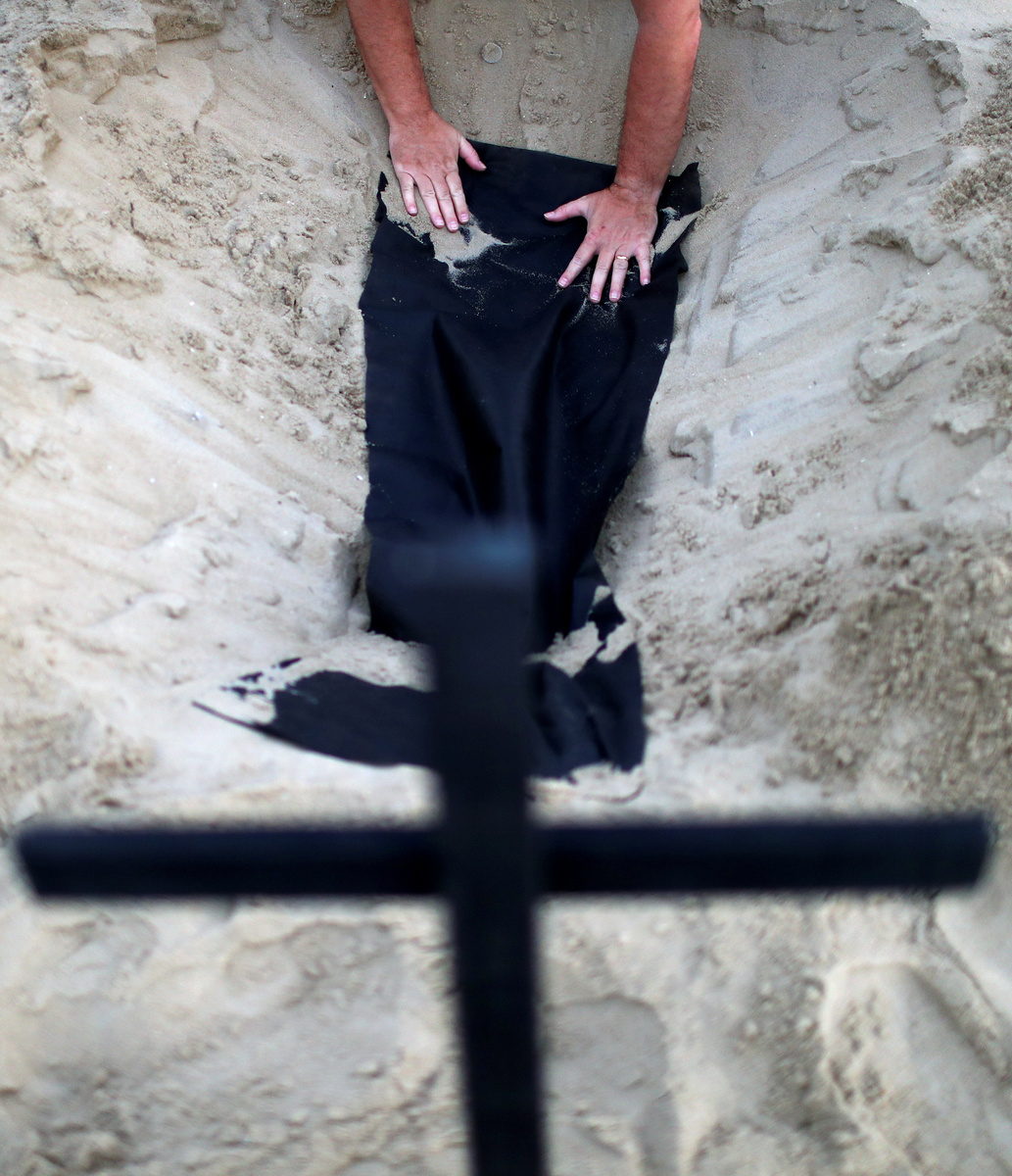
Graves dug in Rio beach to protest handling of COVID-19 pandemic
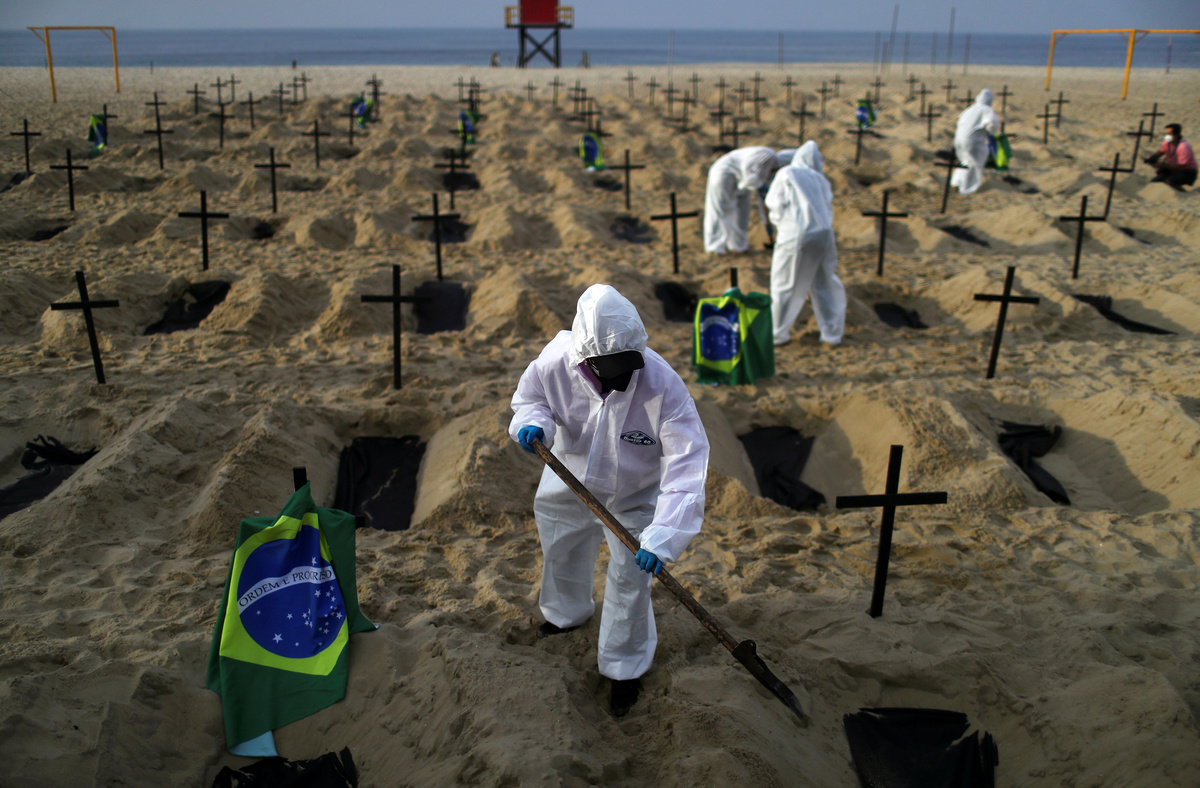
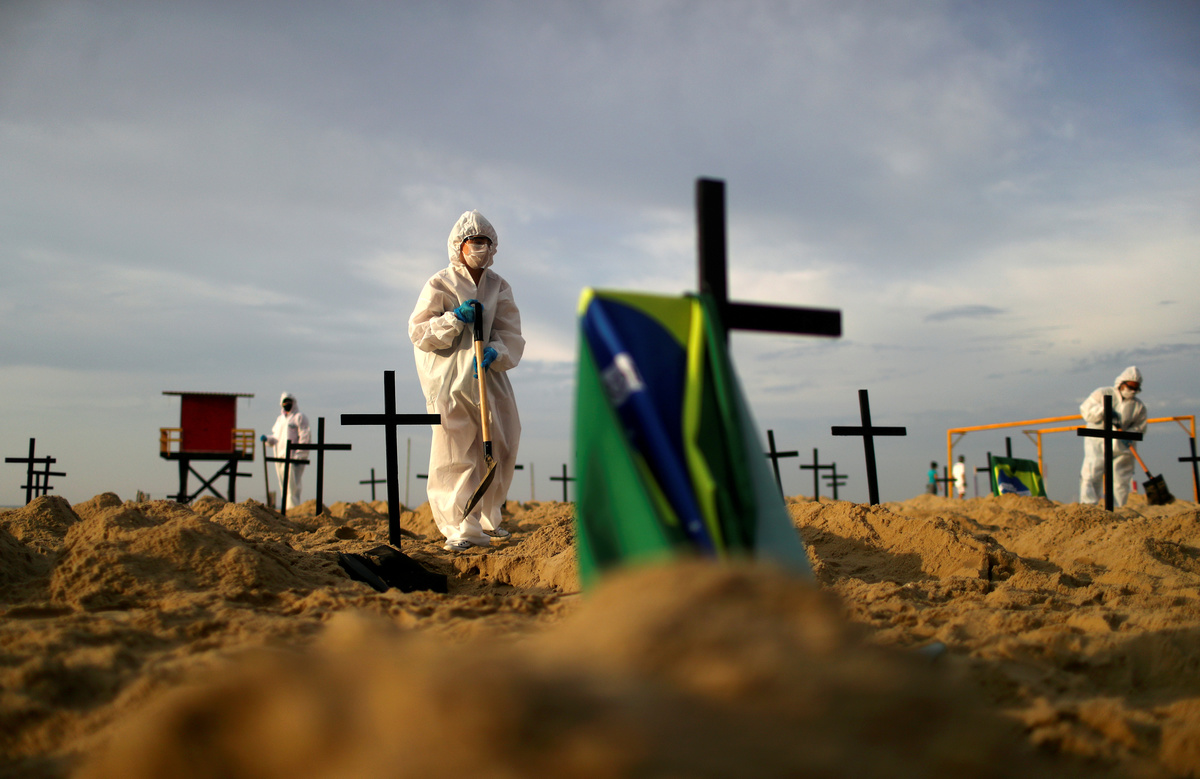
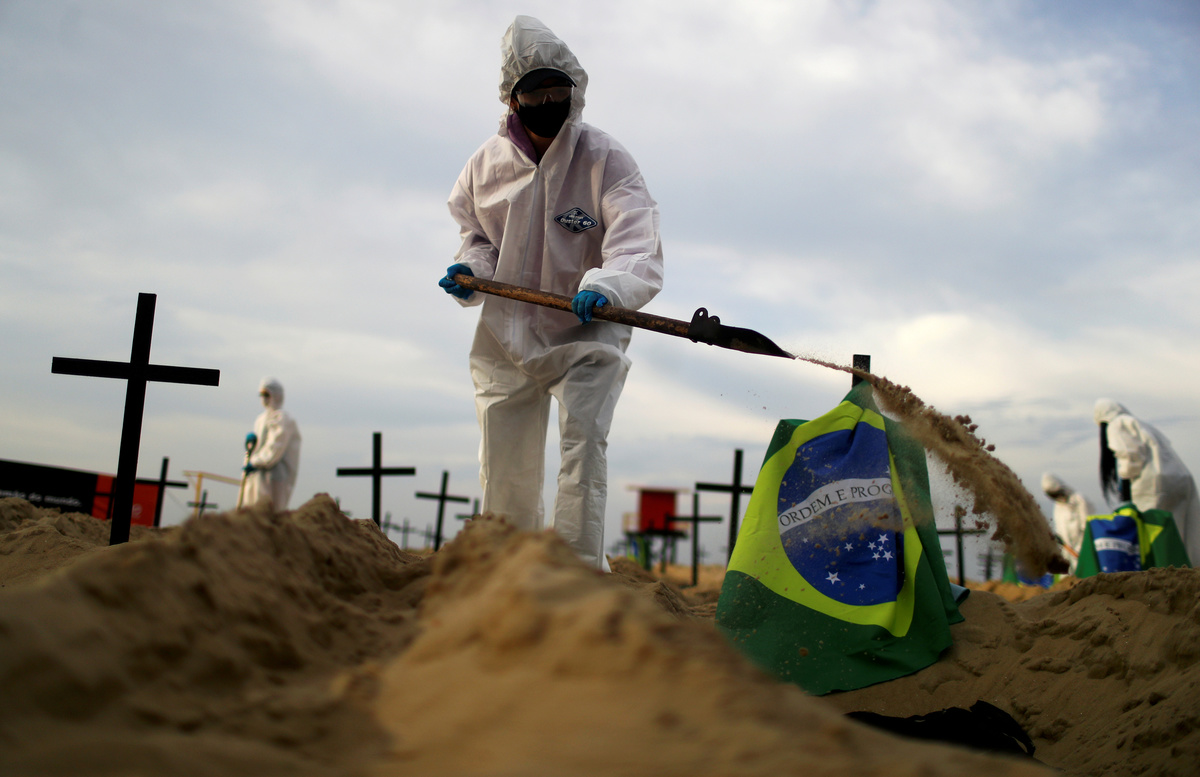
Activists of the NGO Rio de Paz in protective gear dig graves on Copacabana beach to symbolise the dead from the coronavirus disease (COVID-19) during a demonstration in Rio de Janeiro, Brazil, June 11, 2020. REUTERS/Pilar Olivares
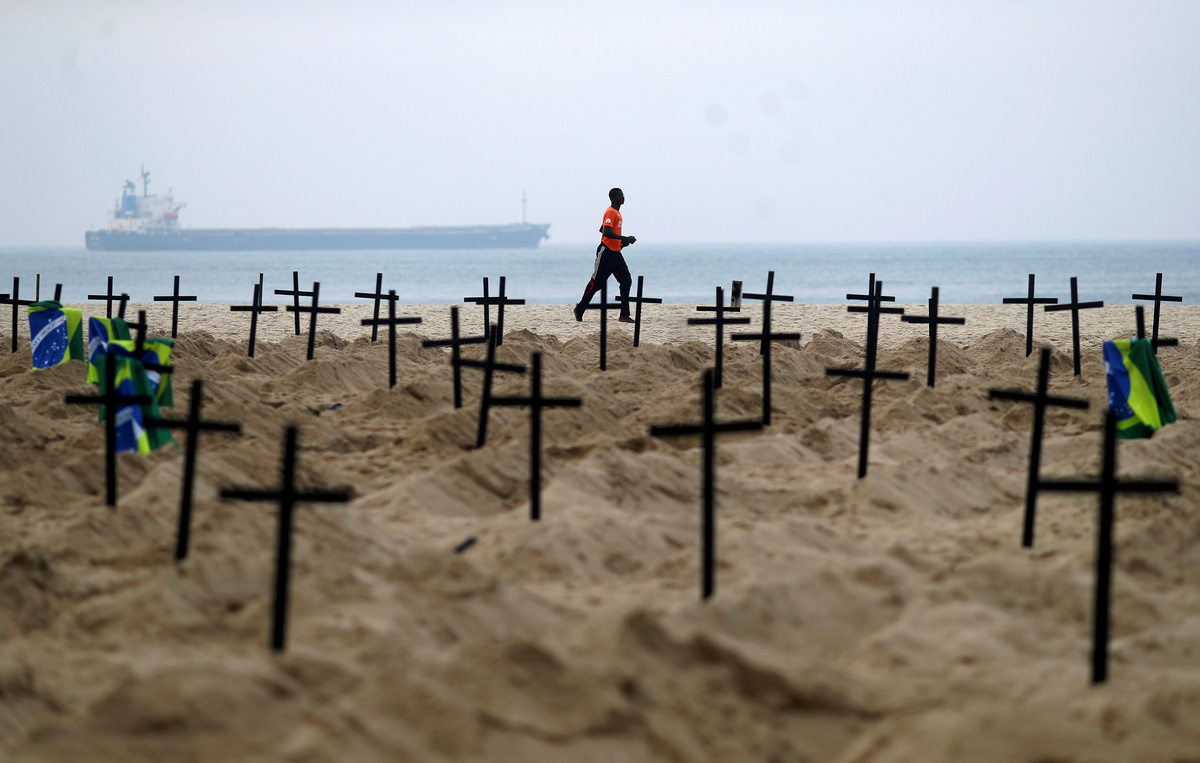
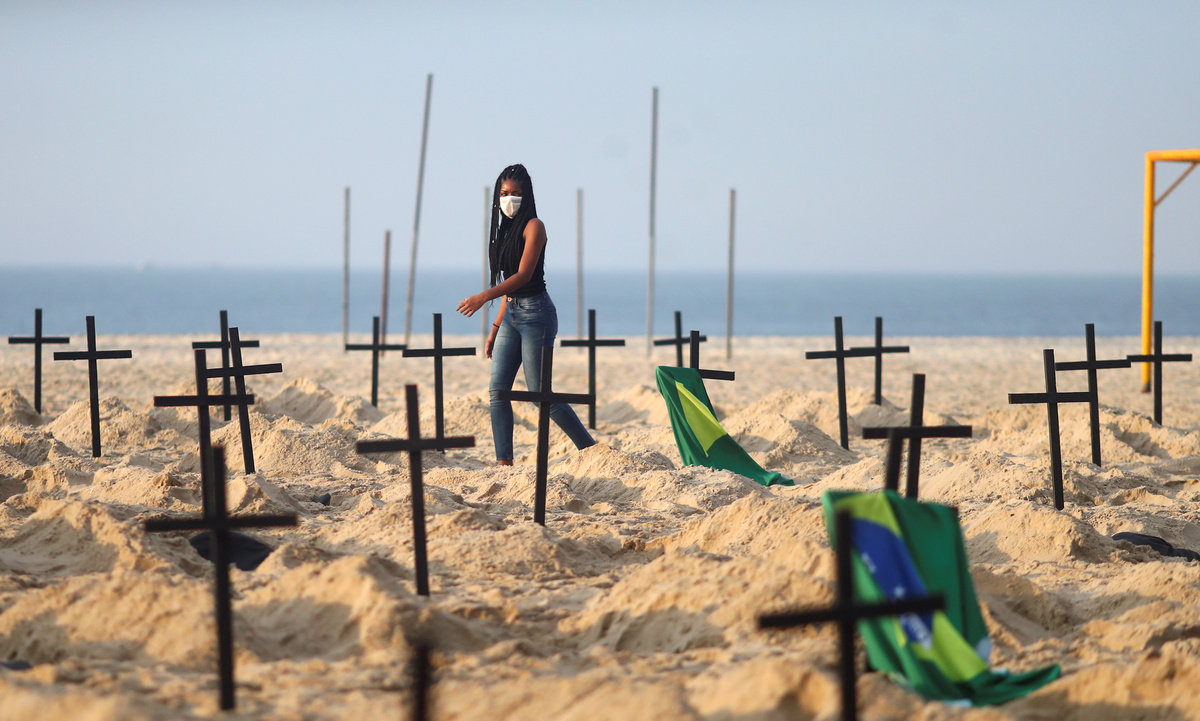
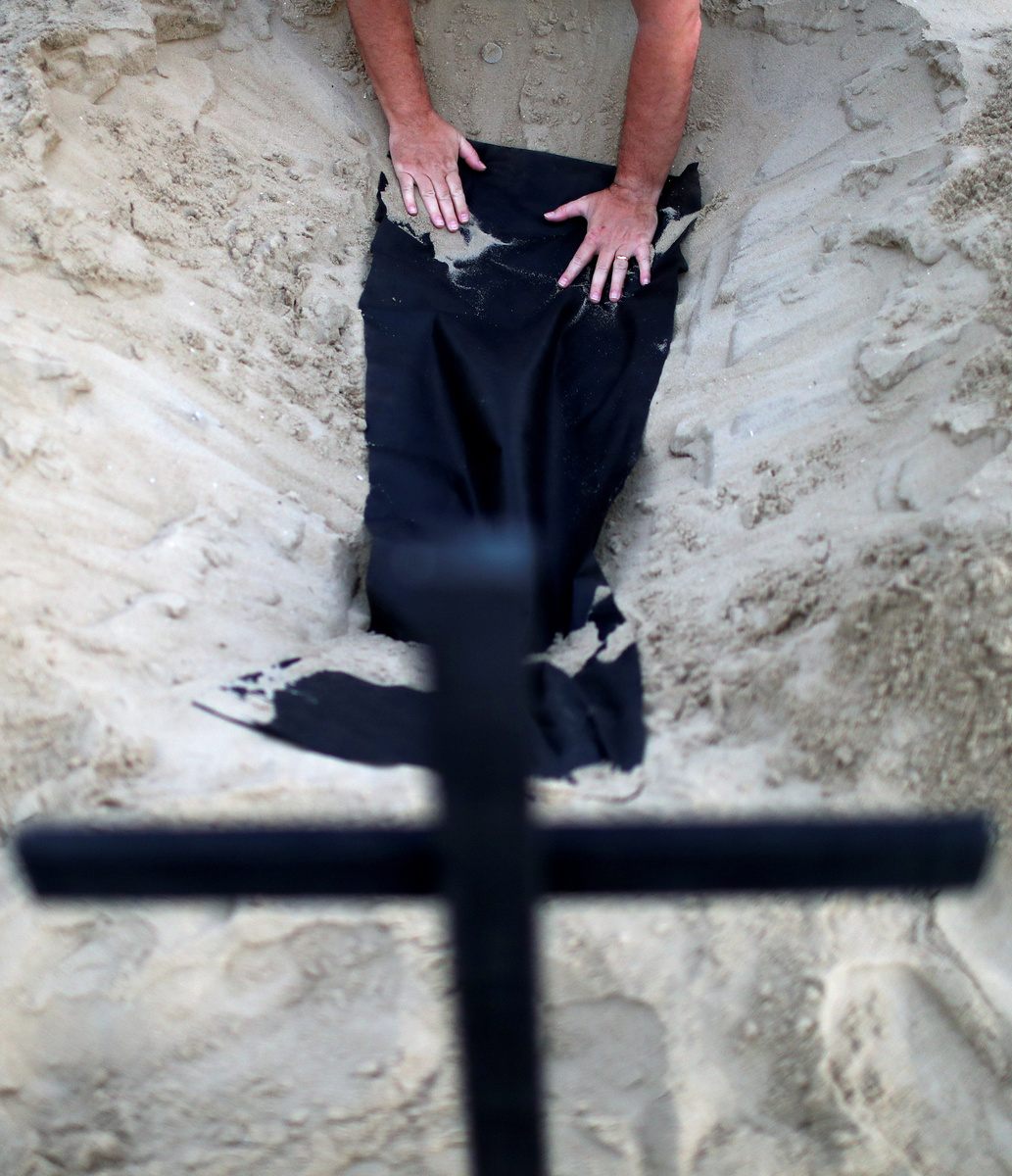
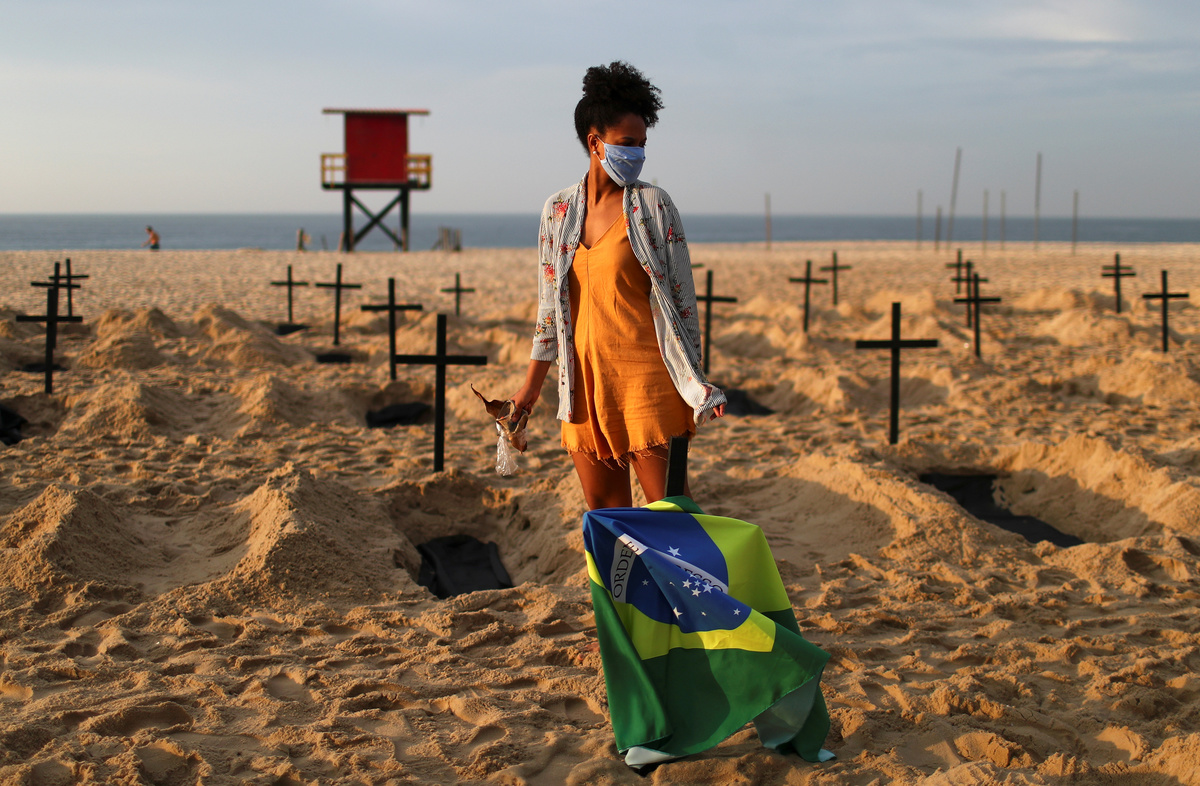
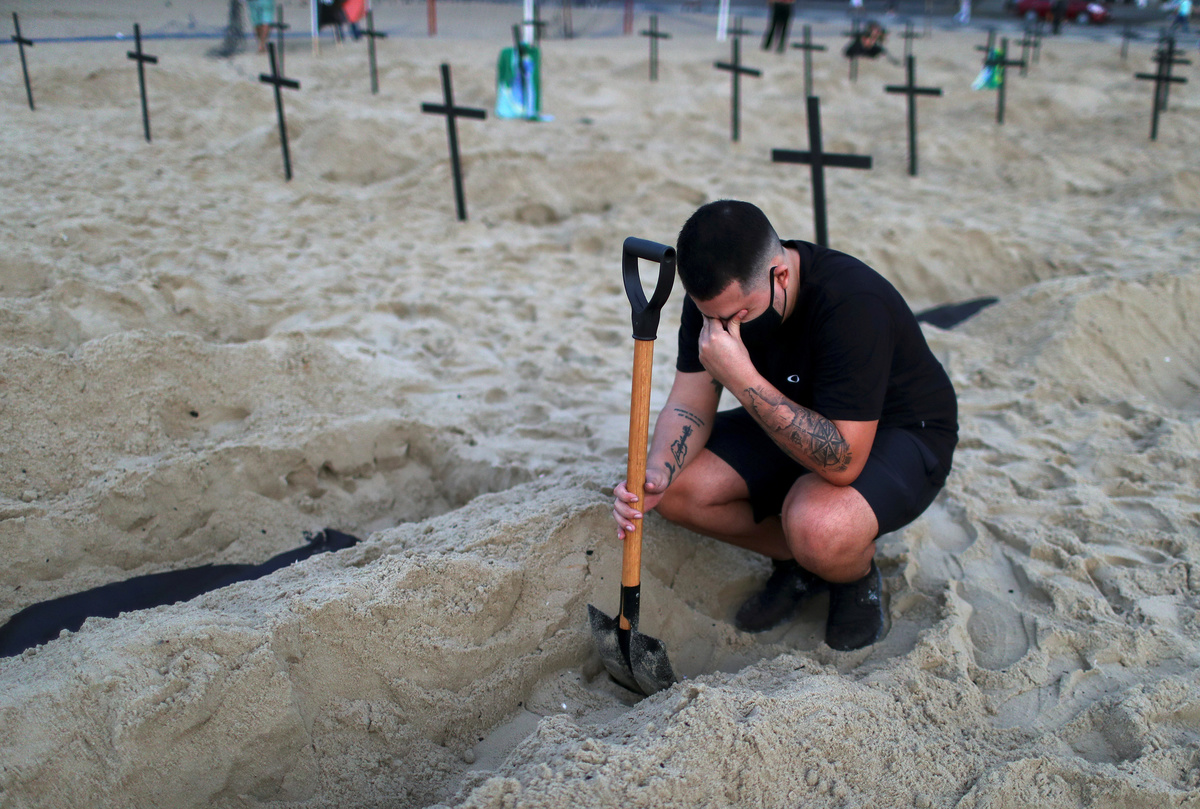
Brazilians critical of their government's ambiguous response to a surging coronavirus pandemic dug 100 graves and stuck black crosses in the sand of Rio's Copacabana beach on Thursday in a tribute to the nearly 40,000 people who have died so far.
The graves were dug overnight on the beach opposite the ritzy Copacabana Hotel in a protest mounted by non-governmental organization Rio de Paz.
A man runs past the one hundred graves which were dug by activists of the NGO Rio de Paz on Copacabana beach symbolising the dead from the coronavirus disease (COVID-19), in Rio de Janeiro, Brazil, June 11, 2020. REUTERS/Pilar Olivares
Brazil has become a major epicenter of the coronavirus pandemic, with 39,680 deaths and over 770,000 confirmed cases as of Wednesday, the world's worst outbreak after the United States.
Far-right President Jair Bolsonaro has downplayed the gravity of the pandemic and pushed local governments to lift quarantine measures, sending contradictory signals to Brazilians on whether to use masks and practise social distancing.
"The president has not realized that this is one of the most dramatic crises in Brazil's history," said organizer Antonio Carlos Costa, who criticized Bolsonaro for not showing solidarity with the suffering.
Activists of the NGO Rio de Paz in protective gear dig graves on Copacabana beach to symbolise the dead from the coronavirus disease (COVID-19), during a demonstration in Rio de Janeiro, Brazil, June 11, 2020. REUTERS/Pilar Olivares
"Families are mourning thousands of dead, and there is unemployment and hunger," he said.
Not everyone agreed with the protest.
An angry man pulled out crosses, shouting against the symbolic tribute. Another man, who said his 25-year-old son died of COVID-19, went around replacing the fallen crosses.
An activist of the NGO Rio de Paz wearing a protective mask attends a demonstration during which one hundred graves were dug on Copacabana beach symbolising the dead from the coronavirus disease (COVID-19), in Rio de Janeiro, Brazil, June 11, 2020. REUTERS/Pilar Olivares
"It's such a tragedy," said passer-by Marcia Lucia Dias. "It's frightening to see the crosses. But this is really happening. Our authorities contradict themselves and we don't know what to do."
(Reporting by Sergio Queiroz and Rodrigo Viga Gaier; Writing by Anthony Boadle; Editing by Rosalba O'Brien)
An activist of the NGO Rio de Paz places a black blanket inside one of the one hundred graves which were dug on Copacabana beach, symbolising the dead from the coronavirus disease (COVID-19), during a demonstration in Rio de Janeiro, Brazil, June 11, 2020. REUTERS/Pilar OlivaresActivists of the NGO Rio de Paz in protective gear dig graves on Copacabana beach to symbolise the dead from the coronavirus disease (COVID-19) during a demonstration in Rio de Janeiro, Brazil, June 11, 2020. REUTERS/Pilar Olivares An activist of the NGO Rio de Paz wearing a protective mask attends a demonstration during which one hundred graves were dug on Copacabana beach symbolising the dead from the coronavirus disease (COVID-19), in Rio de Janeiro, Brazil, June 11, 2020. REUTERS/Pilar Olivares An activist of the NGO Rio de Paz wearing a protective mask reacts as he attends a demonstration during which one hundred graves were dug on Copacabana beach symbolising the dead from the coronavirus disease (COVID-19), in Rio de Janeiro, Brazil, June 11, 2020. REUTERS/Pilar Olivares An activist of the NGO Rio de Paz places a black blanket inside one of the one hundred graves which were dug on Copacabana beach, symbolising the dead from the coronavirus disease (COVID-19), during a demonstration in Rio de Janeiro, Brazil, June 11, 2020. REUTERS/Pilar Olivares
Sign up to read this article
Read news from 100's of titles, curated specifically for you.