Graphic novelist Craig Thompson on the making of Habibi - in pictures
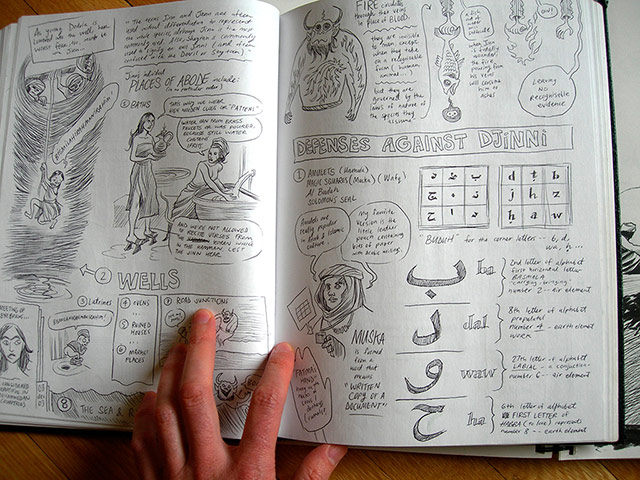
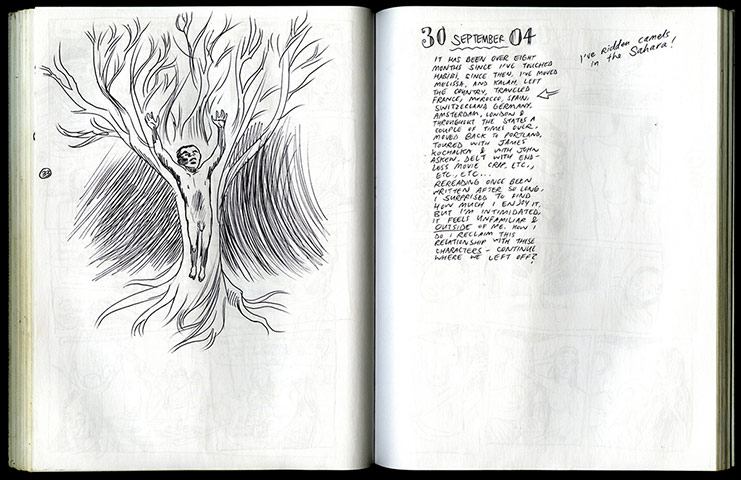
For me, drawing is never divorced from the act of writing – my school notebooks were always filled with doodles in the margins. Here are my first research notes on the 3x3 magic square – a pre-Islamic, mystical sudoku made of nine Arabic letters that later underpinned the structure for HabibiPhotograph: Craig ThompsonThe first draft of Habibi was drawn directly in my sketchbooks using ballpoint penPhotograph: Craig ThompsonWriting began in January 2004, but then was disrupted for nine months: six months of the book tour for Blankets, and three months of generally sorting out my lifePhotograph: Craig Thompson
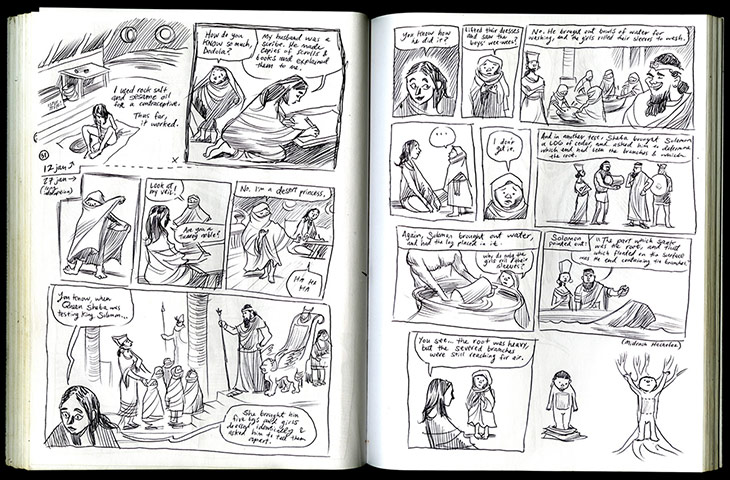
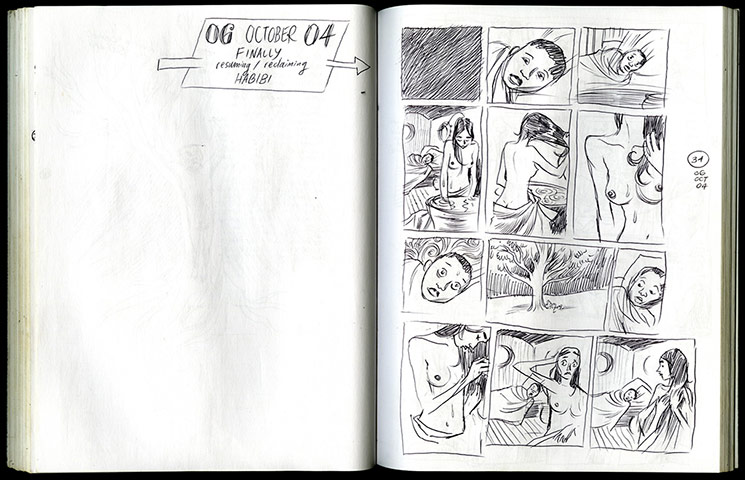
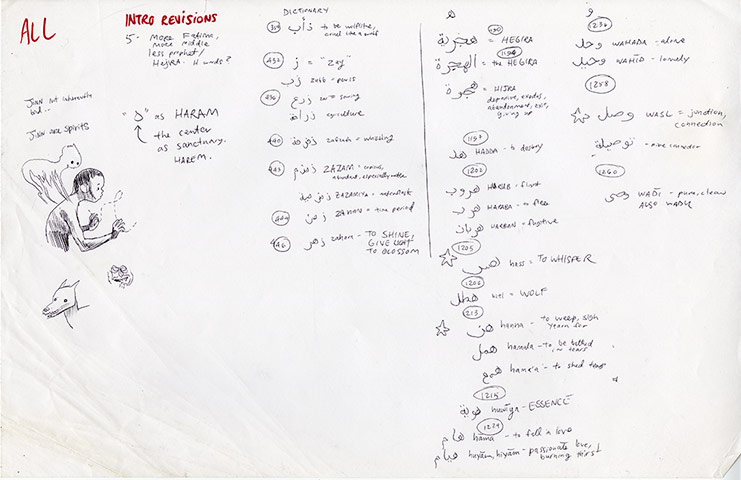
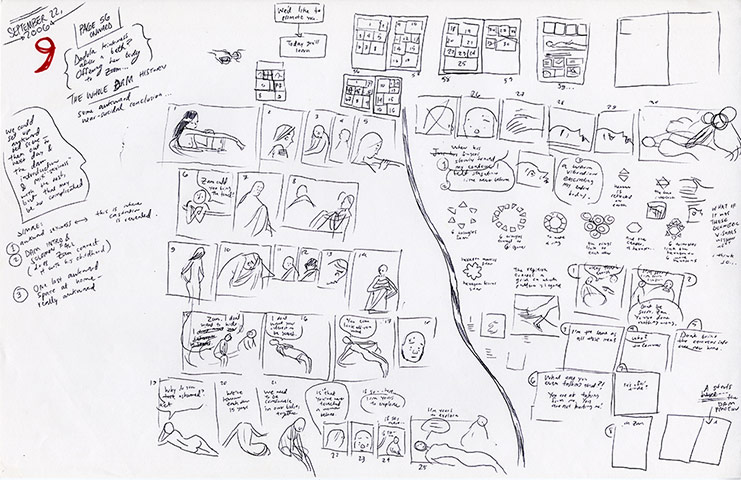
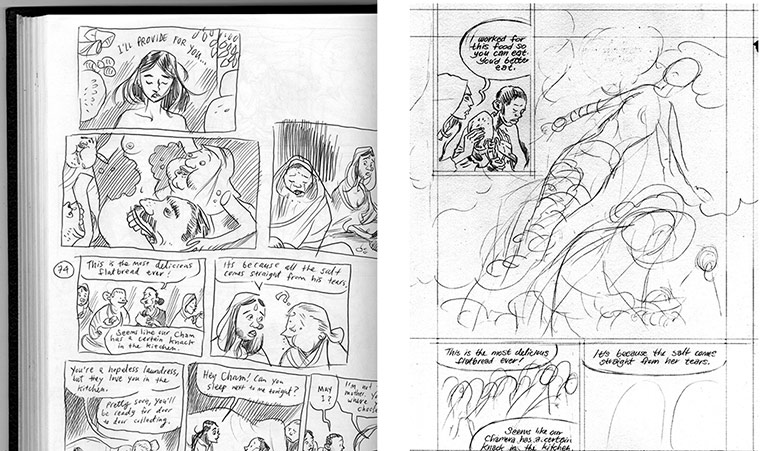
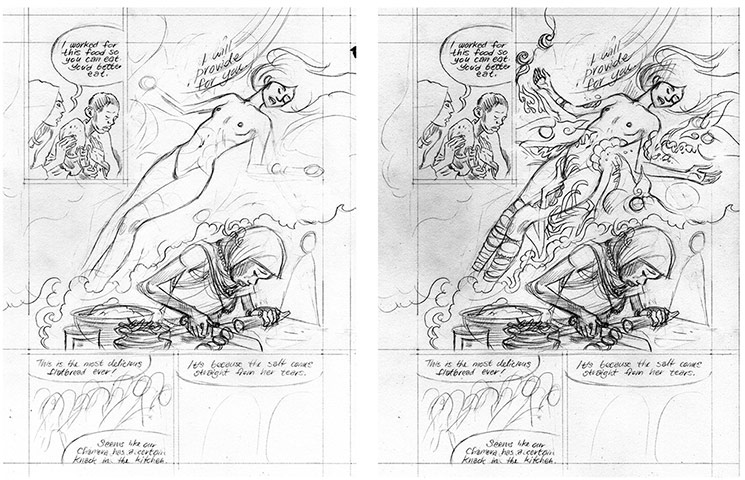
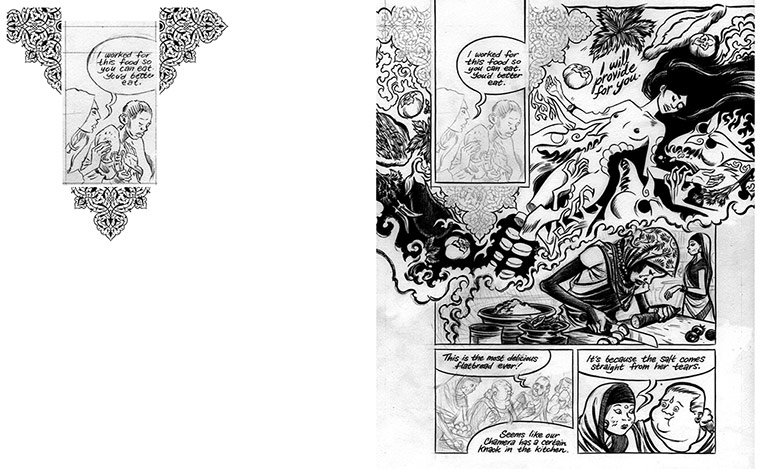
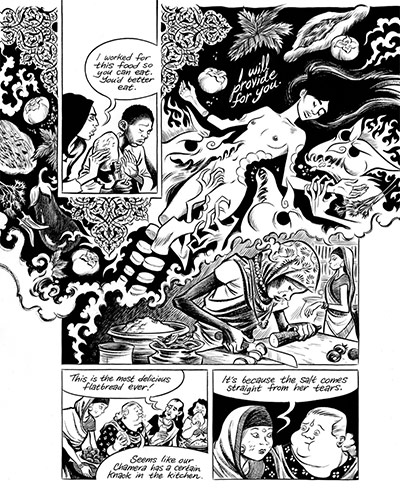
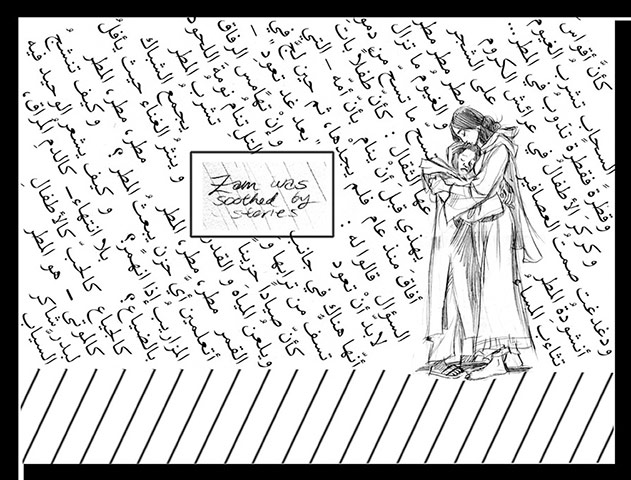
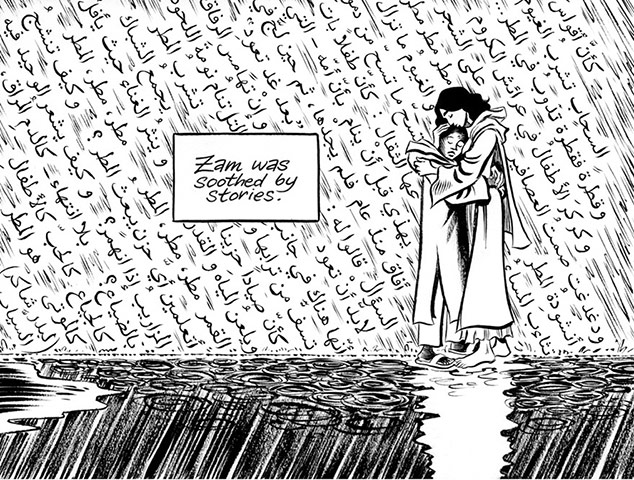
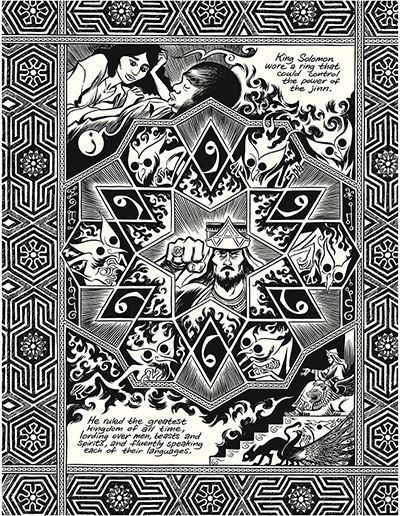
When I was able to resume writing in October of 2004, the character of Zam had grown up in the course of a single page and awakened into sexualityPhotograph: Craig ThompsonEach of the nine chapters in Habibi corresponds to an Arabic letter (and its numeric value) within the 3x3 magic square. Here are notes on the letter "zaa", searching for the themes that would shape the fourth chapter of the bookPhotograph: Craig ThompsonThis is the first state of the writing, when the drawings and text are an equal form of scribbly shorthand, basically indecipherable to anyone other than me. When I've accumulated ten pages of story in this form, I translate them into the more legible ballpoint draft that I chisel away at and edit for months, even years, before beginning the final drawingsPhotograph: Craig ThompsonHere are the layers of construction on a single page. 1) The original sketchbook draft ... 2) The first loose gesture of pencils on the Bristol paper ...Photograph: Craig Thompson 3) Details emerge, beginning with anatomical figures ... 4) More detail ...Photograph: Craig Thompson5) Sampling a scrap of classical ornamentation ... 6) Tracing that ornamentation onto the page ...Photograph: Craig Thompson7) The completed page drawn in brush and India inkPhotograph: Craig ThompsonHere's a page with Arabic text integrated into it. The text is an excerpt of Iraqi poet Badr Shakir al-Sayyab's Rain Song (1960). It is digitally spliced, merged with the sketch, then traced with a brush and ink onto the final page …Photograph: Craig ThompsonOn the surface, the poem (as the name suggests) is about rain. But more so it is about the poet's relationship to his mother's death, and his experience as an exile from Iraq.Photograph: Craig ThompsonThe middle of the book and its emotional hub revolve around the fifth and central letter, "haa"Photograph: Craig ThompsonThe character of Dodola is a Scheherazade. She tells stories to survive, but not because she is threatened with beheading. The orphan Zam needs comforting, so she weaves tales of the prophets into their own story, their own relationshipPhotograph: Craig Thompson
Sign up to read this article
Read news from 100's of titles, curated specifically for you.