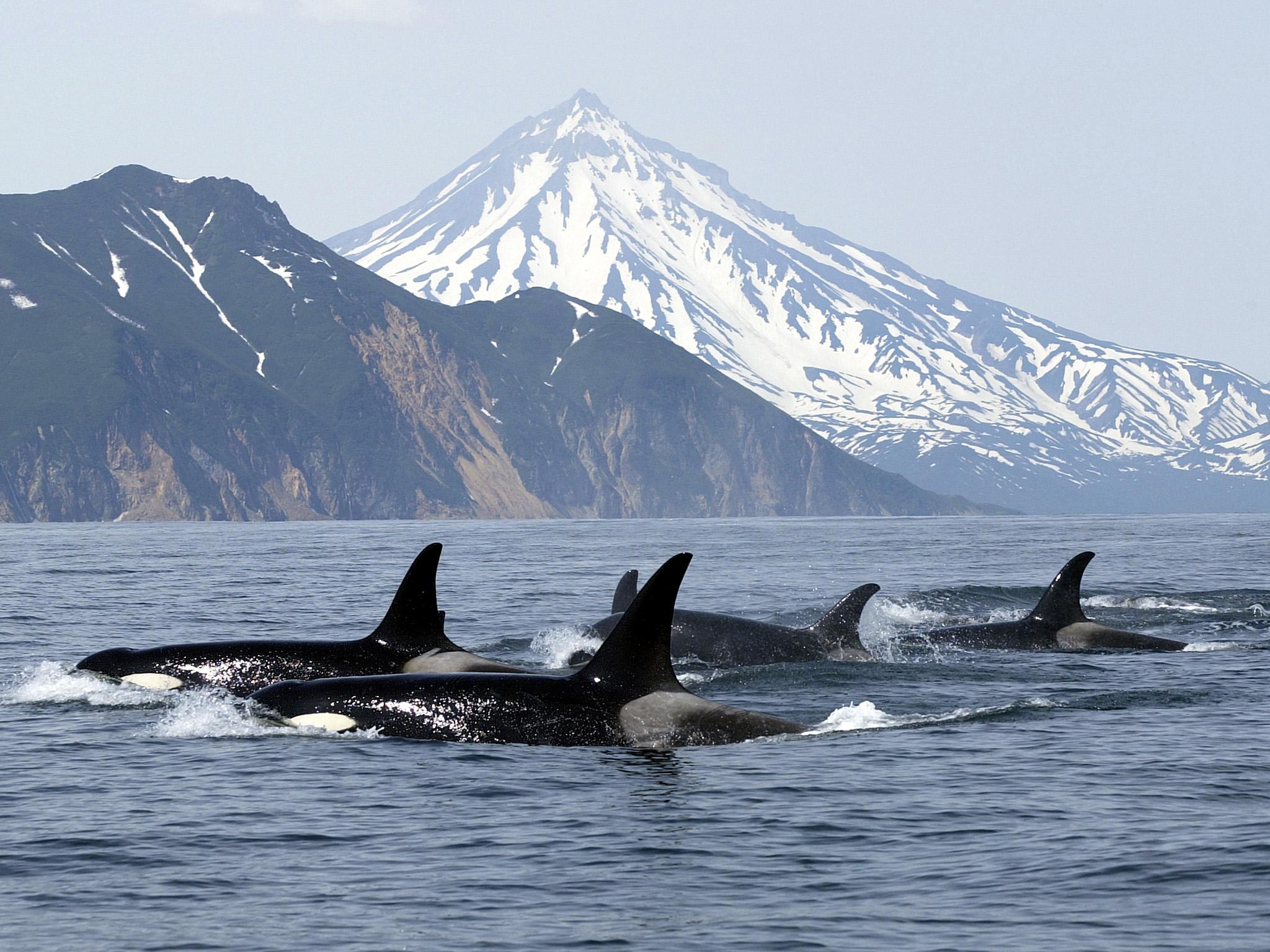
The presence of post-menopausal female killer whales boosts the survival rates of their grandchildren thanks to the “wisdom” they offer, a new study has found.
Grandmother killer whales who can no longer reproduce have more time to help their grandchildren during difficult periods when food is scarce compared to female whales who can still reproduce.
Just five animals are known to experience menopause, including killer whales, short-finned pilot whales, belugas, narwhals, and humans.
Researchers were attempting to understand why female killer whales live for many more decades after their ability to reproduce has halted.
The study was carried out by the University of York and University of Exeter, alongside the Centre for Whale Research in the US and Fisheries and Oceans Canada.
The findings were published in the Proceedings of the National Academy of Sciences journal, and point towards a better understanding of why menopause has evolved in certain animals.
Senior author Dan Franks, from the University of York, told the BBC: “If a grandmother dies, in the years following her death, her grand-offspring are much more likely to die.”
He added that from an evolutionary perspective, females who live a long time after reproduction “can still pass on their genes and genetic legacy by helping their grand-offspring”.
The research also suggests that post-reproductive grandmothers avoid conflict daughters and reduce competition for food among their children.
Killer whales are highly social animals and their societies are matriarchal. This research further emphasises the importance female killer whales have within the species’ social structures.
Some behaviour suggests grandmother killer whales “babysit” their grandchildren while the mother goes hunting for fish, said Franks.
He said researchers will use drone footage to observe the behaviour and gain a better understanding of the interactions within pods in a future project.
Darren Croft from the University of Exeter, who co-authored the study, said: “Our new findings show that just as in humans, grandmothers that have gone through menopause are better able to help their grand-offspring and these benefits to the family group can help explain why menopause has evolved in killers whales just as it has in humans.”
Additional reporting by agencies