In spite of the pandemic, the reincarnation of Marie Guimar -- a restaurant and subject of this week's Eating Out -- has come at the right time.
The name Marie Guimar was first brought to life in Bangkok's cosmopolitan dining scene in 2015 through a namesake Thong Lor eatery inspired by the legend of Marie de Guimar, head of the royal kitchen during the Ayutthaya period.
Guimar, of mixed Japanese-Portuguese-Bengali descent and wife of Constantine Phaulkon, a Greek counsellor to King Narai, introduced to the Siamese palace a number of new desserts with Portuguese culinary influences. She was later bestowed with the authoritative title "Thao Thong Keeb Ma".
Marie Guimar restaurant, a brainchild of veteran chef-patron Van Arayangkoon (of 4 Garcons and Second Edition), showcased a one-of-a-kind melting pot of multinational cookeries.
Unfortunately, the restaurant closed its doors in 2016. The brand did not return until March this year.
The latest chapter of Marie Guimar opened amid a much-glorified enthusiasm over ancient Thai cuisine, of which obsolete recipes are re-explored and marketed by a young generation of chefs.
Hence, when I learnt upon arrival at the six-month-old establishment that its focus was basically bygone Thai recipes in general, as opposed to the culinary inspiration by the noble dame, my expectation on its kitchen work was dim.
"They were looking to benefit from the current craze," or so I thought.
My cynical attitude instantly shifted upon my first bite on the restaurant's complimentary amuse bouche.
It was a bold choice serving miang lao as a kick-off treat to enliven the guest's palate.
This old-fashioned Thai nibble, featuring a mixture of meat, peanuts and herbs in preserved Chinese mustard greens rolled into a bite-sized ball, is rarely a crowd pleaser although it's an all-time favourite of my household. That's why only a few shops in Bangkok offer it.
Traditionally the savoury sweet ball is eaten with rice crackers. But the chef here chose to present it with an airy crispy taro cake that proved more enjoyable. The strong pungency of fresh ginger in the scrumptious ball was replaced by a brittle garnish of deep-fried ginger floss that lent to the bite a mild nutty hint.
The a la carte menu lists 50 vintage recipes, many of which unknown to the average diner.
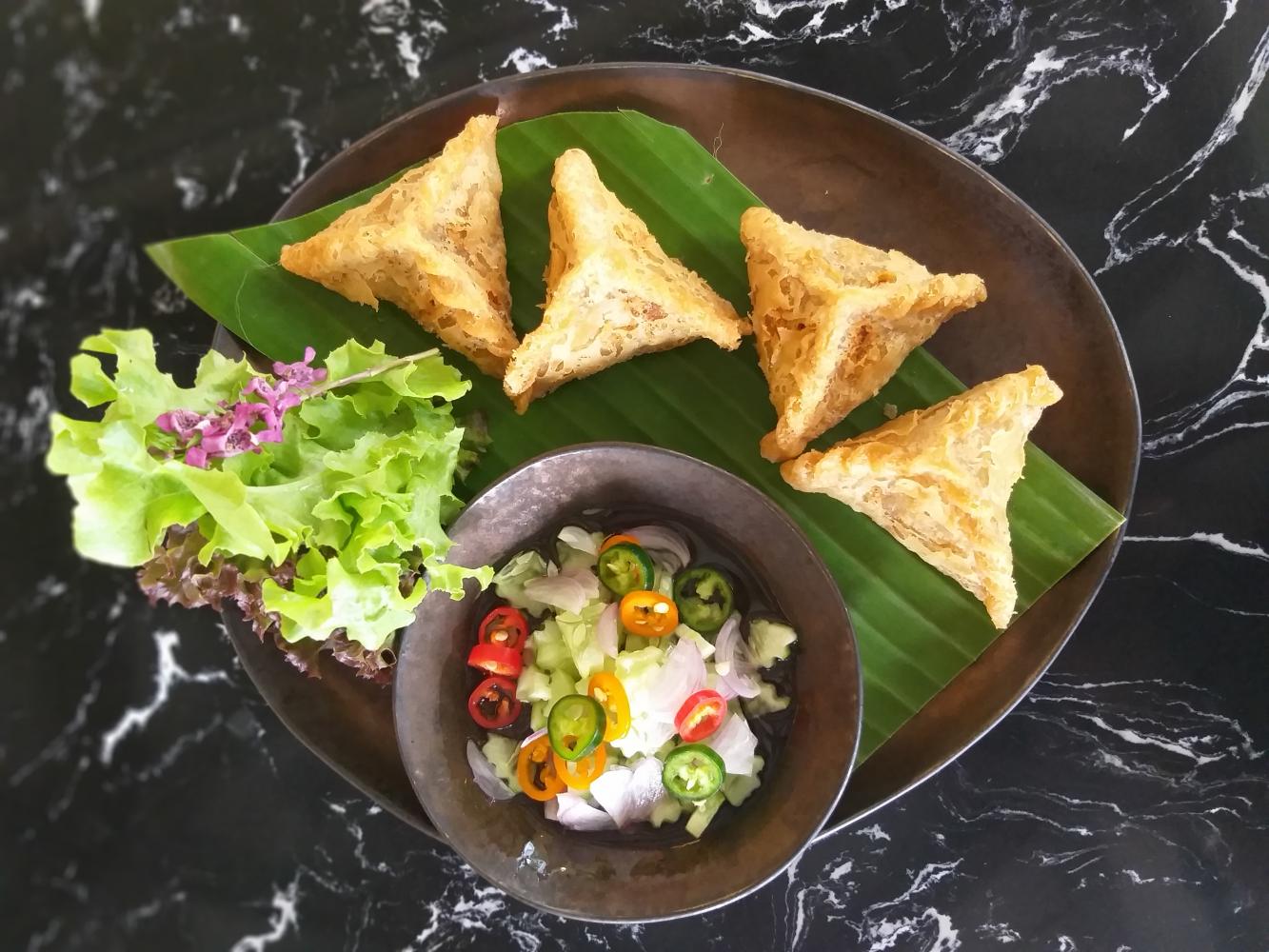
Highly recommended choices for starters are khangkhao pheuak (180 baht) and ray-rai pu (320 baht).
The first features deep-fried taro dumplings with a very light and fluffy skin made from taro paste and gluten-free wheat starch stuffed with a salty sweet filling of minced shrimp, prawn tomalley and herbs. The dumplings, shaped into triangle pieces to resemble bats (khangkhao in Thai), were served with a sweet, sour and spicy cucumber relish.
The ray-rai dish presents steamed fresh noodles rolled into bite-sized pieces with a dressing of simmered crab meat in coconut cream on the side.
The dressing was comparable to a sweet, salty and tangy peanut curry in a typical khanom jeen nam phrik dish with the characteristic fragrance of kaffir lime zest. Jumbo lump crabmeat helped add to the curry an extra sumptuous mouthfeel.
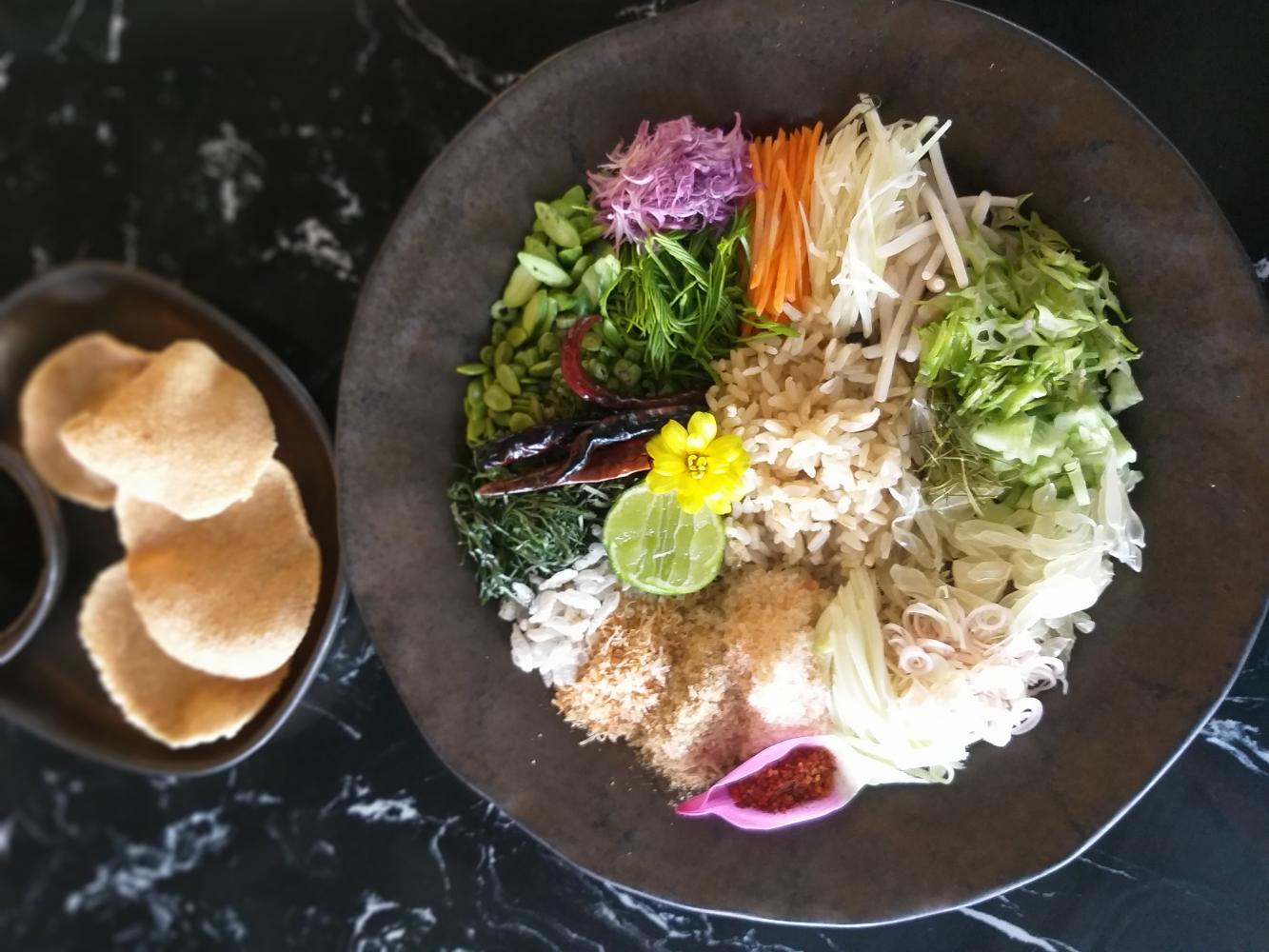
For the main dish, khao yum, or southern Thai style salad with rice, vegetables and herbs (250 baht) is one of the bestsellers.
It's a colourful and healthy plate of brown jasmine rice, sataw (wild nitta beans), med krathin (leadtree seeds), cha-om (climbing wattle), pomelo pulps, cucumber, winged bean, bean sprouts, finely sliced kaffir lime leaves, lotus petals, carrots, green mango and lemongrass.
Right before eating, all the ingredients are to be tossed with roasted grated coconut and dried chilli before being flavoured with fresh-squeezed lime juice and a salty and sweet house-concocted sauce.
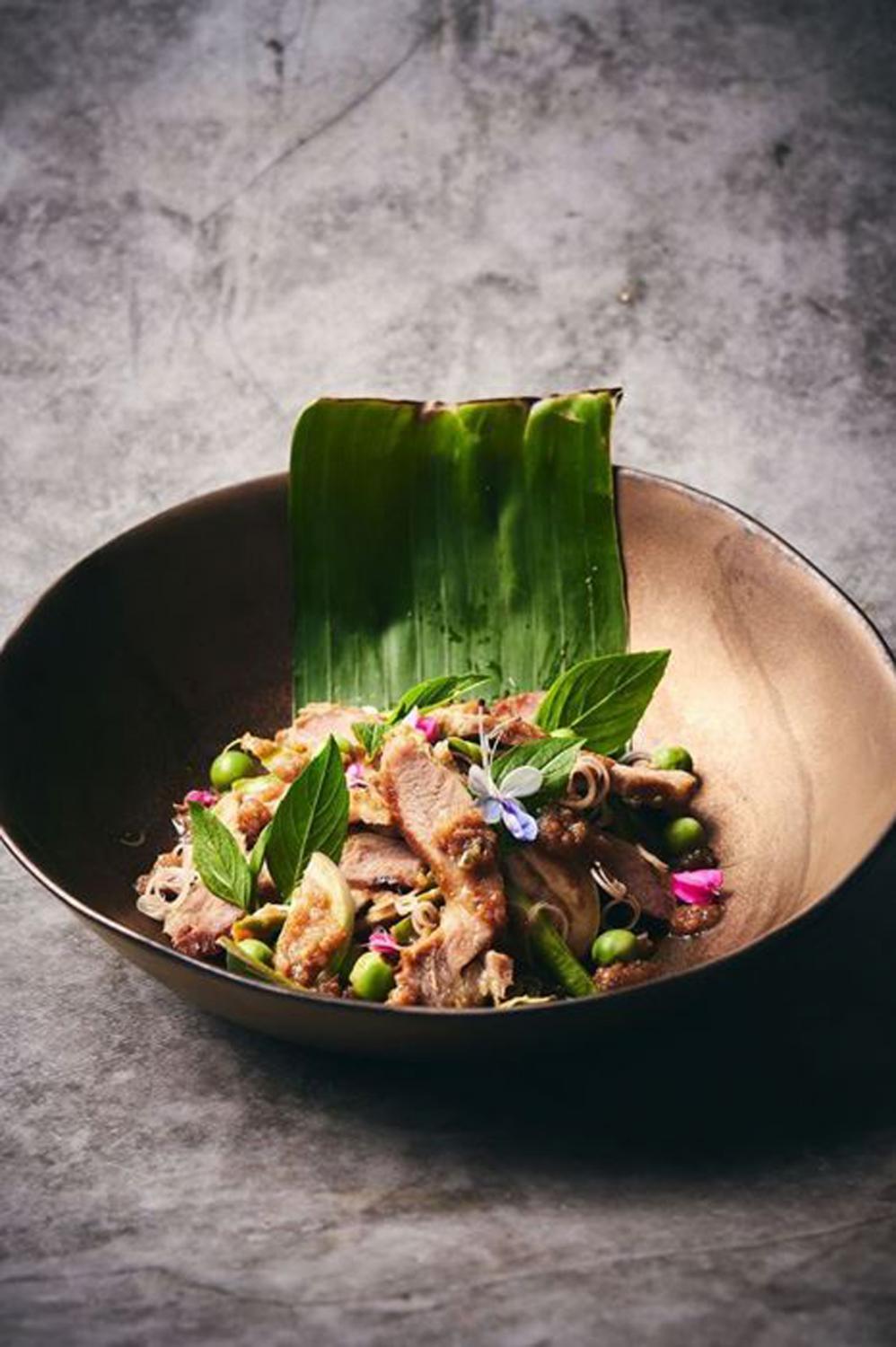
Another dish I never heard of but later proved to very much impress my palate was tong mu yang (380 baht). Described in English on the menu as northeastern spicy salad with grilled pork and shrimp paste, it featured a hefty portion of sliced grilled pork and eggplant seasoned with fish sauce, lime juice, palm sugar, shrimp paste, horapha (Thai basil) and fresh chillies. This super poignant dish is best enjoyed with rice.
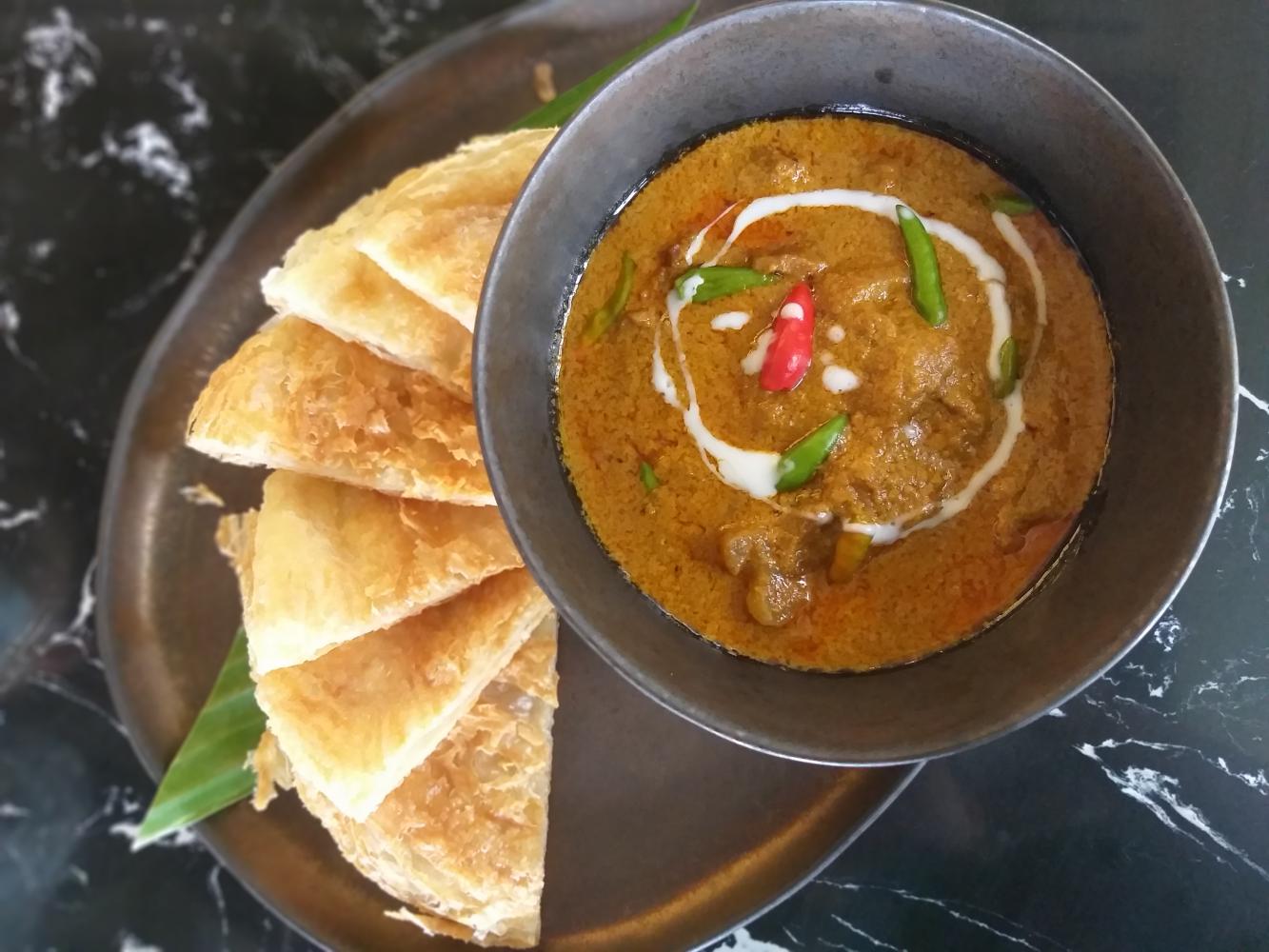
Marie Guimar's rendering of beef curry with roti (400 baht) is unconventional yet popular.
Rather than a typical soupy green curry with deep peppery tang, the curry here, in reddish brown hue, exhibited a thick and nutty sweet consistency freshly perfumed with bird's eye chillies.
Bathed in the delicious curry were sizeable slices of beef shank, slow-cooked until tender yet still boasting a marbling line of gelatinous connective collagen, all complemented by flaky golden pieces of pan-fried roti bread.
It might sound a bit disappointing that there are only two options of dessert on the menu. But good news is they are the very best you could ever ask for.
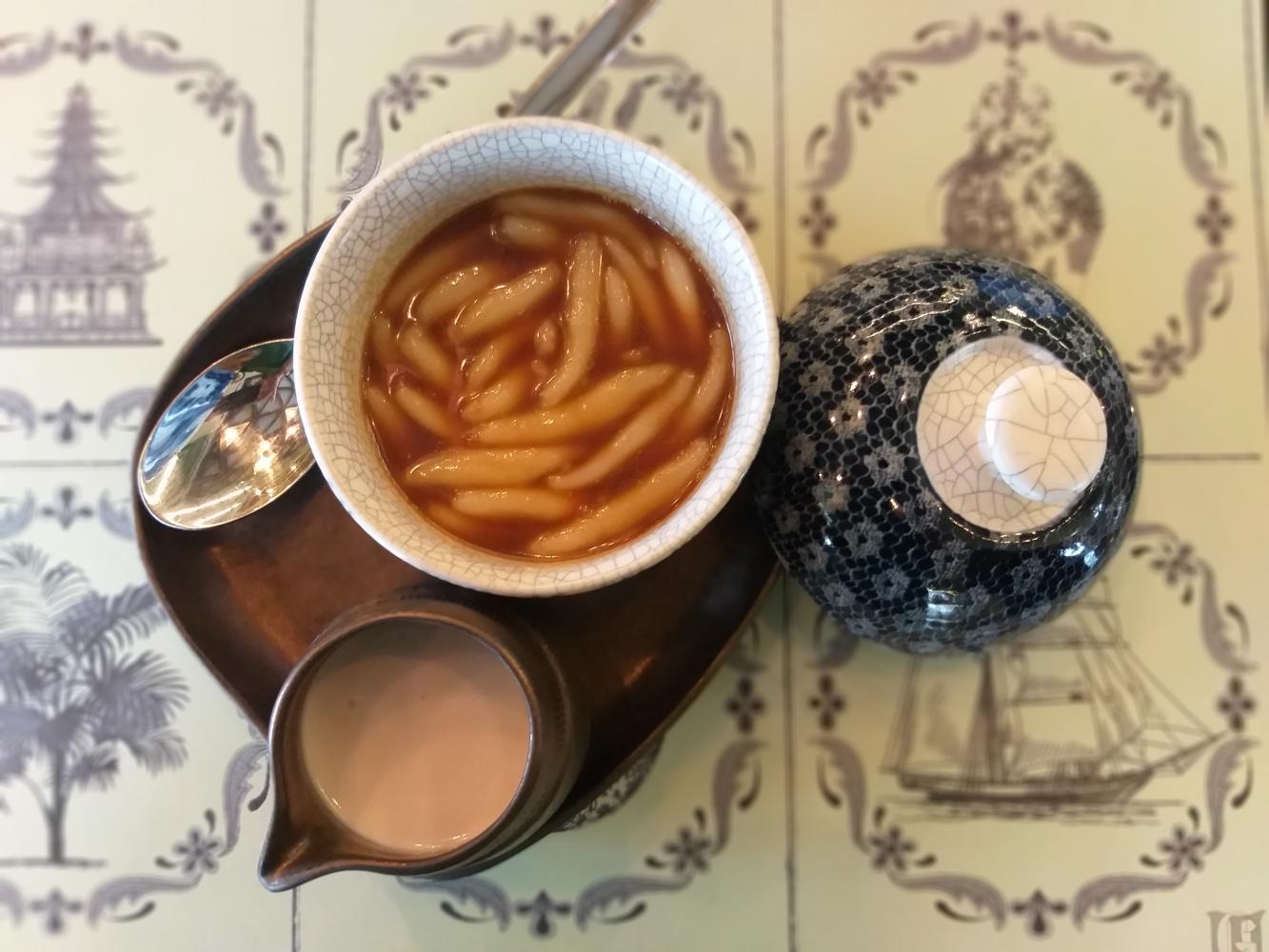
Pla krim khai tao (180 baht), a classic Thai dessert duo featuring a white portion of sticky rice dumplings in salted coconut cream and a golden portion of sticky rice noodles in bitter sweet caramel sauce, proved a true taste buds ecstasy.
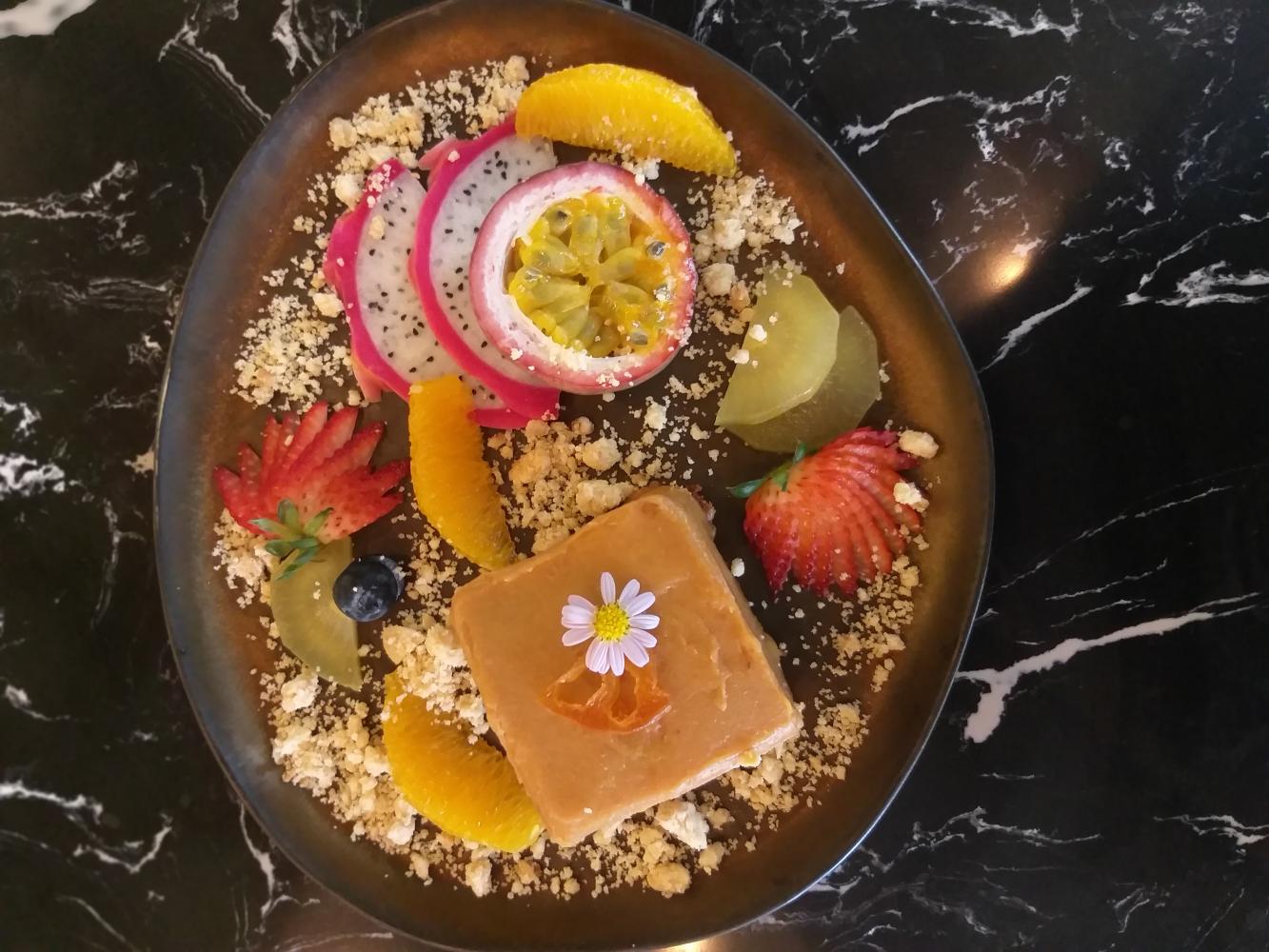
Should you be a connoisseur of bael fruit cake, you can't miss Marie Guimar's version (180 baht).
The cake, seethed generously with chopped candied bael, showcased a moist and spongy centre with a luscious buttercream glaze, accompanied by fresh kiwi, orange, passion fruit and strawberries that gave the buttery cake a fresh fruity complement.
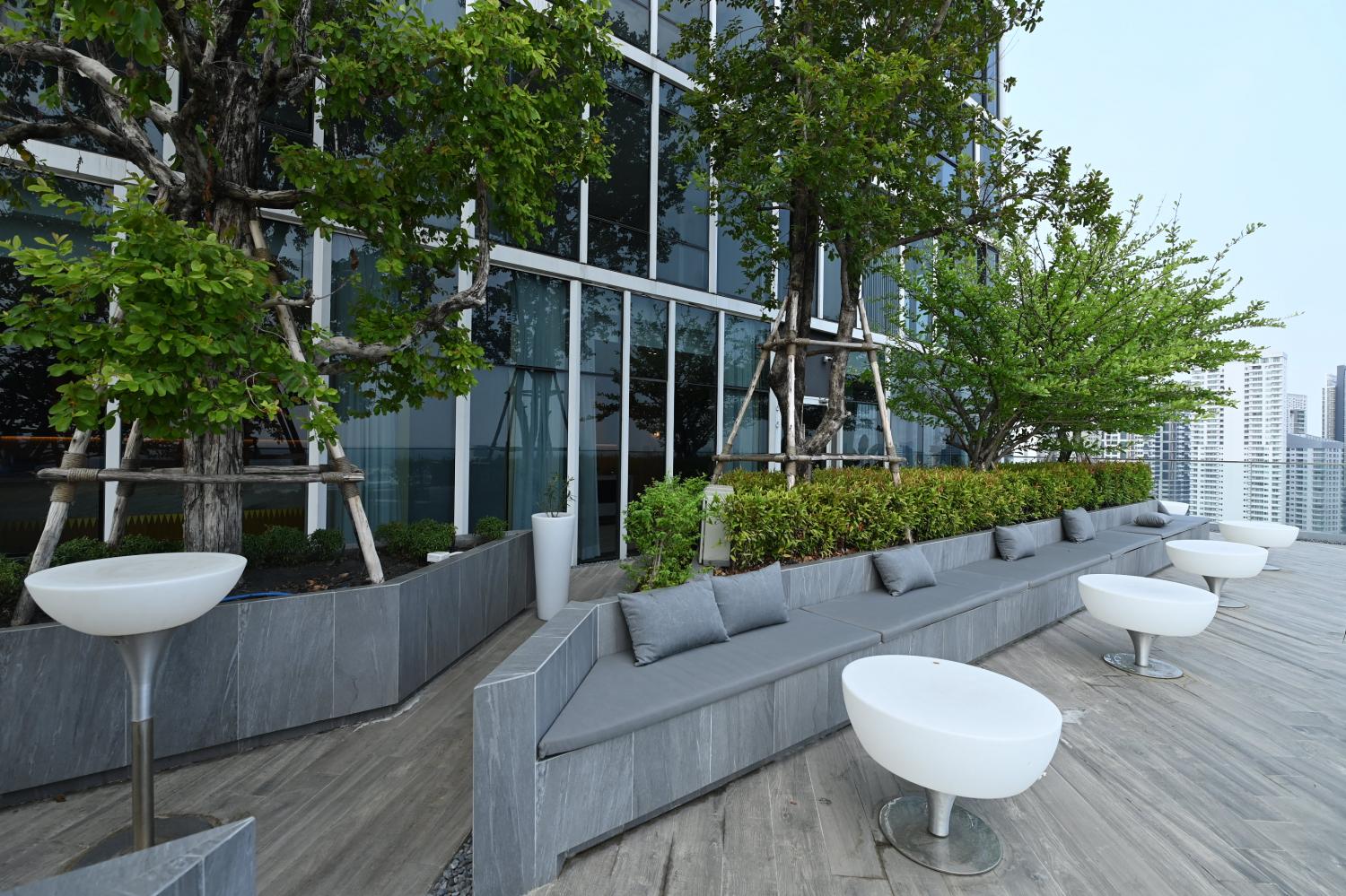
The restaurant occupies a spacious space on the 28th floor of Wyndham Bangkok Queen Convention Centre, an upscale high-rise residential project in Soi Phai Singto. The dining area is graced with a 360-degree panoramic view of the city's skyline, while an open-air terrace provides the guests with a rooftop lounging feel.
Takeaway and delivery service are also available. For more information, or to see the menu visit marieguimarbkk.com.