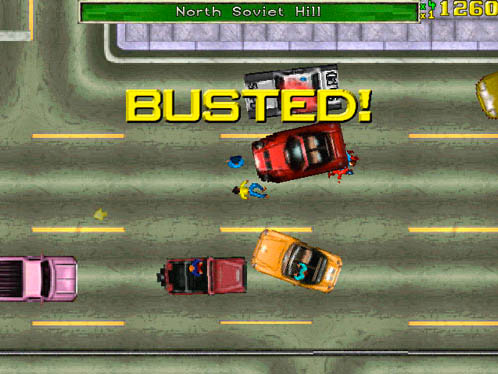
The first Grand Theft Auto game was a game about violent crime at a time when the medium was much warier of such controversial territory. Released in 1997, it laid the groundwork for the open-world video game: an environment in which players are free to do whatever they please, as opposed to following goals set for them by the designer. Its sequel – set in Anywhere, USA – introduced more complex elements to its violent sandbox, but the narrative and social commentary that have made Grand Theft Auto such a prominent presence in pop culture did not come until much later Photograph: PR
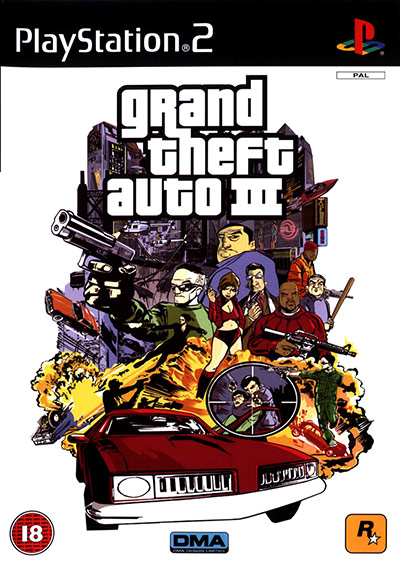
The third instalment was due to be released in October, 2001, but after the events of 11 September that year some last-minute changes had to be made. Its box-art was redone entirely, and some of its script was rewritten or removed to avoid uncomfortable comparisons.
The Liberty City police uniform was also changed to avoid the appearance of disrespect to the real-life NYPD. Post 9/11 American media and governmental hysteria later became a prevailing theme in Grand Theft Auto IV, but notably, the game included no Ground Zero equivalent in its fictional New York Photograph: PR
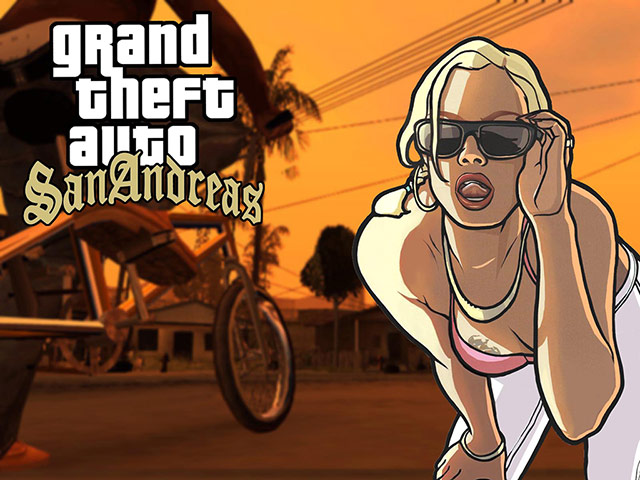
Grand Theft’s most famous controversy became known as the Hot Coffee Fiasco. After a hacker found incomplete sex scenes in the code of GTA San Andreas in 2004, Rockstar Games was forced to recall copies of the game – despite the fact the adult material was inaccessible to anyone unless they hacked the game code Photograph: PR
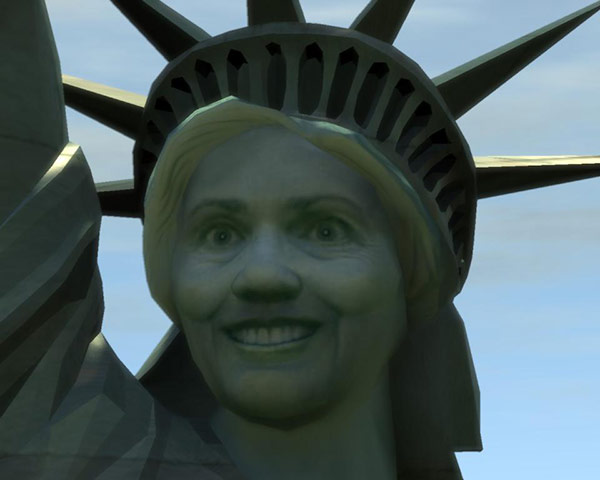
The Statue of Happiness is one of GTA’s most powerful symbols, welcoming immigrants to America whilst simultaneously mocking their idealism and the concept of the American Dream.
As well as its not-exactly-aspirational slogan, Grand Theft Auto’s version of the Statue of Liberty bears a more than passing similarity to Senator Hillary Clinton – who, not-so-coincidentally, led an investigation into the Hot Coffee sex scandal in 2005. The cup of coffee the statue holds is another reference to this ignominious affair Photograph: PR
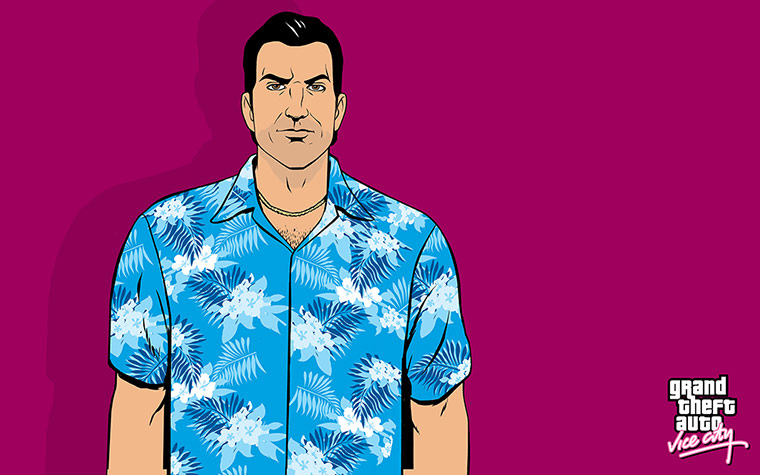
Played by Ray Liotta, Tommy Vercetti – star of 2003’s Vice City – is a quintessential gangster, a former member of a New York crime family who is released from prison and decides to build his own fortune in a new city.
He’s a combination of several mafia men in the world of cinema, but Tony Montana is the prevailing influence, evident in his monogrammed suit and, later, the mansion he acquires Vice City is the Grand Theft Auto that’s closest to homage, capturing the music and ambience of the 80s and the pop-culture icons of that decade Photograph: PR
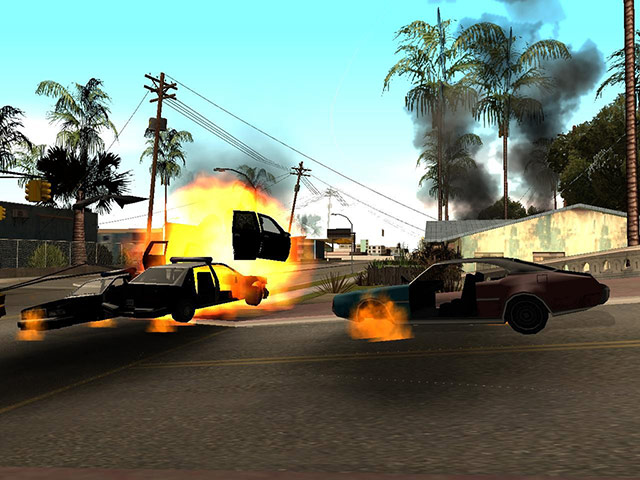
San Andreas is Rockstar’s California, and the jewel in its desert is Los Santos, a two-faced, troubled city that mirrors Los Angeles. In 2004, Grand Theft Auto: San Andreas tackled the early 90s crack epidemic, the LAPD corruption scandal of the late 90s (which saw members of the force’s anti-gang unit engage in wanton violence, theft and manipulation of evidence) and, in the game’s climax, the 1992 riots over police brutality that tore the city apart. Grand Theft Auto IV was the series’ first truly contemporary satire, but San Andreas saw the studio grow in confidence in tackling contemporary issues Photograph: PR
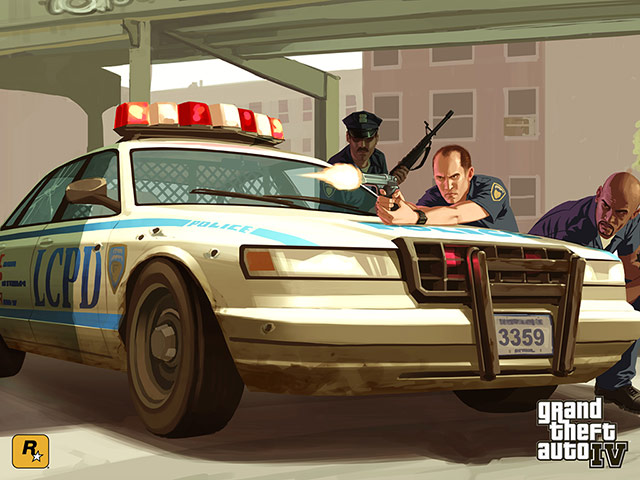
Inspired by Michael Mann’s Heat, one sequence, Three Leaf Clover, in 2008’s Grand Theft Auto IV shows the series at its most thrilling and cinematic.
Protagonist Niko Bellic takes part in a bank heist that goes horribly wrong, as his volatile companions start killing each other and the Liberty City police come down on them hard, forcing them into a desperate escape.
This scene was the inspiration for Grand Theft Auto V, whose storyline is punctuated by the setup and execution of several such grand heists Photograph: PR
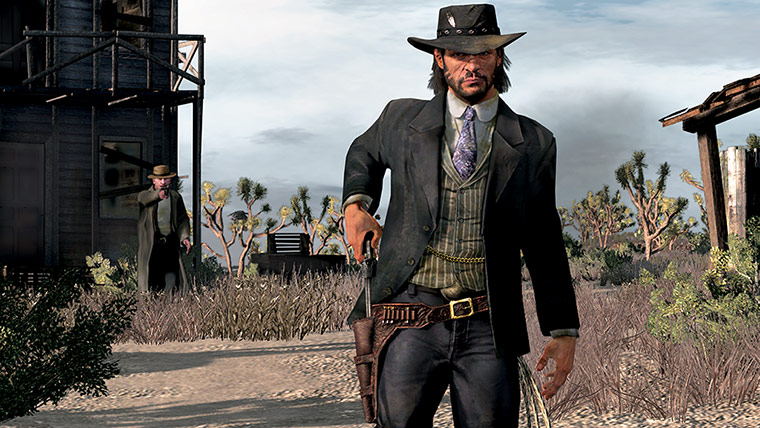
Rockstar’s Red Dead Redemption (2010) might not have been a Grand Theft Auto game by name, but it was by nature, telling the story of a wild west gunslinger trying to leave behind a life on the run and reconnect with his lost family. It is Grand Theft’s America in its formative years Photograph: PR
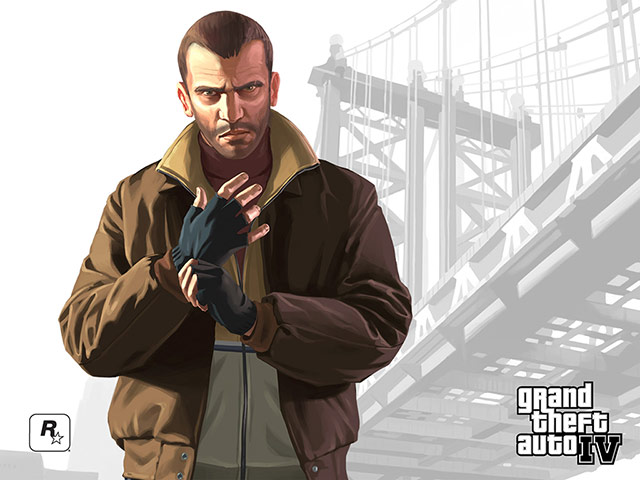
2008’s Grand Theft Auto IV’s protagonist Niko Bellic is from what writer Dan Houser calls “that grey part of broken-down eastern Europe”, seeking an escape in Liberty City.
The promise of America turns out to be an illusion for him Photograph: PR
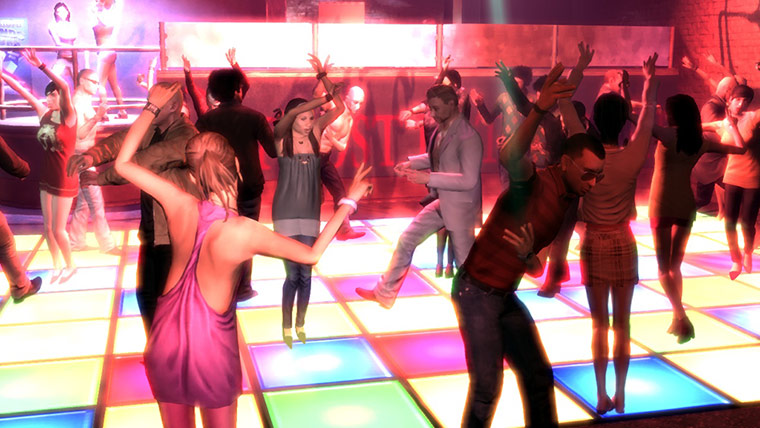
Since Grand Theft Auto II, music has been a hugely important stylistic element of the series, one way in which its in-game worlds cross over with reality. Vice City, set in the 80s, had a soundtrack of more than 100 tracks that brought the era to life. It has in-game radio stations that play techno, 90s pop, college rock, 80s classics, modern and classic hip-hop, funk and soul, electronica and more, hosted by fictional DJs with perfectly pitched parodic personas and interrupted by spoof adverts and news bulletins. The in-game chat radio has some of the sharpest and funniest writing in the games Photograph: PR