A grand jury will convene in the “near future” to hear evidence in the case of Akai Gurley, the unarmed 28-year-old who was shot dead in Brooklyn by police last year. Gurley’s domestic partner is also expected to launch civil litigation.
Kimberly Ballinger, the mother of Gurley’s two year-old daughter, met Brooklyn district attorney Ken Thompson on Tuesday, along with her lawyer, Scott Rynecki, who told the Guardian the prosecutor had “justice in his heart”.
“We have total faith in his investigation and the way he will be presenting it to a grand jury,” Rynecki said. “We think he is going to truly try and get to justice in this matter.”
In December, Thompson impanelled a grand jury to decide whether rookie officer Peter Liang, who fired the fatal shot, and his partner, also a rookie officer, should be indicted in Gurley’s death.
The district attorney had resisted calls for a special prosecutor to oversee the case, in the wake of perceived bias in recent grand jury decisions over the deaths of Michael Brown and Eric Garner, unarmed black men who were killed by police last year. Neither grand jury indicted the officers responsible.
“I was elected by the people of Brooklyn to do this job without fear or favour, and that is exactly what I intend to do,” Thompson said in a statement at the time.
Thompson’s office provided no comment to the Guardian on Wednesday, describing the work of the grand jury as a “private matter”.
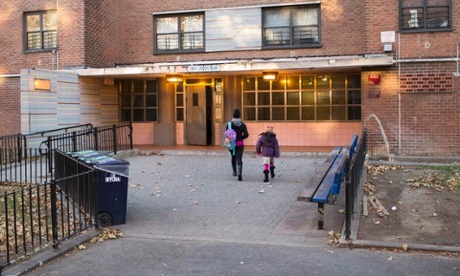
Gurley was shot dead in November as he descended the darkened stairwell of a block in the Louis Pink Houses project in East New York. Police maintain that Liang fired accidentally. But community members and local politicians have asked why the officer was patrolling the project with his gun unholstered.
Reports have suggested that Liang contacted his police union instantly after discharging his weapon, instead of calling for medical assistance.
Rynecki told the Guardian Ballinger would commence civil litigation against the two officers, as well as the city of New York and the local housing authority.
“There will be a number of different claims including wrongful death, and civil rights violations and outright negligence,” Rynecki said.