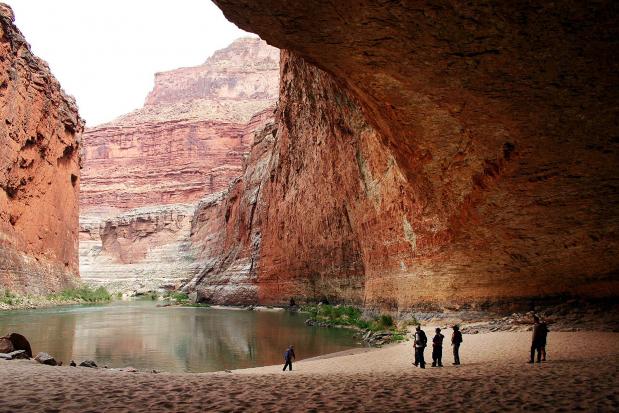
One of the crown jewels of the U.S. parks system and an internationally renowned icon of the American Southwest, Grand Canyon National Park was established in 1919 to showcase and preserve the gargantuan desert chasm whose age is estimated at around two million years. The visually stunning landmark and UNESCO World Heritage site slices 445 kilometres through the Arizona desert, plunging 1.5 km at its deepest and varying in width from one-half to 30 km. The strikingly stratified walls of its three main gorges display a geological record that spans the four main eras of Earth's evolutionary history, from the Precambrian to the Cainozoic.
Geologically speaking, the ‘canyon’ is actually classified as a fissure of the Colorado Plateau, but its diverse landscape includes plateaus, plains, deserts, forests, lava flows, streams, waterfalls, not to mention the raging white-water rapids of the majestic Colorado River. The vast undisturbed solitude serves as an ecological refuge, where remnants of increasingly rare eco-systems such as boreal forests and desert riparian communities continue to flourish.
There are a number of options for visiting the canyon--peering over its precipitous rim, exploring its arid floor and interior or viewing it from the air.

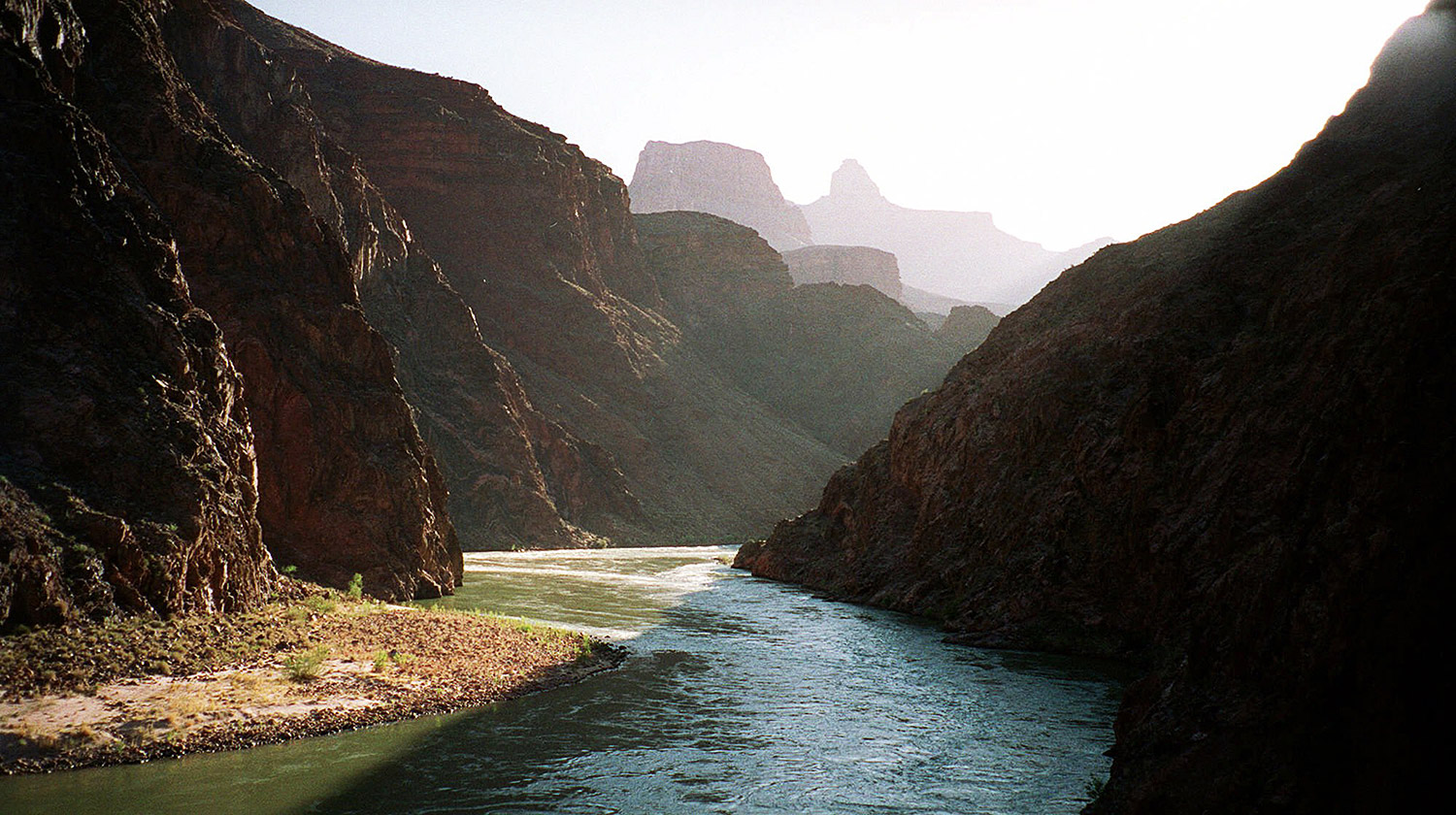
Dripping with nostalgia and old-timey charm, the Grand Canyon Railway offers a two-hour trip into the vast gorge aboard 1920’s vintage trains, stopping at Grand Canyon Village, where visitors can spend a half-day exploring the national park. Also located on the canyon floor, Phantom Ranch is a collection of rustic stone and wooden cabins offering outdoor activities like hiking, mule rides, and river-rafting, while the Tusayan Museum and Ruins comprises detailed exhibits, artefacts and scale models depicting the lives of Native American Indian tribes that once inhabited the area.
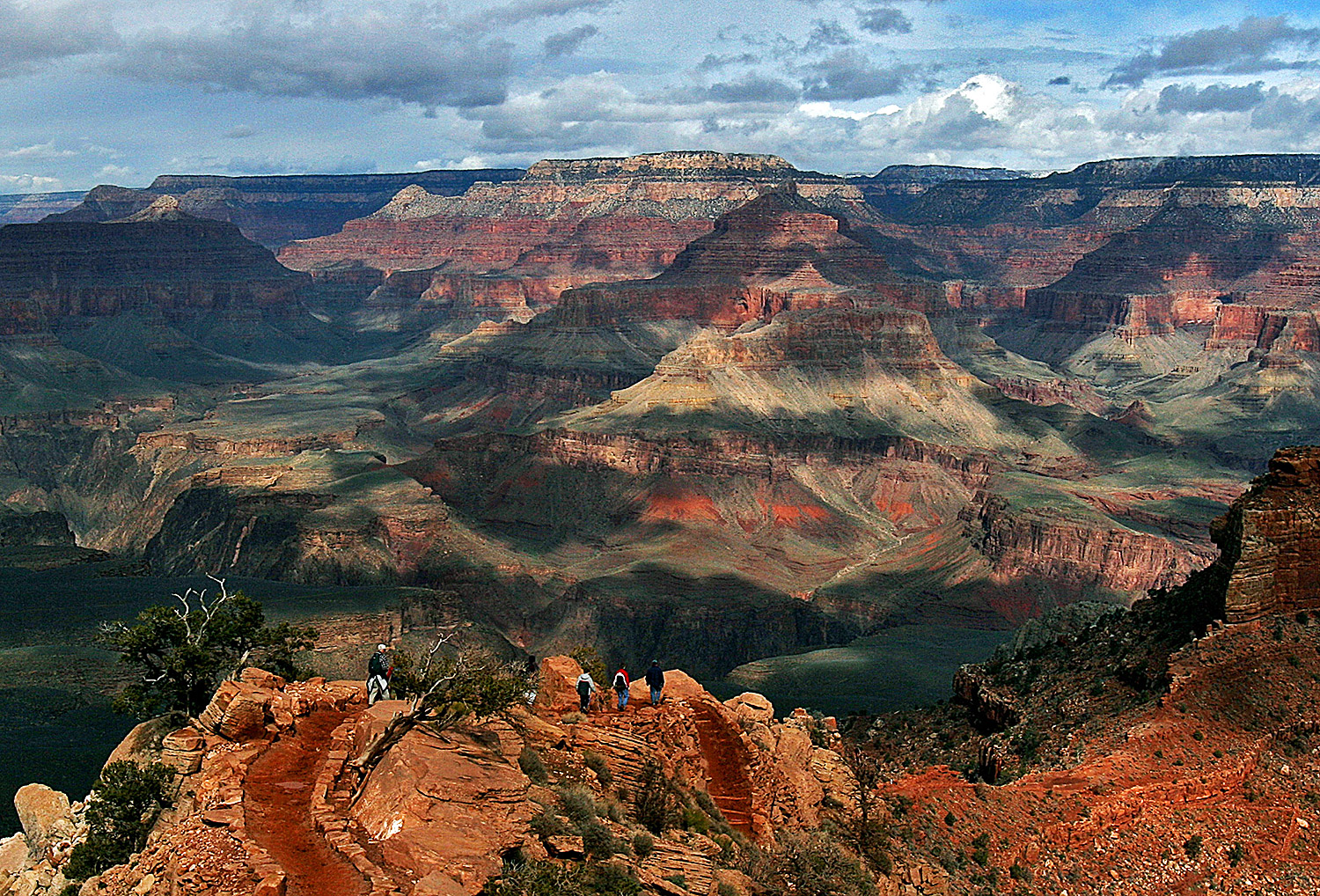
But there’s no better way to get a feel of the canyon’s colossal scale than standing at its edge and peering into the abyss.
Most of those who take in the view at Mather Point are first-time visitors, and it is not unknown for overwhelmed sightseers to fall to their knees and weep at the sheer beauty and immensity and of the chasm as seen from this west-facing vantage point. At the Yavapai Point and Observation Station, visitors can get an idea of the canyon’s depths, with bird’s-eye views of Phantom Ranch and the Colorado River, while Lipan Point offers some of the most spectacular vistas and sunsets.
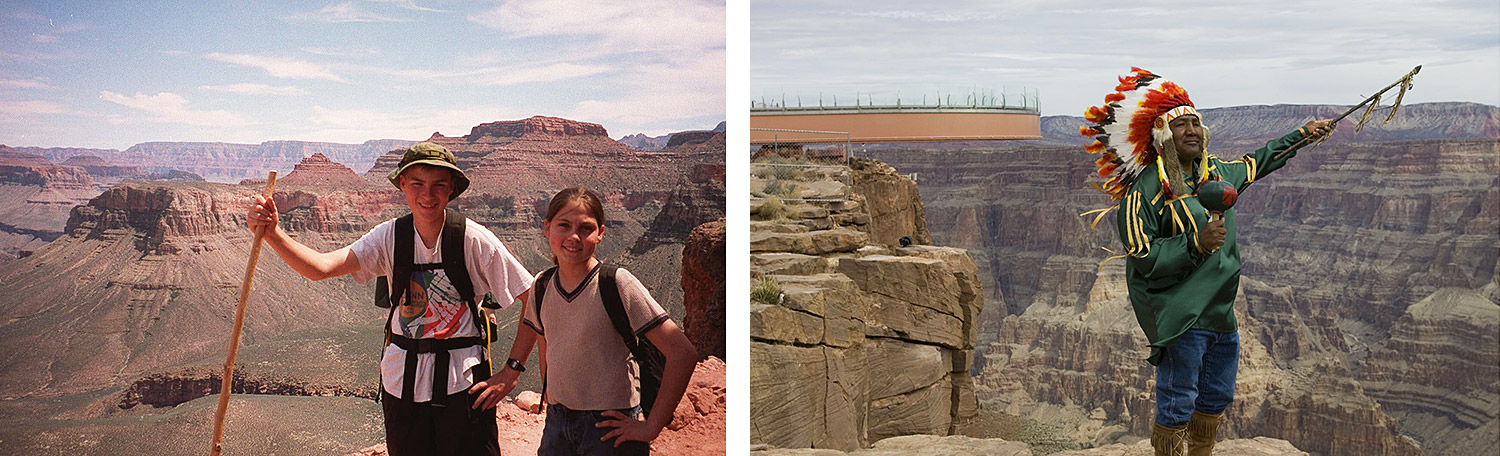

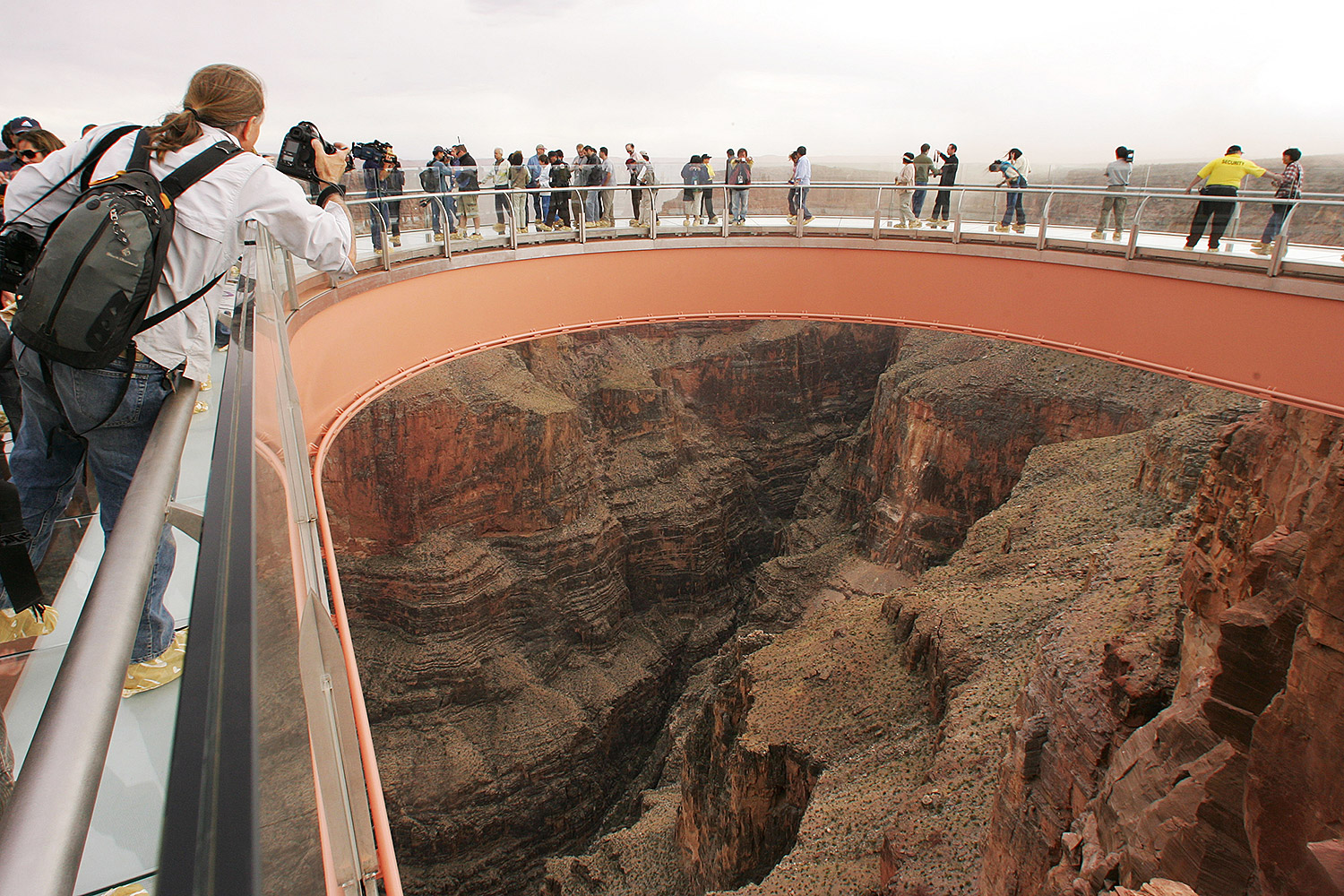
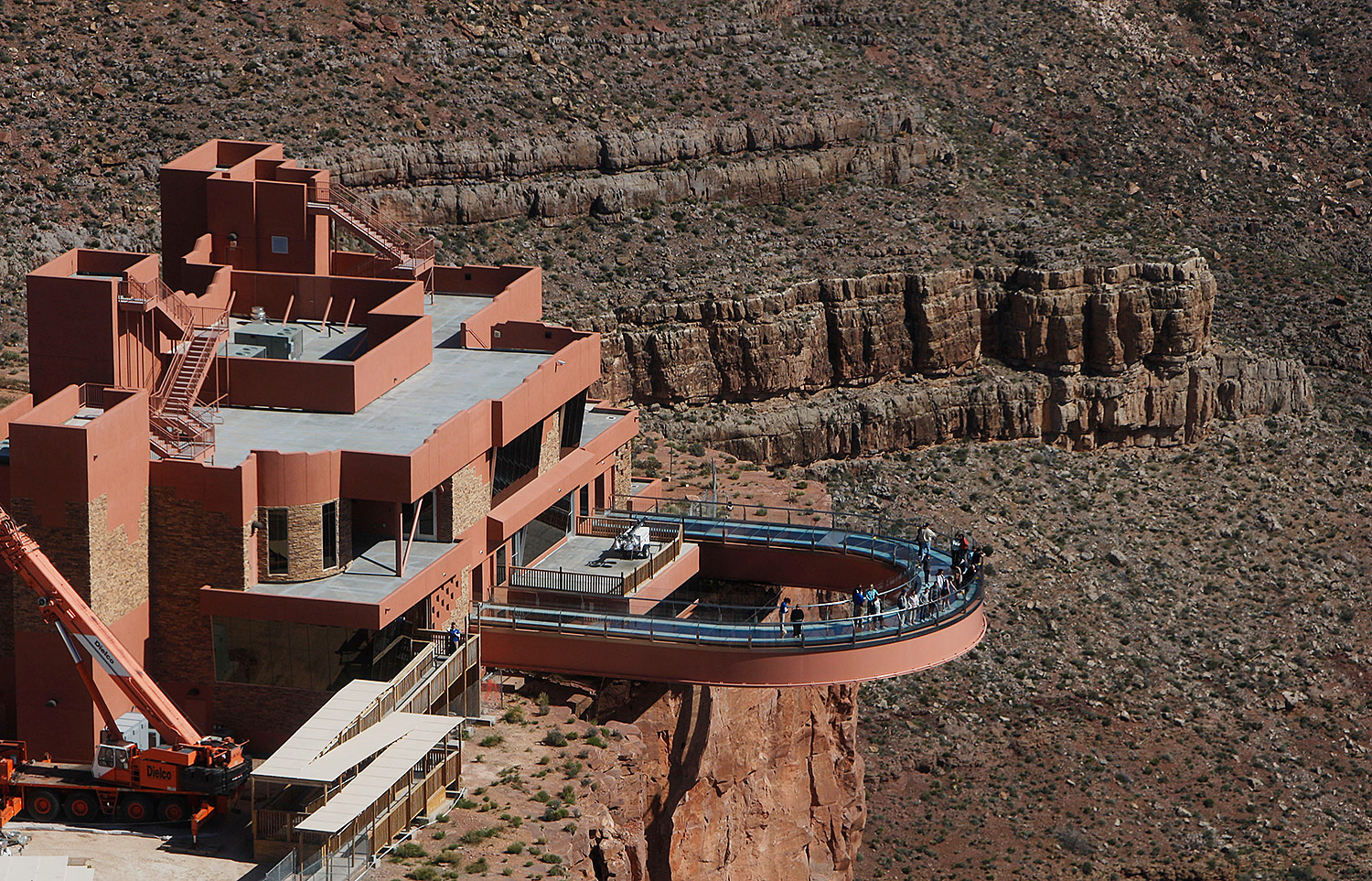
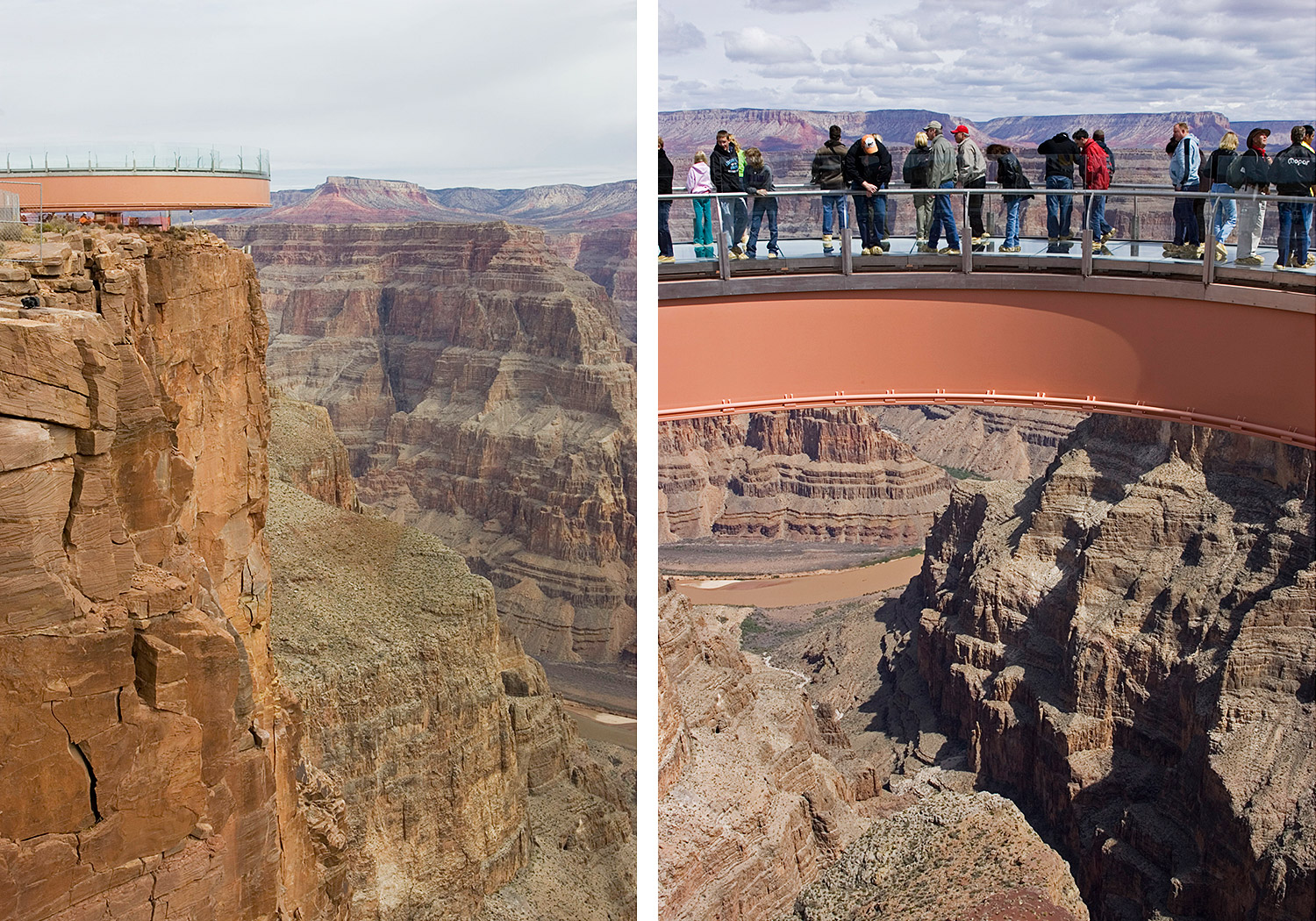
But the most dramatic viewing experience can be found at the Grand Canyon Skywalk, which gives intrepid visitors the sensation of hovering in mid-air. First opened in 2007, the literally high-tech lookout features a cantilevered, horseshoe-shaped walkway with a transparent glass floor that juts out 21 metres from the canyon’s rim. Standing on the see-through deck gives “sky-walkers” a vertigo-inducing 1.5 km-view—straight down. But no worries, the steel-framed platform is designed to support the equivalent weight of a dozen fully loaded jumbo jets.
There are also a number of air-tour companies offering sightseeing flights to the Grand Canyon. Both fixed-wing and rotary aircraft take passengers high above the massive trench or in some cases, down low below the rim for closer-up viewing of specific features.
The Grand Canyon National Park Airport is served by direct flights from both Phoenix Sky Harbor International Airport in Arizona and Nevada’s Las Vegas McCarran International Airport.