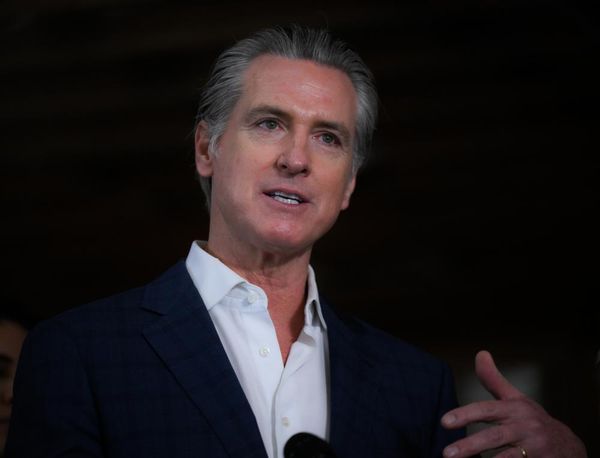
WASHINGTON _ As Sen. Lindsey Graham races against a rapidly approaching congressional deadline for selling his health care proposal, his own state's governor is refusing to offer support.
"I'm studying it," South Carolina Gov. Henry McMaster told reporters in the state's capitol on Monday morning.
McMaster confirmed he has had several conversations with Graham and Vice President Mike Pence along with "a few others."
The governor's unwillingness to give a full-throated endorsement _ or for that matter, any endorsement _ won't sink the effort. Fifty senators must commit to voting for Graham's legislation to repeal and replace the Affordable Care Act, and while outside backing can help build momentum, it's no guarantee of Senate success.
But Graham has made wooing governors a centerpiece of his longshot strategy. The Senate rejected a Republican-authored health care plan this summer, and there's little taste for more battle.
And now Graham can't even get his own state's governor, a member of his own Republican party, to go along. Nor can he get the backing of his fellow senator, also a Republican.
Sen. Tim Scott has said he likes the framework of the legislation. South Carolina Republicans in the House who support states' rights and hate Obamacare would likely back the bill if presented with the opportunity to vote on it.
But the McMaster stance so far stings. Graham has sought to sell the bill as a consensus-builder among the Republican Party. Democrats opposed to his measure could seize on McMaster distancing himself as a sign the legislation does not have sufficient support to move ahead.
On a personal level, McMaster declining to support Graham's health care gambit could be viewed as a slight to a longtime friend. McMaster, then the state's lieutenant governor, had endorsed Graham for president during the 2016 GOP primary campaign, before Graham dropped out in late 2015 and McMaster went on to become one of President Donald Trump's most ardent supporters.
The two go far back in South Carolina Republican politics and usually agree on major policy issues. Both were once represented by Richard Quinn & Associates, a powerhouse GOP strategy and consulting firm. Putting aside the firm's current woes _ it is now implicated in a state public corruption scandal _ clients tended to reflect the more establishment, mainstream strains of the Republican Party.
McMaster hasn't elaborated on why he's been slow to endorse the health care legislation, which would send money spent on Obamacare in the form of block grants to the states for health care costs.
He may not like how the bill is funded through maintaining the current health law's taxes on the wealthy, which Republicans have routinely criticized. That's one reason Kentucky Republican Sen. Rand Paul is refusing to support it, arguing that by keeping the taxes it doesn't actually repeal the Affordable Care Act.
"Graham/Cassidy keeps Obamacare and tells the states to run it," Paul tweeted, referencing the bill's two lead sponsors. "No thanks." Sen. Bill Cassidy, R-La., is chief co-sponsor.
There are also inherent political risks in advancing Graham's bill. Lawmakers have been seeking to repeal and replace Obamacare through a procedural maneuver known as reconciliation, which allows the Senate to limit debate with 51 votes. Republicans control 52 of the Senate's 100 seats.
That authority, however, expires on Sept. 30, giving Congress just days to advance the legislation in both chambers. And both chambers are not scheduled to meet later this week because of the Jewish holiday. They plan to return Sept. 25.
So assuming Republicans, desperate to fulfill a campaign promise, can rally behind the effort, they will be sending legislation to the president's desk to dramatically reshape the American health care system without much _ if any _ time for debate or chance to offer amendments.
McMaster, facing re-election and multiple primary challengers next year, would be faced with guiding the transition into a new health care system that is likely to be controversial and take time to work out inevitable kinks.
For the time being, all McMaster would say is he continues to "study" the proposal.
"I think most things would be better than Obamacare," McMaster told reporters Monday. "Of course, block grants are much better than other ways to do things _ but again, this is a very serious question, and I'm studying it very closely."