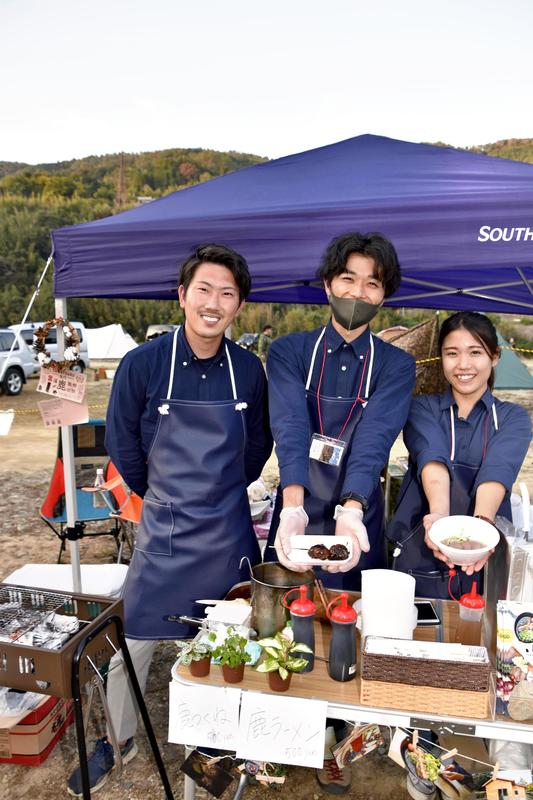
KYOTO -- Three 23-year-old graduates of Ryukoku University in Kyoto have recently started a business for processing and selling game meat in Kasagi, Kyoto Prefecture, hoping to reduce the damage caused by wild animals in the town.
The idea was first conceived when the three -- Daiki Kasai, Kaito Yamamoto and Nodoka Eguchi -- were students in a seminar led by Prof. Masataka Fukao of the university's Policy Science Department. Fukao is also an expert of nonprofit organization studies.
Since then, the three have been studying regional economies and town development in Kasagi, which is suffering from depopulation.
They conducted a series of interviews with local residents to learn about the damage caused by deer, boars and other wild animals that destroy crops. Eguchi came to realize that the problem in Kasagi could not be solved with a lukewarm approach.
Last May in her senior year, she decided to discontinue job hunting, and instead spent three months in Naka, Tokushima Prefecture, honing her skills in deer hunting and meat processing, among other relevant techniques.
Determined to start their own business, the three rented an old house in Kasagi and other places in October last year and established the Kasagi-based company Re-Social Inc. the following month.
Thanks to locals who taught them the necessary skills, and Fukao, who financially supported them, they also established the Yamatoaru Kobo meat processing plant in Kasagi last month. Before starting this new business, the three obtained licenses to process and sell the meat.
The entire butchering process into cuts of venison is carried out at the plant. To successfully remove most of the deer meat's peculiar smell, they use a proven method to drain the blood immediately after the kill.
Most game animals like deer that are caught in Kasagi had been disposed of due to a combination of aging farmers and a lack of skills to dress the game meat.
While only about 50 deer and other game animals have so far been processed in the town per season, now with the company and the plant in operation, about 120 such animals are expected to be hunted and processed per season, according to the trio.
"We have high expectations for their work and engagement," said an official of the Kyoto prefectural government's promotion division of agriculture, commerce and industry cooperation.
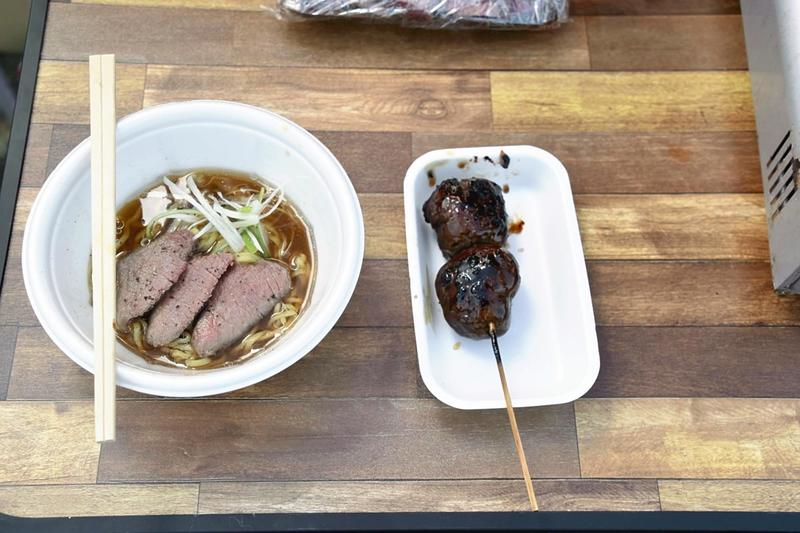
Venison is sold for such dishes as shabu-shabu hotpot, grilled meat and steaks. The three participated in an event held on the banks of the Kizu River on Oct. 29, their first event to promote game meat cuisine. They served ramen and tsukune meatballs prepared with plenty of deer meat, which were popular among visitors.
"Through the consumption of food, we want to convey our appreciation for life as well as the relationship between humans and nature in the way it should be," said Kasai, the Re-Social president.
"If we don't do it, who's going to address this problem in Kasagi?" Eguchi said. "The three of us discuss our work a lot and are moving forward step by step."
Yamamoto added, "I hope what we do will serve as a model and spread across the country."
Read more from The Japan News at https://japannews.yomiuri.co.jp/