It is undeniable that the government's measures to restrict the entry of people from China and South Korea obviously came too late amid the new coronavirus outbreak in the nation.
Prime Minister Shinzo Abe tightened up entry restrictions Thursday, targeting China and South Korea as part of efforts to halt the spread of the virus.
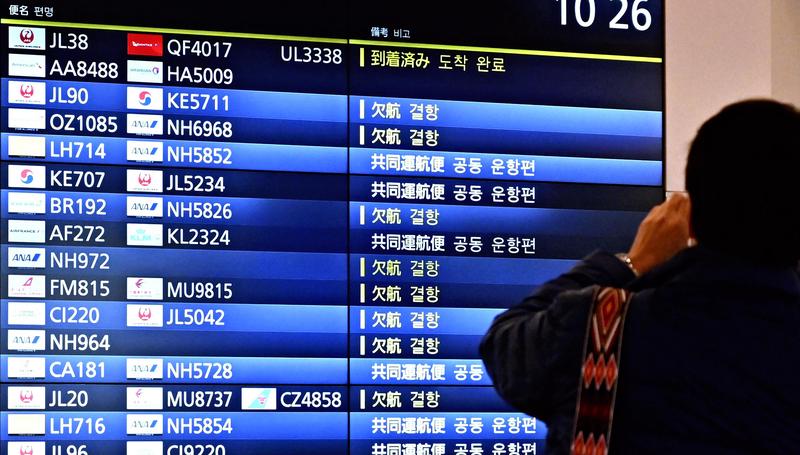
The government is set to adopt all possible means by taking containment measures at ports and airports as well, while calling on all schools to close through the end of spring break.
These actions will paralyze the movement of people between Japan, China and South Korea, which is certain to deal a serious blow to the domestic economy, but the government is urged to make further efforts to implement containment measures as soon as possible.
Abe's foreign diplomacy
"The nation is now being tested while the infection has spread in various countries," Abe said Thursday at a meeting of the government task force to combat the virus. "It is essential that we need to take strong actions including containment measures without hesitation as well as beefing up domestic measures."
Regarding the entry controls targeting China, the source of the outbreak, the United States announced its policy on Jan. 31 to prohibit in principal the entry of foreigners who had stayed in China in the two weeks prior to their arrivals.
Japan, for its part, began to reject only the entry of foreigners from China who had been in Hubei Province starting Feb. 1, and Zheijiang Province on Feb. 13. There is an undeniable sense that the government's policy about the entry restriction was one step behind other countries.
The planned visit by Chinese President Xi Jinping as a state guest that was slated for early April was believed to have significantly affected Japan's late move about the entry restriction.
Abe, who aims to improve Japan-China relations, has prioritized Xi's visit to Japan, as he believes it is a culmination of his administration's signature foreign policy.
"We should not have thrown cold water on the planned state guest's visit to Japan by expanding entry restrictions on foreigners," said a source close to the Japanese government said.
The Chinese government started banning overseas group tours on Jan. 27, which significantly decreased the number of Chinese tourists to Japan. This apparently moved Japan to impose the entry restrictions.
Short notice
A plan had surfaced at the Prime Minister's Office to fundamentally strengthen measures to restrict entry from China when the full-scale spread of the virus infection occurred in the nation after mid-February, making it doubtful that Xi would visit Japan.
Many Liberal Democratic Party members, mainly conservative lawmakers, have claimed from the start that the government should adopt a stronger entry restriction targeting China.
Opposition parties and foreign media also have criticized the government, saying Abe failed to take strict containment measures out of consideration to China.
In late February, Abe told aides, "Some people say it is better to halt the entry of Chinese, but I heard that the rise in the number of patients [infected with the virus] has been decreasing," a source close to the prime minister said. Abe was apparently weighing whether to restrict Chinese citizens from entering Japan, according to the source.
In negotiations with China at a later date, the postponement of Xi's visit was decided.
In addition, Shanghai and Beijing started in March to quarantine people from Japan and other countries, which led the Japanese government to conclude it could take similar measures.
Abe's announcement on the entry restriction came only about three hours after the official announcement of the postponement of Xi's visit.
The government decided to suspend visas already issued to visitors from China and South Korea, but shelved a plan to ban the entry into Japan based on the Immigration Control and Refugee Recognition Law, which allows Japan to refuse entry to people who are likely to harm the country's interests.
"The government can decide on whether to issue a visa, exercising its own discretion, based on Japan's foreign policy -- which is more flexible than applying the law," a high-ranking government official said.
Read more from The Japan News at https://japannews.yomiuri.co.jp/