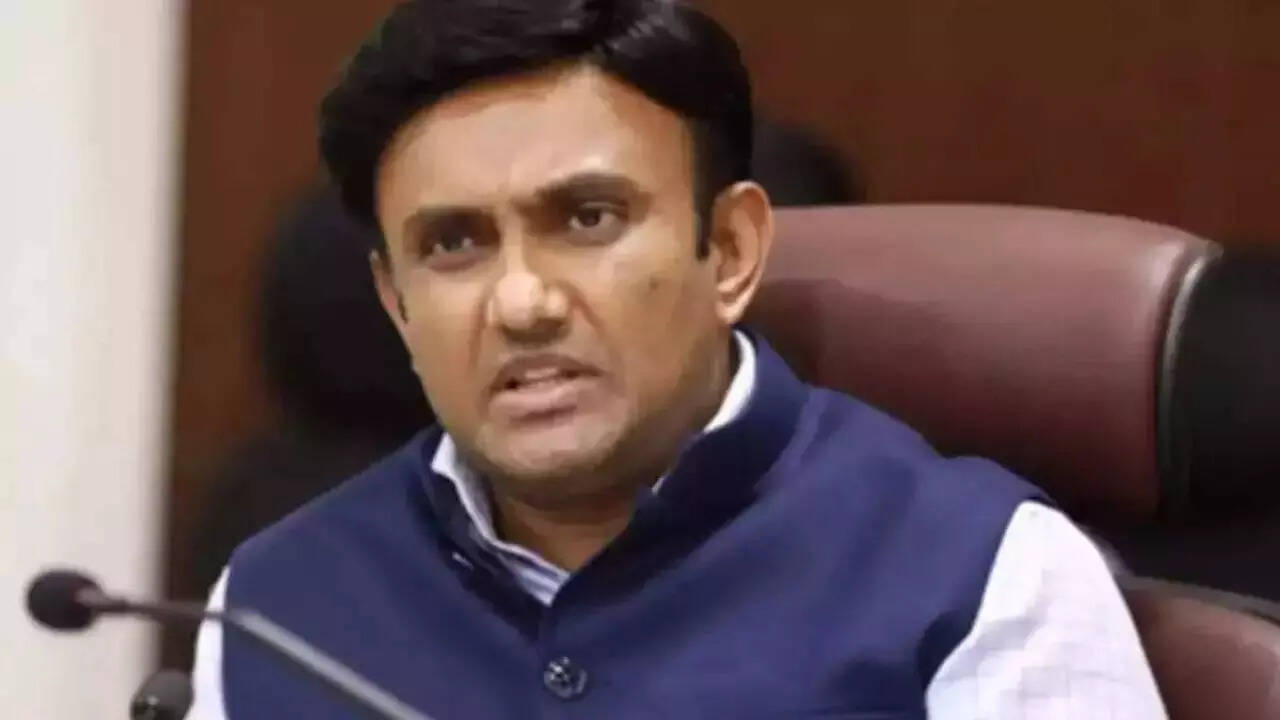
BENGALURU: Health and medical education minister K Sudhakar stressed on the need for management training among government doctors and health professionals. He said officials at the administrative level - district health officers, medical college deans, district surgeons, state programme officers and joint directors - should be trained in management.
The minister was inaugurating a programme - Professional certificate in hospital management - launched by the Indian Institute of Management, Bangalore on the occasion of Doctors' Day.
The 12-month online-synchronous programme is a blend of Massive Open Online Courses (MOOCs) by IIMB faculty and live online sessions by industry experts.
Sudhakar said he understood and appreciated the role of learning and training as he had worked in a primary healthcare centre and seen lacunae in the system. "I know that corporate hospitals are run professionally because they have better managers. Investment-wise, the government spends a lot on infrastructure and maintenance, but the private sector performs better. That's why I want all doctors in government hospitals to be trained in administration," he said, promising that he will nominate many government doctors to the hospital management programme.
Dr Devi Shetty, chairperson, board of governors, IIMB, said: "This course is especially relevant for a country like India where 80 per cent of healthcare is delivered, not by corporate chains in cities, but by 30-bed and 50-bed nursing homes in tier II and tier III cities. Doctors running such nursing homes need help in management and administration. They think they are successful because they have money to pay salaries at the end of every month but, such businesses are always on the brink."
Manjunath: 'IDIOT' syndrome piling pressure on docs
The 'IDIOT' (Internet Derived Information Obstruction Treatment) syndrome is making treatment of people, especially educated ones, an uphill task, said Dr CN Manjunath, director, Sri Jayadeva Institute of Cardiovascular Sciences & Research. Doctors describe the syndrome as when people blindly trust medical information available online and decided to stop their treatment abruptly without consulting their doctor. Dr Manjunath was speaking at a programme organised to honour senior doctors and their family members on the occasion of Doctors' Day.
He said with the latest innovations in technology, expectations of people and patients on doctors are increasing. "People are finding information about their ailments with the help of technology available on their gadgets. Amid this tech explosion, patients and their assistants are also expecting a lot from their doctors. When people rush to them with unrealistic expectations, doctors are overwhelmed. This makes it imperative for them to not only have technical and professional skills but also that of communication," said Dr Manjunath.