A government panel on infectious disease control believes the early detection of small clusters of people infected with the new coronavirus will be key to preventing infections from spreading, and is calling for young people to exercise restraint in their behavior.
This is a Japanese-style approach to dealing with the virus, different from those of China and Singapore, which have restricted movements uniformly and are monitoring personal behavior.
Will the Japanese prevention method be effective?
Clusters without context
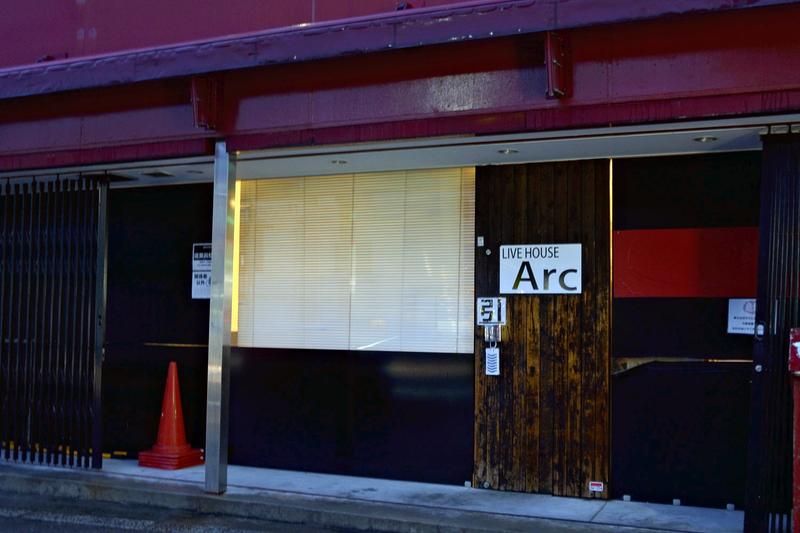
"The first infected person in the prefecture has been confirmed. We know the patient is a woman in her 40s who attended a music concert at a venue in Osaka," said Ehime Gov. Tokihiro Nakamura at an extraordinary press conference Monday.
The woman was one of at least 100 people who attended a performance on the evening of Feb. 15.
Infections were also discovered Tuesday in places including Kobe. Osaka Gov. Hirofumi Yoshimura expressed a sense of crisis, saying, "There is a possibility [the virus] spread due to the large number of people who gathered in a closed space."
Clusters have occurred in Japan around a pleasure boat in Tokyo and a sports gym in Aichi Prefecture. In addition to the music venue, other possible clusters include one that originated in temporary tents at the Sapporo Snow Festival in Hokkaido.
Experts have been challenged by the behavior of the virus, which appears to infect clusters of people in places without any apparent context.
However, according to Tohoku University Prof. Hitoshi Oshitani, who is a member of the Health, Labor and Welfare Ministry's cluster control group that is examining infection pathways in different places, "If we can find and respond to these clusters quickly, it will stop the chain of infection."
This is because the characteristics of how the virus spreads have gradually become more clear.
Young people 'key'
An analysis of 110 infected people in 10 locations including Tokyo, Hokkaido, Aichi and Kanagawa prefectures, showed that about 80 percent, or 83 people, did not infect anyone else.
Yet of the remaining 27 people, at least one person from the pleasure boat and another from the gym spread the virus to around 10 people each. Both were in closed spaces with poor ventilation and were in close contact with an unspecified number of people.
Hokkaido had 79 reported infections as of Tuesday, with 77 being residents of the prefecture. However, the estimated number is about 940 cases.
"It's highly likely that young people in their teens to 30s, who would have mild symptoms even if they are infected, are spreading [the virus] without realizing they are infected," said Shigeru Omi, who is vice chair of the government's expert panel.
The expert panel is calling for early detection of clusters, for understanding of the behavioral history of infected people, for people who have been in close contact with an infected person to refrain from going out, and for restricting the use of facilities that generated clusters.
In addition, to cut off "invisible clusters" spread by young people, "The key is for young people to avoid places with poor ventilation and where they talk with others at close range," according to the panel.
WHO's recommendation
A health ministry official said: "The most powerful means of combating infectious diseases is to stop person-to-person contact and moving around. But there is no law in Japan that can control the movement of uninfected people."
The government is considering amending a special measures law to allow governors of prefectures to "request" that people refrain from going out, though this will not be compulsory, in case the prime minister declares an emergency due to the rapid spread of infections.
The prevention measures laid out by the expert panel are aimed at maintaining social functions as much as possible.
"It doesn't restrict the movement of people," Omi said. He emphasized that he would like to use a "Japanese-style" approach to narrow down the people and environments at risk, and cut off likely routes of infection.
The World Health Organization also recommends a cluster-focused response. Kiyosu Taniguchi, director of clinical research at National Mie Hospital and an expert in the epidemiology of infectious disease, said, "It's possible that if we respond properly to a cluster, we will stop it."
Singapore puts personal data online
China has taken unusual steps to combat the coronavirus, including quarantining the entire city of Wuhan, Hubei Province, which has a population of about 11 million people.
On Jan. 23 it closed the airport and high-speed railway station to keep residents from leaving the city. Since mid-February, residents' movements around the city have been strictly controlled, with some being banned from leaving their housing complexes.
Of the 125 new infections in China reported Monday, only 11 were from outside Hubei Province. It seems that the blockade has been effective in preventing the spread of the virus.
President Xi Jinping himself is said to have decided to cut off Wuhan. The Xi administration has begun to emphasize the "superiority" of their one-party system under the Communist Party, as even if people's behavior is restricted, the government can take hard-line measures if necessary.
In Singapore, where 110 infections were reported Tuesday, the government decided on Feb. 18 that the Health Ministry would start posting personal information about infected people on its website.
This includes records of where they visited and other behavior. Although the infected people are not identified by name, the data includes their age, sex, nationality and even address excluding the housing complex room number.
Although the move may appear heavy-handed, a WHO official said Singapore was "thoroughly tracking the path of infection."
The posting of this data has helped the ministry receive additional information from the public.
Read more from The Japan News at https://japannews.yomiuri.co.jp/