The government is struggling with whether or not to extend the so-called "priority measures" aimed at preventing the spread of the coronavirus currently in effect in 10 prefectures when they expire on July 11.
With infections spreading again in Tokyo and elsewhere, the momentum for keeping the measures in place is gaining strength. By doing so, however, that can't help but effect the hot-button issue of maximum number of spectators allowed at the Tokyo Olympics.
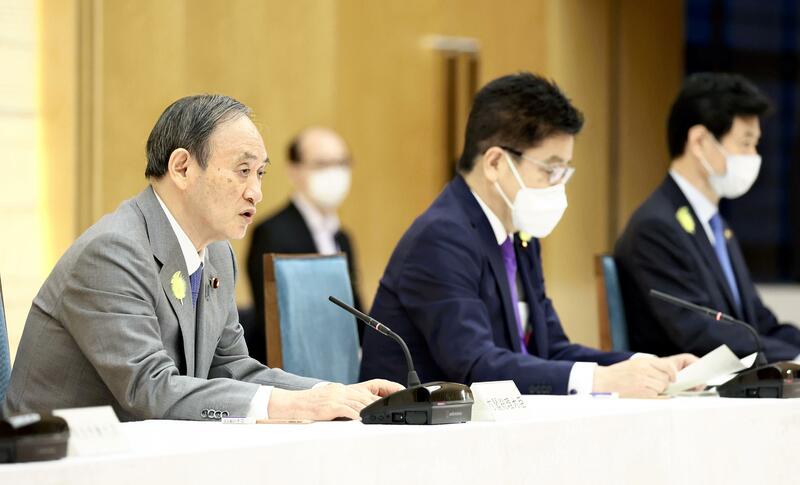
"The number of new infections remains at low levels in many regions, but is on the rise in Tokyo," Prime Minister Yoshihide Suga said at a meeting Wednesday evening of Cabinet members concerned with the coronavirus held at the Prime Minister's Office. "We will implement thorough countermeasures with a high sense of urgency and take necessary measures flexibly based on close observation of the situation."
The government has already factored in the fact that the number of newly infected people in Tokyo and other areas will increase. On June 21, a state of emergency ended in seven prefectures including Tokyo and Osaka, replaced by the priority measures. Some restrictions were eased, such as allowing restaurants and bars to serve alcohol, but it also led to more people going out, particularly in the major cities.
Even so, the number of newly infected people in Tokyo has increased by a larger margin than that in Osaka and elsewhere. As of Wednesday, it has raised Tokyo to Stage 4, the most serious alert level. The figures in neighboring Saitama, Chiba, and Kanagawa prefectures are also on the rise. There is widespread feeling within the government that the four prefectures will have no choice but to extend the priority measures beyond July 11.
-- High hopes for vaccine
Amid this situation, the government is pinning its hopes on vaccinations as its "ace in the hole" in the fight against the coronavirus.
The government is expected to achieve its target of completing vaccinations for all elderly residents by the end of July. At the Cabinet meeting, the prime minister boasted that "about 60% of elderly have received one dose of the vaccine."
If the elderly, who are more likely to suffer severe symptoms from the coronavirus, become less susceptible to infection, it will prevent putting a strain on the medical system that occurred during surges in the past.
Also brought up at the meeting was a forecast that the number of newly infected people in Tokyo may reach more than 1,000 per day. Nevertheless, Yasutoshi Nishimura, minister in charge of economic revitalization, told reporters after the meeting, "With vaccinations now picking up, the number of seriously ill patients can be kept quite low."
However, the opening of the Tokyo Olympics on July 23 is fast approaching.
The organizing committee and others have decided to limit the number of spectators at competition venues to 50% of capacity or 10,000 people, whichever is lower. According to the government's standards for holding large-scale events, such limits are applied for about a month after the lifting of the priority measures.
However, this is based on the assumption that the priority measures will end on July 11 as scheduled. If they are extended, the limit on the number of spectators becomes 5,000 or less.
-- Hospital bed occupancy rate
In line with the rising number of infections, the occupancy rate of hospital beds in Tokyo is slowly increasing. The rate was 21% on June 17, the day the government decided to end the state of emergency in Tokyo; on June 29, it was at 24%.
Despite Nishimura's optimism, some in the government are voicing concern about what lies ahead.
"If we extend the priority measures, the situation afterwards may make us have to declare a state of emergency yet again," said one member at the meeting.
Another state of emergency declaration would make "no spectators" a realistic option at the Olympics.
Read more from The Japan News at https://japannews.yomiuri.co.jp/