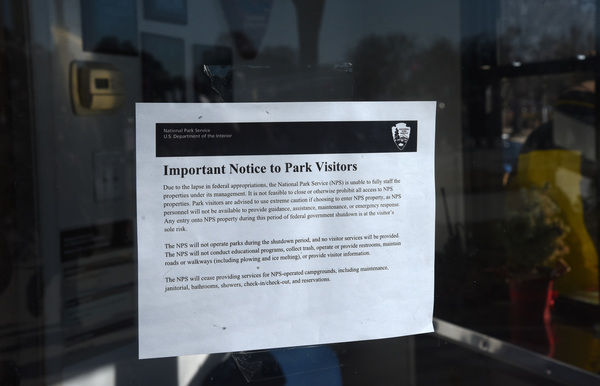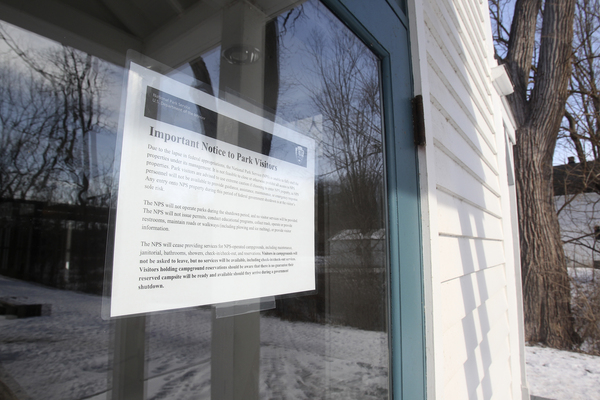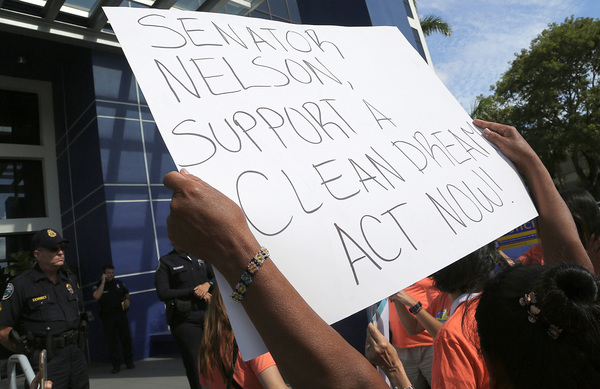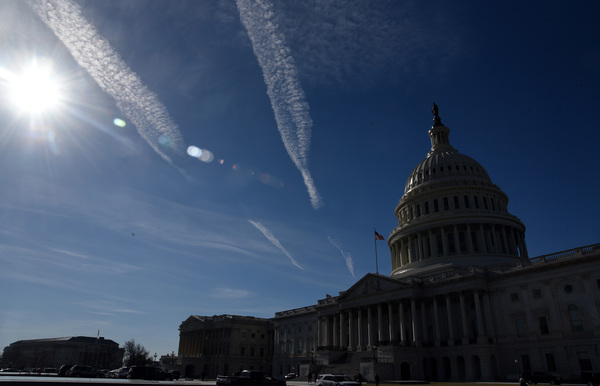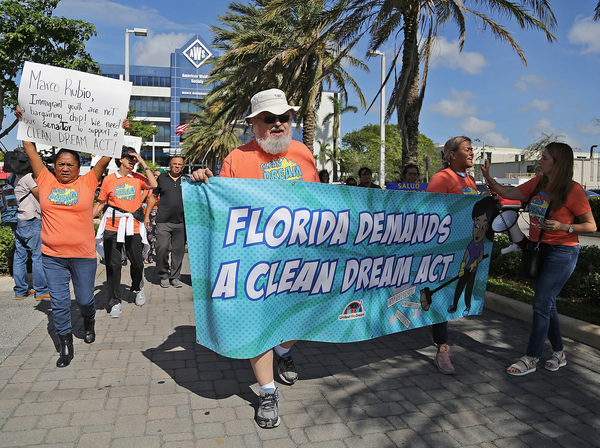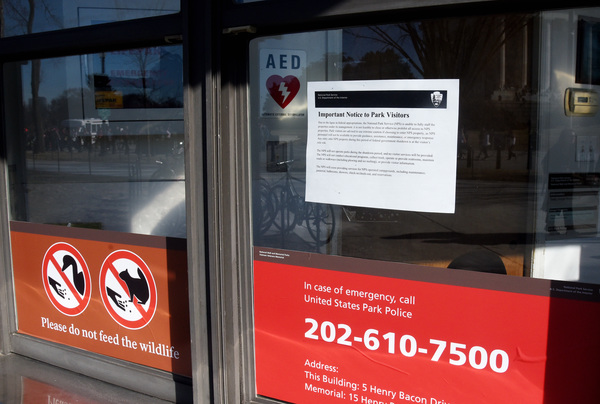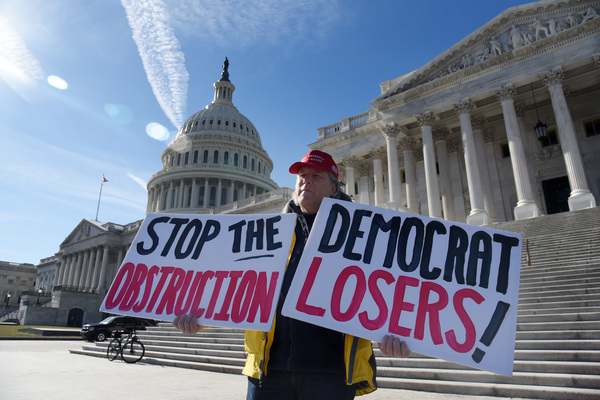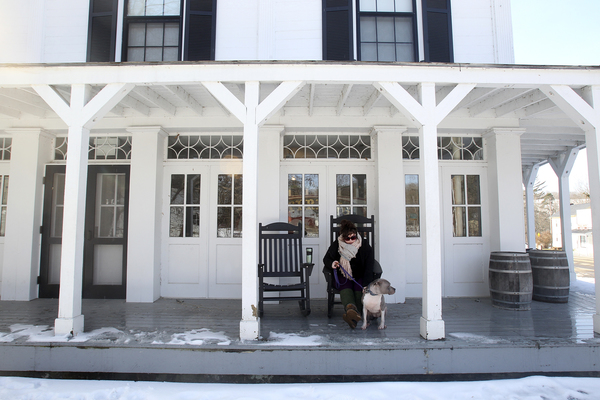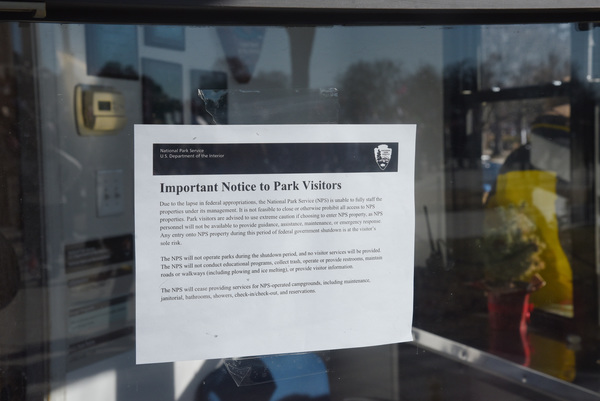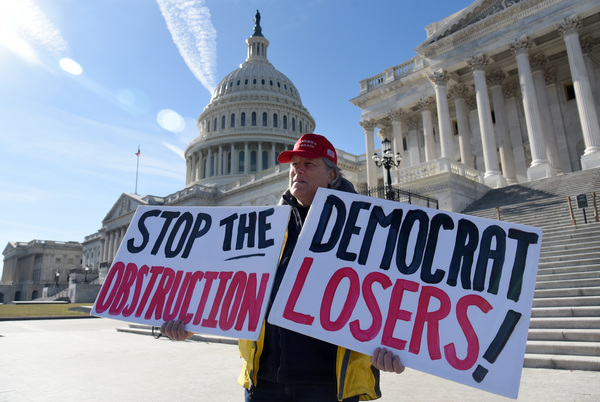
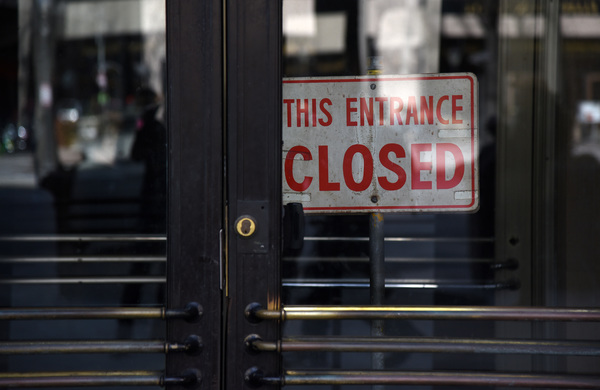
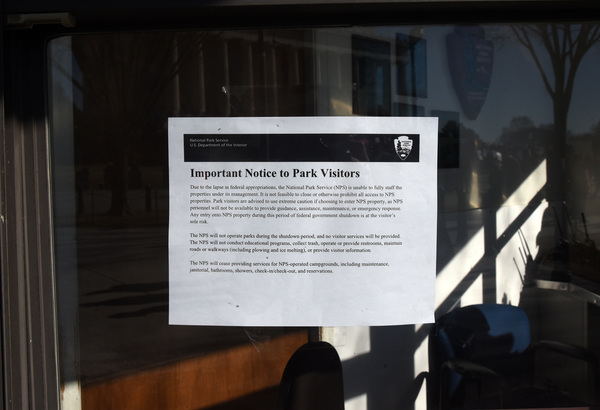
WASHINGTON _ The American public woke up to a sobering reality Saturday _ the first partial government shutdown in five years after Democrats and the Republicans who control both houses in Congress could not make a deal with President Trump to keep the government open before a midnight deadline expired.
Lawmakers in both parties said they planned to spend the morning pushing plans for new stopgap measures lasting either weeks or days, continuing a tightrope process that had been going on for months, and finally broke down as midnight struck Friday.
House Democrats and Republicans planned separate meetings in the morning. But the focus of the action remained in the Senate, where Majority Leader Mitch McConnell, R-Ky., was trying to hatch a plan that could win 60 votes.
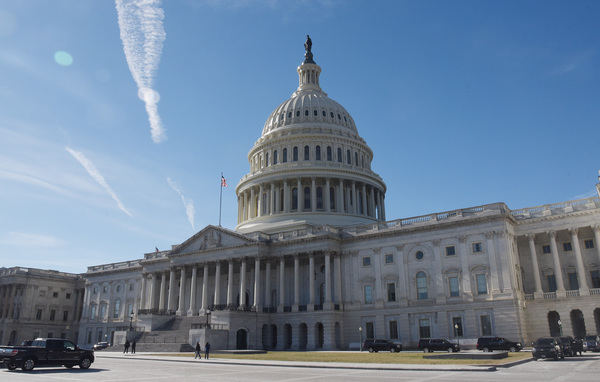
Lawmakers from both chambers remained in town, forgoing a planned recess. Trump delayed a weekend trip to his beachfront resort Florida, and may have to skip a political fundraiser Saturday night _ where a pair of tickets started at $100,000 _ at Mar-a-Lago to celebrate his first year in office.
"This is the One Year Anniversary of my Presidency and the Democrats wanted to give me a nice present," posted on Twitter early Saturday.
The effects of the shutdown may not be felt immediately, given that many government employees do not normally come to work on a weekend.

The Smithsonian's 19 museums in Washington and New York and the National Zoo said they would remain open, at least for the weekend. The nation's military will stay on duty, although their pay may be delayed, and veterans' services could be disrupted.
Barclays estimated that each week of a shutdown shaves 0.1 percentage point from quarterly economic growth. But because it is early in the quarter, the economy could make up for some, or all, of that loss before the end of the quarter, especially if the shutdown is brief.
Lawmakers from both parties face serious political risks with a shutdown of any length, but especially a prolonged one.
The way forward remains uncertain. Any deal must work around Trump's upcoming State of the Union address on Jan. 30, when both sides hope to avoid a shutdown hanging over what is usually an agenda-setting presidential speech to Congress.
Democrats were seeking a shorter deal with an agreed-upon outline for negotiations. Republicans want to push the next deadline until after the president's speech, with limits on immigration talks.
Five of the most vulnerable Senate Democrats in this fall's midterm elections sided with Republicans late Friday in a vote that would have paved the way for a deal to keep the government open, while four Republicans voted against it.
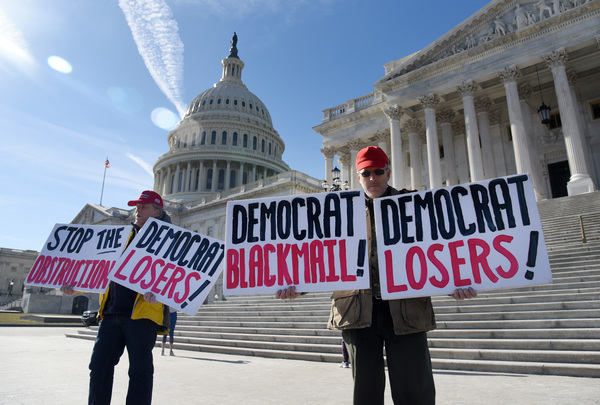
Even though the vote was 50-49, it was not enough to reach the 60-vote threshold needed to end debate for a final vote.
Late Friday night, lawmakers engaged in bipartisan talks for nearly two hours.
At one point, 30 senators _ Republicans and Democrats _ gathered around the desk of Minority Leader Charles E. Schumer, D-N.Y., as Sen. Lindsey Graham, R-S.C., explained his proposal for another stopgap measure, for three weeks until Feb. 8, to allow talks to continue.
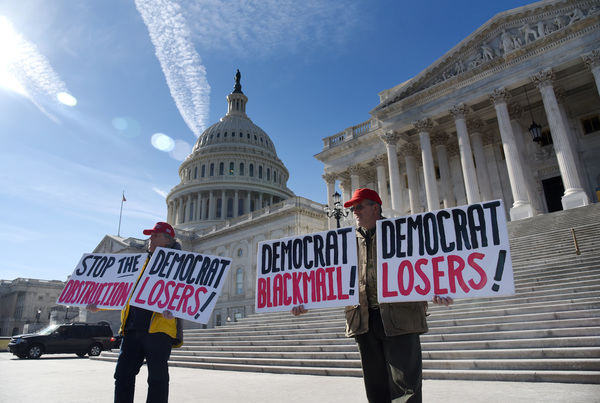
But Democrats objected to that plan when McConnell tried to bring it forward well past midnight. They don't believe negotiations will produce a better outcome after Friday's talks ended without establishing parameters for debate.
That forced the Republican leader to set up the days-long procedure necessary to break their filibuster. House and Senate leaders advised members to stay in town, with additional votes possible on Saturday or Sunday.
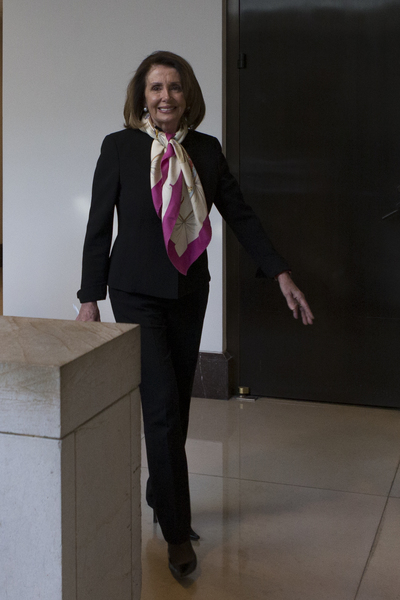
Before the shutdown, the promise of a deal rose when Trump invited Schumer to the White House for a meeting Friday afternoon. Last year, the two, with House Minority Leader Nancy Pelosi, D-Calif., struck an immigration bargain that stunned Republicans.
Over lunch Friday in the Oval Office, Schumer thought talks were progressing toward a deal.
The two discussed the contours of a possible deal, and Schumer agreed to the higher military funding the Republicans have wanted.
In what Schumer later said was a difficult decision, he also considered the possibility of Trump's full border wall request, well beyond the $2.6 billion the administration had initially requested for the fiscal year that was included in the Graham-Durbin immigration proposal.
"In the room, it sounded like the president was open to accepting," Schumer told the Senate. "But what has transpired since that meeting in the Oval Office is indication of the entire chaotic process the Republicans have engaged in."
����
Staff writers Brian Bennett in Shannon, Ireland, and Jim Puzzanghera in Washington contributed to this report.