Afternoon summary
- Michael Gove has used his first speech as justice secretary to say that wealthy law firms should contribute more to ensure that the poor have access to justice. In a subsantial speech, Gove said the “two nations” nature of the legal system meant the poor were losing out. Wealthy law firms should contribute more, either by doing more pro bono work or by paying a levy, he suggested. A proposal like this would have been dismissed by the Tories as undiluted socialism if Ed Miliband had suggested it, but Gove presented it as emblematic of David Cameron’s “one nation” Conservatism. Gove also said the Ministry of Justice should economise by closing courts (and ultimately having fewer judges), and that court procedure needed radical modernisation. Although critics argued that his proposals would not undo the damage caused by the government’s legal aid cuts, many figures in the legal establishment welcomed his tone, which was constructive and, at times, even deferential towards lawyers and the judiciary. Jeremy Robson, a Nottingham Law School lecturer, said: “There does seem to be a clear change in message from that of his predecessor. Where Chris Grayling spoke of ‘fat cat lawyers’, Gove speaks of the ‘scrupulous patience, intellectual diligence and culture of excellence which characterises the work of those solicitors and barristers’.” Gove also confirmed that the government could leave the European convention on human rights. (See 2.14pm.)
- Zac Goldsmith, the Conservative MP, has confirmed that he will seek his party’s nomination for mayor of London. (See 12.47pm.)
- Downing Street has confirmed that ministers want to change the way child poverty is measured. (See 1.28pm.)
- Labour has released figures suggesting that union members who become affiliated supporters may have little influence in the Labour leadership contest. (See 3.57pm.)
-
Lord Janner has been accused in Parliament of being a serial abuser who attacked children inside the Palace of Westminster. The Labour MP Simon Danczuk made the claim in a Westminster Hall debate. Earlier this year the Crown Prosecution Service said it would not charge Janner over these allegations because of his health, but his family insist he is innocent.
That’s all from me for today.
Thanks for the comments.
Updated
As the BBC reports, Bill Waddington, chair of the Criminal Law Solicitors’ Association, has criticised Michael Gove’s speech as “whitewash, pure and simple, covering over the ever widening cracks in the system for which this government is solely responsible.”
Waddington explained:
Those victims who do get their day in court face the prospect of delay due to court closures, CPS failings, over-listing and many of them have to experience cross examination by an unrepresented defendant who is ineligible for representation due to legal aid cuts. All of this is due to this government’s policies over the last five years and there appears to be no sign of reversal.
But Tony Cross QC, chair of the Criminal Bar Association, was more positive. He said:
Access to justice with minimal delays in a fully functional criminal court system delivered by the very best qualified lawyers is as much a public right as access to healthcare within a functioning NHS delivered by the best doctors and nurses. We welcome the justice secretary’s understanding of the need to make our system of court hearings more efficient whilst ensuring safeguards remain in place to ensure individuals subject to the criminal law process have the best access to justice.
A Labour leadership election round-up
Here is a Labour leadership election round-up.
- Labour has released figures suggesting that union members who become affiliated supporters may have little influence in the Labour leadership contest. The statistics show that around 13,000 people have chosen to take part in the leadership contest by becoming registered or affiliated supporters. Some 9,115 people have paid £3 to become registered supporters, but just 3,788 union members who pay a political levy have chosen to sign up as affiliated supporters. This figure suggests the influence of the unions in the contest may be much less than some people expected (a Unite official reportedly said the union was signing up affiliated supporters at the rate of 1,000 a day), although people can carry on signing up as registered or affiliated supporters and vote until 12 August. Voters in these two categories are vastly outnumbered by the 246,469 people who will vote as party members. As LabourList points out, this figure includes around 45,000 people who have joined since the election.
Let’s again, go back to some numbers: reports that a quarter of a million people joined the anti-austerity march last weekend proved wide of the mark - that would have filled not just Parliament Square but Whitehall, Trafalgar Square and the Strand - and the most optimistic figure of total attendees, including the ones who sloped off for a pint or a wedding halfway through, is probably around 25,000. Let’s say that just 10,000 of them can be convinced that the Labour party, even one led by Corbyn, is worth the candle. Then they each need to recruit five friends. If just one of those five friends recruits another friend, Corbyn could be Labour’s next leader.
These are not numbers beyond a decent organiser. It may be that the Corbyn campaign can’t do it, but doesn’t mean not it’s not doable. The thumping defeat envisaged by members of the parliamentary Labour party when they put Corbyn on the ballot could turn into a surprise win for the Islington North MP.
Later, at the insistence of his parents, he headed to Cambridge University to study English. But he failed his first interview there because he didn’t realise you “had to have these slightly arrogant-sounding opinions about books”. Since then, Burnham has repeatedly told how he has always waited for the “tap on the shoulder that says: ‘Sorry mate, you don’t fit in.’”
He met Dutch wife Marie-France van Heel – known as Frankie – at university. After they had been dating a while, she appeared on ITV’s Blind Date because the show’s producers held auditions at their college. Burnham said in 2008: “I didn’t mind at the beginning but had second thoughts when she got on the show. I watched the TV from behind the sofa through my fingers. Luckily for me, she preferred me.”
Stricter rules on how loans are used and how different campaigns groups collaborate are needed before the EU membership referendum, the Electoral Commission has told UK ministers.
The commission urged the UK government to introduce clear controls on loans and credit facilities for campaigners where each loan or facility is from a permitted source and each worth over £7,500 be reported.
The commission, which confirmed the total spent during the final 16 week campaign last summer hit £6.66m, with donations to the no campaign reaching £3.69m and the yes side £2.6m, added that tighter rules on different groups collaborating were needed.
The pro-UK group Better Together had complained to the commission during the campaign, without success, about yes campaign groups sharing resources, staff and materials. Campaigners should now be required to set out after a referendum who they worked with and how much they spent.
The commission added that other investigations into suspected accounting breaches with the Crown Office into the pro-independence blog Wings over Scotland, and Better Together, were still ongoing. The commission’s civil inquiry into Labour for Independence is continuing.

Ladbrokes now have Zac Goldsmith as the favourite to win next year’s London mayoral election following the confirmation that he will seek the Tory nomination. (See 12.47pm.) Here are their latest odds.
2/1 Zac Goldsmith
5/2 Tessa Jowell
10/3 Sadiq Khan
12/1 David Lammy
16/1 Syed Kamall
25/1 Diane Abbott
33/1 George Galloway
33/1 Michael Bloomberg
50/1 Stephen Greenhalgh
50/1 Vince Cable
50/1 Simon Hughes
50/1 Gareth Thomas
66/1 Russell Brand
100/1 Christian Wolmar
100/1 Caroline Pidgeon
100/1 Ivan Massow
100/1 Andrew Boff
100/1 Sol Campbell
Sadiq Khan, the former shadow justice secretary and now a candidate seeking the Labour nomination for mayor of London, has posted this about Michael Gove’s speech on Twitter.
Pleased Gove is alarmed at 2-tier justice system but wasn't he a Minister in the last Government who cut #legalaid? http://t.co/8QTlD4K4JF
— Sadiq Khan MP (@SadiqKhan) June 23, 2015
Here’s a Guardian video with Michael Gove explaining how he wants to modernise the court system.
Gove says there are too many judges in court system
Michael Gove was on the World at One talking about his speech, and other issues. Here are the key points.
-
Gove confirmed that the government had not ruled out withdrawing from the European convention on human rights. Asked if this was a possibility, he replied: “Absolutely”. But it was not something the government wanted to do, he said.
We don’t want to. Neither the prime minister nor I nor the home secretary want to withdraw from the European convention on human rights ... What I’m interested in is making sure that we have the right system for individuals from this country to have their liberties protected.
- He said that his plan to close courts would eventually lead to the number of judges being cut too. Asked if the number of judges would go down, he replied: “Ultimately - but we’ve got to manage the way in which we get to that process.”
-
He confirmed that his call for rich law firms to do more to help the poor get access to legal advice did not necessarily just mean getting lawyers to do more work pro bono. “It is not only through the provision of pro bono work that some of our wealthiest law firms can contribute to making sure that we have better access to justice,” he said, in a reference to the idea that a levy could be imposed on them. Gove may have noticed that the idea of compensating for legal aid cuts by getting more rich lawyers to work pro bono has gone down badly. This is from the lawyer and legal blogger David Allen Green.
Glaring problem with asking City lawyers to do more pro bono work is that most City lawyers clueless in legal areas where need is greatest.
— Jack of Kent (@JackofKent) June 23, 2015
You need properly funded lawyers in the area where people need legal advice, not Hugo from Mergers dabbling in an adoption dispute.
— Jack of Kent (@JackofKent) June 23, 2015
Most City lawyers would frankly not have a clue outside their areas of expertise. https://t.co/GHF3vDU88p
— Jack of Kent (@JackofKent) June 23, 2015
- Gove said that he agreed with the judiciary that an extra £700m needed to be spent to modernise the court service. The Treasury would provide the funding, he said, but they would want to ensure the business case for it was robust.
-
He said his memo to civil servants about correct English had prompted Stephen Fry to send him a text correcting his own English.
The lawyer and legal blogger Carl Gardner says that Michael Gove’s plan to get more rich law firms to do more to help people get access to justice is similar to an idea floated by Geoffrey Bindman two years ago.
I wonder if Michael Gove has in mind the sort of levy on firms proposed by Geoffrey Bindman QC two years ago: https://t.co/DJmZbWSeDU
— Carl Gardner (@carlgardner) June 23, 2015
My colleague Owen Bowcott has filed his story on Michael Gove’s speech. He says Gove could legislate to force rich legal firms to contribute to legal aid.
Signalling a radical approach, the justice secretary pledged that those who make the most money out of the courts would be required to hand back additional benefits and expertise to help improve what he described as a two-nation justice system where the wealthy access a “gold standard” service others cannot afford.
Gove did not spell out how such contributions will be extracted – whether in terms of payment or pro bono work – but indicated legislation could be involved ...
Gove said he did not want to legislate but acknowledged it would be a possibility if necessary. There have been recent moves in some US states to impose a compulsory number of pro bono hours on lawyers.
Some proposals – for what may be termed a lawyers’ levy – have been drafted but he said he wanted to discuss them initially with the legal profession. If there was resistance, he added, then “we can make the case publicly”.
No 10 lobby briefing - Summary
Here are the main points from the Number 10 lobby briefing.
-
Ministers discussed changing the way child poverty is measured at cabinet this morning ahead of the publication on Thursday of figures expected to show that, using standard definitions, it is increasing. The prime minister’s official spokeswoman said Nicky Morgan, the education secretary, Oliver Letwin, the Cabinet Office minister, and Iain Duncan Smith, the work and pension secretary led a discussion on child poverty that looked at whether the government was using “the right measures”. This was a commitment in the Conservative manifesto, she said. The manifesto said:
We will work to eliminate child poverty and introduce better measures to drive real change in children’s lives, by recognising the root causes of poverty: entrenched worklessness, family breakdown, problem debt, and drug and alcohol dependency.
The spokeswoman said that David Cameron talked about problems with the way poverty is measured in his speech yesterday; for example, she said, child poverty fell during the recession, but that was because overall incomes were falling, and poverty is a relative measure. At cabinet there was reference to the fact that poverty figures are coming out on Thursday, but the actual figures themselves were not discussed.
-
The spokeswoman said that Cameron wanted EU leaders to agree to hold technical talks on Britain’s EU renegotiation demands at this week’s summit and that this would be “an important step forward” for Britain. She said Britain wanted the technical talks, conducted by officials, to get underway this summer. Ministers saw the renegotiation as a four-stage process, and moving to technical talks would take the EU into stage two, she said.
There are stages in this process. The current phase we are in [involves] the prime minister having high-level political talks with leaders about why he wants to address these issues. Then there is the next phase, where we want to have talks at official level working through the substance. Then the leaders have to come back to it. [Then the public] will be able to make an informed choice in the referendum that will follow on whether they want to stay in or out [of the EU].
Number 10 has said it expects the technical talks to last “several months”. At today’s briefing the spokeswoman was asked to define “several”. She said she would think of it as “at least a handful”.
-
Theresa Villiers, the Northern Ireland secretary, will chair a meeting of political leaders in Northern Ireland on Thursday in an attempt to resolve a deadlock over welfare cuts. The situation in Northern Ireland was “very serious”, the spokeswoman said.
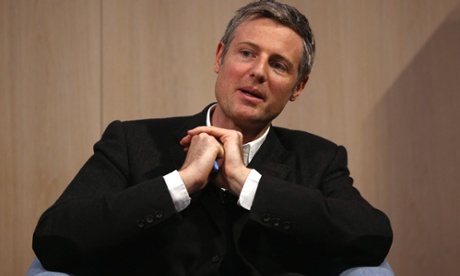
Zac Goldsmith to seek Tory nomination for London mayor
I’m back from the Number 10 lobby briefing. I’ll post a summary shorty.
In the meantime, the Evening Standard has revealed that Zac Goldsmith, the Conservative MP, has decided to seek his party’s nomination for London mayor. He said he would ballot his constituents to get their permission before he stood (he is fabulously wealthy, and can easily afford the £50,000 cost of the postal ballot), and today he is saying that, by a margin of four to one, they want him in the contest.
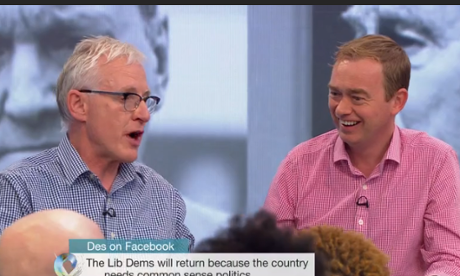
Norman Lamb and Tim Farron, the two candidates in the Lib Dem leadership contest, both appeared on Victoria Derbyshire’s BBC 2 show this morning. As the Press Association reports, they admitted they did not agree on assisted dying.
Assisted dying is the major dividing line between the two men fighting to become the next leader of the Liberal Democrats, voters were told.
In a televised debate, candidate Norman Lamb said he believed people with a terminal illness had the “right to decide” to end their life.
Lamb and opponent Tim Farron both conceded the party faced a major challenge trying to win back the trust of voters after five years in coalition.
During the discussion on BBC 2’s Victoria Derbyshire programme, Lamb said: “We agree on an awful lot. There are things we disagree on. Assisted dying is one where Tim, because of his faith and I totally respect that, takes a position.
“I fundamentally believe that it’s a liberal issue that if you, in a position of terminal illness, want to make a decision to end your life it should be you, not the state, that decides.
“I think that is a fundamental point about the rights of the individual against the state.”
Farron hit back, insisting his position was “more to do with the evidence” than his Christian beliefs.
He also defended his views on abortion, insisting that while he backed the current laws, “we need to constantly look at the science and medical advice”.
“What is acceptable and what is possible at one time can change five or 10 years on,” he added.
Lamb said he had apologised personally to his opponent after “shocking” claims emerged at the weekend that two members of his leadership campaign team breached party rules.
The allegations centre on the potential use of party membership lists to conduct negative polling against Farron.
I’m off to the Number 10 lobby briefing. I’ll post again after 12.30pm.
And Frances Crook, chief executive of the Howard League for Penal Reform, has posted her reaction to the speech on a blog. She says Gove should read today’s Guardian long read about the Red Hook model in the US.
[Gove] could look at what happens in New York. The Red Hook community court experiment was replicated in Liverpool but was abandoned because it was claimed to be too expensive. Part of the problem was that the Liverpool court was hobbled by an antiquated and bureaucratic sentencing structure that dished out excessively long community punishments that people cannot achieve. If we ask too much of people, they will fail. The first lesson from New York is that we should exact a penance that is proportionate, immediate and brisk.
The second lesson from Red Hook is that people should be treated with respect and an expectation of redemption. The court process should be the first step to change. At the moment the court is the start of a lifelong condemnation that ends in repeated reoffending.
Mr Gove will have a fight on his hands. There are vested interests in the court system that will resist change. I wish him luck.
Liam Fox, the Conservative former defence secretary, has praised Michael Gove’s speech.
Michael Gove speaks for many of us who worry about access to Justice - a very welcome speech @MoJGovUK @Conservatives
— Dr Liam Fox MP (@LiamFoxMP) June 23, 2015
Lord Falconer, the shadow justice secretary, has said people will be “bemused” by Michael Gove’s speech because government policies have actually reduced access to justice. He put out this statement.
People will be bemused by the sight of the Justice Secretary complaining of a two nation justice system.
Since the Tories took office access to justice has been all but dismantled for the poorest in our society. The number of social welfare cases being granted funding has plummeted, victims of domestic violence are struggling to get help, employment tribunal fees are a significant barrier to workplace justice and the essential safeguard that is judicial review has been severely restricted.
Labour has long called for the rights of victims of crime to be enshrined in law – so it is welcome that the government is finally waking up to this issue.
Instead of hand-wringing rhetoric he should get on with developing the evidence based cost effective solutions we need to improve access to justice for all.
David Cameron has paid tribute to Sir Chris Woodhead, the former Ofsted chief whose death has just been announced.
Chris Woodhead started a crucial debate on school standards and reform. Meetings with him were never dull. My thoughts are with his family.
— David Cameron (@David_Cameron) June 23, 2015
Michael Gove's speech - Summary
I have already summarised some of the key lines from Michael Gove’s speech. (See 9.09am and 9.35am). Here are the other points that emerged once the full text became available.
-
Gove said that he wanted top lawyers and law firms to do “much more” to ensure that the poor can access legal advice for free. Many lawyers already do pro bono work, he acknowledged. But he said he wanted to extend this, because the status quo was “not acceptable”.
The belief in the rule of law, and the commitment to its traditions, which enables this country to succeed so handsomely in providing legal services is rooted in a fundamental commitment to equality for all before the law. So those who have benefited financially from our legal culture need to invest in its roots.
That is why I believe that more could – and should – be done by the most successful in the legal profession to help protect access to justice for all.
I know that many of the most prestigious chambers at the Bar and many of the top solicitors’ firms already contribute to pro bono work and invest in improving access to the profession. Many of our leading law firms have committed to give 25 hours pro bono on average per fee earner each year.
That is welcome, but much more needs to be done.
Last year, according to a survey by the Law Society, 16% of solicitors in commerce and industry provided an hour or more pro bono work. When it comes to investing in access to justice then it is clear to me that it is fairer to ask our most successful legal professionals to contribute a little more rather than taking more in tax from someone on the minimum wage.
- He said that he wanted to close underused courts. He would prefer to save money this way than by cutting legal aid further, he said. (See 10.02am.)
- He said criminal court procedure needed “urgent” reform because the system was too inefficient. In some cases delays could be “life-destroying”, he said. Email and conference calls should be used more in court proceedings, he said. (See 9.35am.)
- He said that only 46% of criminal trials are “effective”, meaning they proceed as expected. Another 37% are “cracked”, meaning they concluded unexpectedly (for example, because of a last-minute guilty plea) and 17% are “ineffective”, meaning they need to be delayed. Last year there were more than 33,000 “ineffective” trials in the criminal courts, he said.
-
He said civil court proceedings needed to be modernised too, with more procedures taking place online.
Without our civil and family courts, or our tribunal services, our contracts are unenforceable, and individuals left with no recourse when deprived of their rights. But it astonishes businesses and individuals alike that they cannot easily file their case online. And it astounds them that they cannot be asked questions online and in plain English, rather than on paper and in opaque and circumlocutory jargon ...
Across our court and tribunal system we need to challenge whether formal hearings are needed at all in many cases, speed up decision making, give all parties the ability to submit and consider information online, and consider simple issues far more proportionately.
-
He said he would be reviewing the impact of the government’s criminal legal aid cuts.
I want to make sure that once these changes to criminal legal aid are in place, we will monitor their effects to make sure that justice and fairness are served.
That is why we will review the impact of these changes both on the quality of advocacy and access to justice and why I am determined to do everything I can to protect and enhance both.
Updated
Michael Gove is famous for antagonising teachers. But this speech shows that, when he wants to, he can also lay it on with a trowel, and flatter his professional audience with aplomb. This is what he said in the speech after he said he endorsed Sir Brian Leveson’s proposals for criminal justice reform. (See 9.09am.)
It is my intention to do everything I can to support the Lord Chief Justice, Sir Brian and his colleagues in their work. Not for the first time in our history, it is our judges who see most clearly what needs to be done to help the vulnerable, the overlooked and the victimised in our society.
Sir Chris Woodhead, former head of Ofsted, has died
The Press Association has just snapped this.
Former chief inspector of schools Sir Chris Woodhead, who had motor neurone disease, has died, friends said.
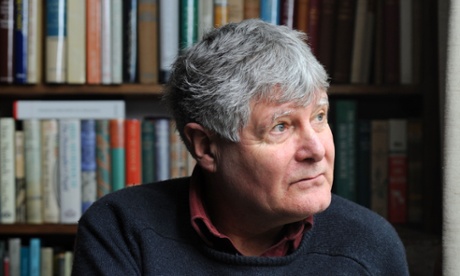
He had been ill for many years with motor neurone disease, but also more recently was diagnosed with cancer.
Any speech about delays in the legal system would not be complete without a reference to Bleak House, and Michael Gove duly obliged.
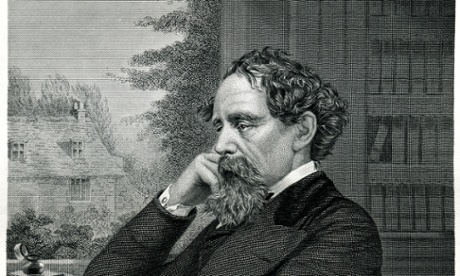
And thinking of those huge bundles, those snowdrifts of paper held in place by delicate pink ribbons, indeed thinking of the mounds of paper forming palisades around the hard-pressed staff who try to bring some sense and order to the administration of justice, it is impossible not to wonder what century our courts are in. Were Mr Tulkinghorn to step from the pages of Bleak House or Mr Jaggers to be transported from the chapters of Great Expectations into a Crown Court today, they would find little had changed since Dickens satirised the tortuously slow progress of justice in Victorian times.
Gove says he would rather close courts than make further cuts to legal aid
I’ve just received a full text of the speech.
Here is the bit where Michael Gove suggests closing courts that are underused. He says he would rather do this than make further cuts to legal aid.
We can reduce our dependence on an ageing and ailing court estate which costs around one third of the entire courts and tribunals budget.
Inevitably, that means looking again at the court estate. It is still the case that many of our courts stand idle for days and weeks on end. Last year over a third of courts and tribunals sat for less than 50% of their available hours (10am – 4pm). At a time when every government department has to find savings it makes more sense to deliver a more efficient court estate than, for example, make further big changes to the legal aid system.
I will post a full summary of the speech shortly.
Updated
It looks as if Michael Gove wants to sell off some courts.
Gove: the court estate needs looking at again. Too many sit idle. #betterjustice
— John Hyde (@JohnHyde1982) June 23, 2015
Gove: It makes more sense to deliver more efficient court estate than make further changes to legal aid. #betterjustice
— John Hyde (@JohnHyde1982) June 23, 2015
Big story emerging: Michael Gove signals he will seek to review court estate - likely to mean more possible closures. #betterjustice
— John Hyde (@JohnHyde1982) June 23, 2015
Here is some Twitter reaction to the extracts from the speech briefed overnight.
From Keir Starmer, the Labour MP and former director of public prosecutions
Gove right about 2 tier justice system which lets poorest down but honesty about responsibility of last govt needed. http://t.co/PaX7sdV5bv
— Keir Starmer (@Keir_Starmer) June 23, 2015
From Dinah Rose, the human rights barrister
The tone of debate is important. Unlike Grayling, Gove seems to think access to justice matters. http://t.co/PEkOJTLAub
— Dinah Rose (@DinahRoseQC) June 23, 2015
From Frances Crook, chief executive of the Howard League for Penal Reform
Good that Mr Gove wants to change courts. Two ideas: respectful courts & immediate short interventions http://t.co/WePpymUmeh
— Frances Crook (@francescrook) June 23, 2015
From David Allen Green, the lawyer and legal blogger
Astonishing and welcome to see justice policy on newspaper front pages and leading news sites, regardless of merits of Gove's speech.
— Jack of Kent (@JackofKent) June 23, 2015
Whatever one thinks of Gove, it is surely a Good Thing that justice policy is now more prominent in national politics.
— Jack of Kent (@JackofKent) June 23, 2015
The legal affairs correspondents aren’t used to speeches about court reform attracting so much interest. This is from John Hyde, deputy news editor of the Law Society Gazette.
Room is very busy with print and broadcast media for Michael Gove speech. BBC cameras here. Gove definitely a big 'draw' #BetterJustice
— John Hyde (@JohnHyde1982) June 23, 2015
Michael Gove is speaking now.
Michael Gove promises to protect the rule of law. pic.twitter.com/la8nETnW61
— Joshua Rozenberg (@JoshuaRozenberg) June 23, 2015
There is no live feed, and so I won’t be able to provide minute-by-minute coverage. I’ll post a proper summary when I’ve seen the full text, although I will post any highlights that come up on Twitter.
Michael Gove's speech - Extracts released in advance
I have already quoted the section from Michael Gove’s speech, briefed in advance, criticising the “two nations” legal system. (See 9.09am.)
Here are some other lines from the extracts released overnight.
-
Gove says the poor suffer the most from the failings in the legal system.
I have seen barristers struggle to explain why a young woman who had the courage to press a rape charge should have had to wait nearly two years before her case was heard. Reporting these offences in the first place must be a traumatic experience – made worse still by having to relive it in court two years later. I have watched as judges question advocates about the most basic procedural preliminaries in what should be straightforward cases and find that no-one in court can provide satisfactory answers. I have heard too many accounts of cases derailed by the late arrival of prisoners, broken video links or missing paperwork. I have seen both prosecution and defence barristers in a case that touched on an individual’s most precious rights acknowledge that each had only received the massive bundles in front of them hours before and – through no fault of their own – were very far from being able to make the best case possible.
The waste and inefficiency inherent in such a system are obvious. But perhaps even more unforgivable is the human cost. It is the poorest in our society who are disproportionately the victims of crime, and who find themselves at the mercy of this creaking and dysfunctional system. Women who have the bravery to report domestic violence, assault and rape. Our neighbours who live in those parts of our cities scarred by drug abuse, gangs and people trafficking. These are the people who suffer twice – at the hands of criminals and as a result of our current criminal justice system.
-
He says he wants the system to be more efficient, with more use of email and conference calls in court proceedings.
We urgently need to reform our criminal courts. We need to make sure prosecutions are brought more efficiently, unnecessary procedures are stripped out, information is exchanged by e-mail or conference call rather than in a series of hearings and evidence is served in a timely and effective way. Then we can make sure that more time can be spent on ensuring the court hears high quality advocacy rather than excuses for failure.
The extracts from the speech released in advance suggest his reform proposals today will focus on court procedure. It is not what, if anything, he will say about wider legal reform, such as the Tory plans to replace the Human Rights Act.
-
He praises the judiciary, including Sir Brian Leveson, for proposing reform. This is interesting because, when Leveson chaired his inquiry into press regulation, Gove had a public row with him over the importance of free speech. Today Gove is saying:
The case for reform is overwhelming. Which should not surprise us, because it is made most powerfully and clearly by the judiciary themselves. The Lord Chief Justice and his colleagues who provide leadership to our justice system are all convinced of, and convincing on, the case for reform. They have commissioned work which makes the case for quite radical change. Should anyone doubt the need for dramatic steps, Sir Brian Leveson’s report on the need for change in our criminal justice system makes the case compellingly. He argues with great authority and makes a series of wise recommendations. They need to be implemented with all speed.
-
He asserts his commitment to the rule of law.
The rule of law is the most precious asset of any civilised society. It is the rule of law which protects the weak from the assault of the strong; which safeguards the private property on which all prosperity depends; which makes sure that when those who hold power abuse it, they can be checked; which protects family life and personal relations from coercion and aggression; which underpins the free speech on which all progress – scientific and cultural – depends; and which guarantees the essential liberty that allows us all as individuals to flourish.
Updated
Many government ministers are inherently rather dull. But there are others who could generate a sparky row with an announcement about paperclips and - for better or worse - Michael Gove falls into that category. His conduct as education secretary was so combative and transformative that the teaching profession is still trying to recover (and it was telling that at a recent Labour candidates, the candidates were talking as if Gove was still running England’s schools). Now the legal establishment are going to get the full Gove experience because he has been reincarnated as lord chancellor and justice secretary, and today he is going to give his first proper speech in his new role.
Gove is calling for reform, and he’s made the splash in the Daily Telegraph.
TELEGRAPH: Gove: Justice system is failing victims #tomorrowspaperstoday #bbcpapers pic.twitter.com/th4YeUESTH
— Neil Henderson (@hendopolis) June 22, 2015
Some extracts from the speech were released overnight and you can read the Guardian preview here. Typically, not content with making a straightforward case about the failings of the legal system, Gove has appropriated David Cameron’s “one nation” rhetoric (more on that here) and he is presenting court reform as part of some great Disraelian mission. Here’s an extract.
Even as we can – collectively – take pride in the fact that our traditions of liberty are generating future prosperity we must also acknowledge that there is a need to do much more. Despite our deserved global reputation for legal services, not every element of our justice system is world-beating. While those with money can secure the finest legal provision in the world, the reality in our courts for many of our citizens is that the justice system is failing them. Badly.
There are two nations in our justice system at present. On the one hand, the wealthy, international class who can choose to settle cases in London with the gold standard of British justice. And then everyone else, who has to put up with a creaking, outdated system to see justice done in their own lives. The people who are let down most badly by our justice system are those who must take part in it through no fault or desire of their own: victims and witnesses of crime, and children who have been neglected.
I’ll be covering the speech in detail, and the reaction it generates.
Here is the agenda for the day.
Morning: Scottish government publishes its land reform bill.
9.30am: Michael Gove delivers his speech.
11.30am: Gove takes questions in the Commons.
12pm: Number 10 lobby briefing.
As usual I will be covering the breaking political news as it happens, as well as bringing you the best reaction, comment and analysis from the web. I will post a summary at lunchtime and another in the afternoon.
If you want to follow me on Twitter, I’m on @AndrewSparrow