SACRAMENTO, Calif. _ California legislative leaders and Gov. Jerry Brown have reached a deal on how to spend a significant portion of the money generated by the state's cap-and-trade auctions, breaking through a two-year impasse during which time the funds have sat unspent.
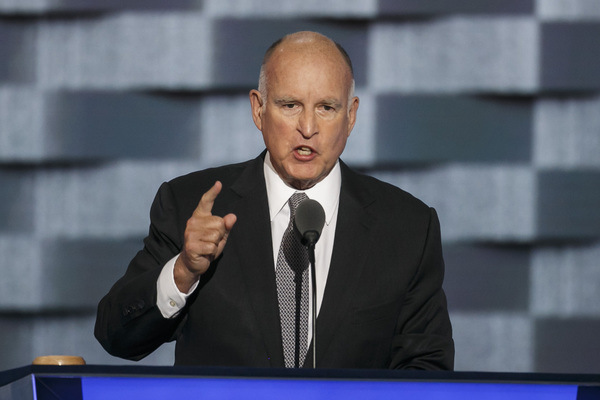
"California's (combating) climate change on all fronts and this plan gets us the most bang for the buck," Brown said in a statement. "It directs hundreds of millions where it's needed most _ to help disadvantaged communities, curb dangerous super pollutants and cut petroleum use _ while saving some for the future."
Under the agreement, the state will spend $900 million on programs to reduce greenhouse gas emissions _ nearly two-thirds of the $1.4 billion that has been raised but unallocated. The cap-and-trade program raises money from businesses that purchase permits to pollute.
The plan includes:
_$135 million for transit projects.
_$133 million for the state's main subsidy program for low- and zero-emission vehicles, and another $80 million for a second subsidy for low-income Californians.
_$80 million for urban parks and other green spaces.
_$140 million to assist disadvantaged communities to develop their own local efforts to combat climate change, such as city planning that includes affordable housing and pedestrian walkways.
"I'm pleased that we've reached a deal to bring relief and access to clean energy to the communities that need it most, and I look forward to getting this funding out the door as soon as possible so it can begin to make a difference," Senate leader Kevin de Leon, a Democrat, said in a statement.
The spending proposal does not include the 60 percent of auction revenues that are automatically directed each year toward certain projects, including the bullet train and affordable housing.
The plan is not as expansive as the one proposed by de Leon earlier this month, which sought to spend $1.2 billion. Assembly Speaker Anthony Rendon, A Democrat, had expressed reservations about spending nearly all of the available cash in light of dwindling proceeds from recent cap-and-trade auctions.
"With this agreement, we take an aggressive approach to investing cap-and-trade funds that provides tangible results for cleaner air and helps lower-income Californians benefit from emission reduction programs," Rendon said in a statement. "At the same time, we are also maintaining a responsible reserve to provide for the future."
Brown appeared even less inclined to dip into cap-and-trade dollars. Asked last week if he backed spending those funds, the governor said he was "committed to spending a little of that money," placing emphasis on the word "little."
The proposals emerged in two identical bills, AB 1613 and SB 830, Wednesday morning. At least one bill must be passed by both houses by the end of Wednesday, the final day of the legislative session.