RALEIGH, N.C. — North Carolina Gov. Roy Cooper vetoed a Republican-backed bill Thursday that would force elections officials not to count any mail-in ballots that arrive after polls close.
“The legislature ironically named this bill ‘The Election Day Integrity Act’ when it actually does the opposite,” the Democratic governor said in a statement. “Election integrity means counting every legal vote, but this bill virtually guarantees that some will go uncounted.”
North Carolina currently has a three-day grace period for absentee ballots. Nobody can vote after the election is over, but as long as their ballot is in the mail by Election Day or earlier, the state will keep accepting and counting them for three days after the election. That’s meant to account for the slow pace of the U.S. Postal Service.
But former President Donald Trump, in pushing the false claim that he won the 2020 election, focused on mail-in ballots. Those have traditionally been favored by Republicans, but in 2020 were more favored by Democrats due to concerns about COVID-19 and, likely, Trump’s own comments questioning mail-in voting.
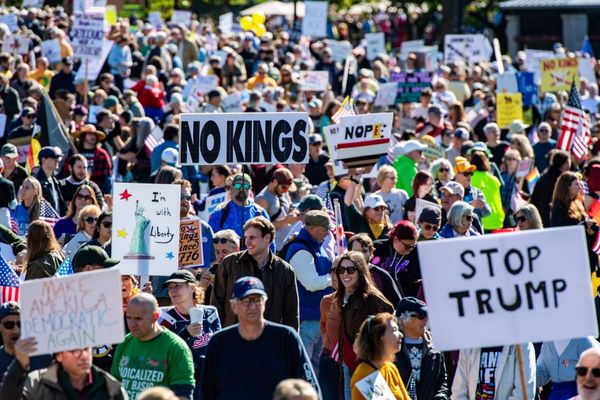
About a day and a half after the polls closed last year, as mail-in ballots were still being counted in many states, Trump tweeted “STOP THE COUNT!” Many of his voters then took to the streets chanting that and similar phrases, including in Raleigh.
And while the protesters have been gone for over a year now, their demands have carried on inside the Legislature. Republican lawmakers took up the cause, feeling pressure from Trump supporters back home to act.
“I’ve never had an issue I’ve been confronted with more than mail-in ballots,” longtime Republican Rep. Jimmy Dixon of Duplin County said during a debate on this bill earlier in the year. “It was continuous. People asking and wondering because of various reports that they had heard.”
The bill lawmakers passed in November, which Cooper has now vetoed, is Senate Bill 326 or the Election Day Integrity Act. It would require that no mail-in ballot delivered to elections leaders after 7:30 p.m. on Election Day can be counted, no matter when it was put in the mail.
Opponents said that would lead to thousands of legitimate votes being thrown in the trash. Republicans dismissed that concern and said the change is needed to improve confidence in elections.
Shortly after the Legislature passed the bill, The News & Observer reported, dozens of GOP state legislators from around the country — including 16 from North Carolina — signed a letter that suggested the possibility of overturning the 2020 election results, removing Democratic President Joe Biden from office and reinstating Trump as leader.
There is no evidence of any scheme to rig the election with mail-in ballots or any other method, according to even Trump administration officials like former Attorney General William Barr. Numerous courts have also ruled that Trump had no proof for his claims, although Trump and his allies have continued to push the false claims of fraud.
Since there are few federal laws governing how states should run their absentee voting programs, the laws for mail-in voting vary widely from state to state.
Some require voters to have an excuse to vote by mail, like being sick. But most states including North Carolina let anyone vote by mail if they want.
Some states automatically send every eligible voter a form to request a mail-in ballot, or even a ballot itself. But most, including North Carolina, do neither.
States also have varying rules for when they will start counting their mail-in ballots, as well as for when they stop.
Deadlines can change frequently. While North Carolina normally has a three-day grace period, the state extended that in 2020 as part of settling a lawsuit that raised concerns about COVID-19 and that year’s particularly long U.S. Postal Service delays.
Many other Republican-led states — but not all — already have the Election Day deadline that North Carolina Republicans want to institute here with this bill, according to an analysis by the National Conference of State Legislatures.
And while there are some political correlations to mail-in voting rules, they’re not entirely tied to which party is in charge of each state. Liberal Vermont requires mail-in ballots by Election Day, but conservative states like Utah and Alaska allow more than a week for their voters’ ballots to arrive and still be counted.
Virginia has the same three-day deadline as North Carolina; West Virginia allows for six days. Other states like Iowa and Kentucky follow that same strategy of allowing at least a few days but less than a week, and a smaller number, like Illinois and California, allow two weeks or more.
One of state lawmakers’ final acts for 2021, as they wrapped up most of their work for the year Monday night, was to pass another bill that Democrats said aimed at pushing Trump’s false claims of election fraud — although Republicans who support it said it shouldn’t be contentious.
It would ban outside charitable groups from giving grants to counties to help with elections and might also be vetoed by Cooper in the coming days.
“This bill continues to traffic the ‘Big Lie,’” state Sen. Jay Chaudhuri of Raleigh said Monday night.
Chaudhuri said Republicans are trying to imply that outside groups somehow bought or otherwise influenced the election, when in reality what happened in 2020 was that a charity led by Facebook founder Mark Zuckerberg donated millions of dollars to North Carolina and other states so that they could buy more pens and cleaning supplies, and pay poll workers extra for the risk of working in-person during the pandemic.
Republicans said regardless of how counties spent the money, the bill is necessary since voters might wonder why outside groups are paying to help run elections, rather than just the government.
“It raises suspicions in the public’s mind about the intention,” state Sen. Paul Newton of Mount Pleasant said.
Newton said the idea should be something people on both sides of the aisle can get on board with.
“I asked my Democratic colleagues, ‘What if it had been coming from the Koch brothers?’” he said. “How would you feel about that?”
The bill passed on party lines with all Republicans in support and all Democrats opposed.
———