WASHINGTON _ With just hours to go until voting could begin on a new Republican bill to roll back the Affordable Care Act, GOP senators emerged from another strategy session Thursday afternoon with no agreement on what that plan should be.
Several Republican lawmakers sounded increasingly downbeat about the prospects for the so-called skinny repeal, a streamlined version to scale back the 2010 health care law, often called Obamacare.
"I don't know if the end is going to be fat or skinny or anorexic or bulimic," said Sen. John Kennedy, R-La.
Some began to doubt whether any plan would win a Senate majority. "I don't see anything passing," Sen. Orrin Hatch, R-Utah, told NBC.
The skinny plan would leave most of the law in place, but roll back some of its mandates and taxes.
But even this more limited approach remains in doubt, as House Republicans and several Senate Republicans have panned the approach.
GOP leaders have emphasized that the limited repeal measure could later be expanded if it is combined with the more sweeping repeal bill passed by the House in March. But several Senate Republicans are worried that the House might simply pass the same skinny version, leaving the yearslong GOP promise to repeal Obamacare falling far short.
"Do you really want to vote for something that doesn't do a whole lot?" asked Sen. Bob Corker, R-Tenn. "After focusing on full repeal and then going to almost nothing, people have some concerns."
Meanwhile, the skinny plan _ which would eliminate the requirement that Americans have health insurance _ continues to draw widespread criticism from people who work in health care, including insurers who have warned that such a step would dramatically increase Americans' premiums.
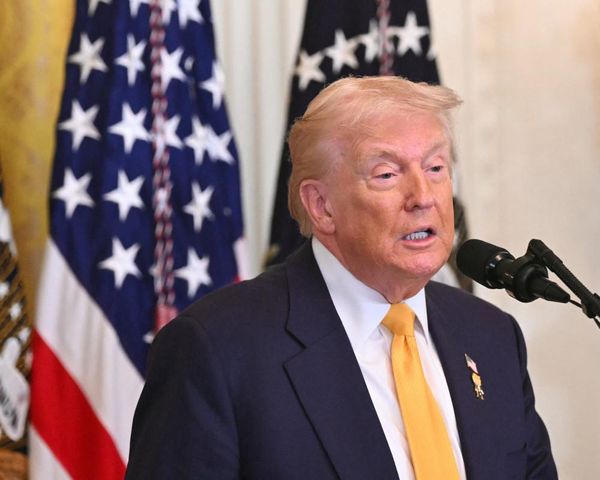
As Senate Majority Leader Mitch McConnell, R-Ky., planned for an all-night session Thursday to consider a slew of amendments, President Donald Trump pushed Republicans to reach a conclusion.
"Come on Republican Senators, you can do it on Healthcare. After 7 years, this is your chance to shine! Don't let the American people down!" Trump tweeted Thursday morning.
In a sign of how far the president may be prepared to go to pressure senators, the administration threatened to cut off some federal aid to Alaska to punish Sen. Lisa Murkowski, one of two Republican senators who voted against opening debate on the current GOP health care effort, according to Alaska Dispatch News.
Democrats have all but given up on the Republicans' partisan effort and have dug in with procedural tactics to drag out the voting process.
"It's like we're in the Twilight Zone of legislating," said Sen. Claire McCaskill, D-Mo.
Senate Minority Leader Charles E. Schumer, D-N.Y., announced late Wednesday that Democrats would offer no more amendments until they see the latest Republican proposal.
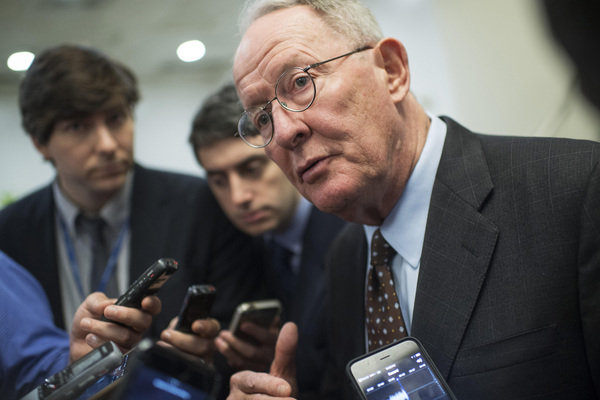
Democrats also reiterated their interest in working together to fix Obamacare as long as Republicans give up their dream of repeal. Schumer said he spoke with the chairman of the Health Committee, Sen. Lamar Alexander, R-Tenn., Thursday morning at the Senate gym and extended the invitation.
"We know Obamacare needs some work. We don't deny that. Let's do it in a bipartisan way," Schumer said.
But the prospects for bipartisanship remain dim at this point.
Republicans are in a political bind. They are under enormous pressure from conservatives in their base who want Obamacare repealed, but they are facing emotional protests from constituents over the potential loss of insurance coverage for millions of Americans nationwide if one of the GOP plans is approved.
Even the skinny repeal would produce some 15 million more uninsured Americans as mandates to carry coverage are repealed, and premium costs would jump by 20 percent, according to an analysis by the nonpartisan Congressional Budget Office.
Capitol police filled the hallways again Thursday, bracing for activists making their way to senators' offices and the Senate chamber.
Senate GOP leaders plowed forward with the repeal push amid escalating pleas to slow down from Republican and Democratic governors, health care leaders and patient advocates.
America's Health Insurance Plans, the industry's Washington-based lobbying arm, warned in a letter to Senate leaders Thursday that the skinny repeal plan will "repeat what we have seen in the past."
"Premiums will rise rapidly, few or no affordable coverage options will be available, and more people will be uninsured," the group's president, Marilyn Tavenner, wrote.
The warning was echoed by a bipartisan group of 10 governors _ including Republicans John Kasich of Ohio and Brian Sandoval of Nevada _ who urged the two parties to cooperate on health care solutions.
"Congress should be working to make health insurance more affordable while stabilizing the health insurance market, but this bill and similar proposals won't accomplish these goals," the governors said
And Peter Lee, director of Covered California, the state's insurance exchange, cautioned that repealing the individual mandate could have disastrous implications for the California insurance marketplace, the nation's largest and one of the most successful.
"The implications for 2018 are stark," Lee said. "The individual insurance market would be far less stable, with about 700,000 fewer Californians with individual coverage. Many of those people would drop coverage, not because there is no penalty but because the increase in premiums could be as much as 20 percent."
Many senators also worry that undoing the mandate that all Americans carry insurance would cause further disruption in the insurance market. "If that's all you did, I'm not advocating that at all, I think that would create a problem," said Sen. David Perdue, R-Ga.
House Speaker Paul D. Ryan, R-Wis., indicated the Republican-controlled House could stay in session beyond Thursday's planned recess, but his conservative flank has criticized the Senate's proposal.