
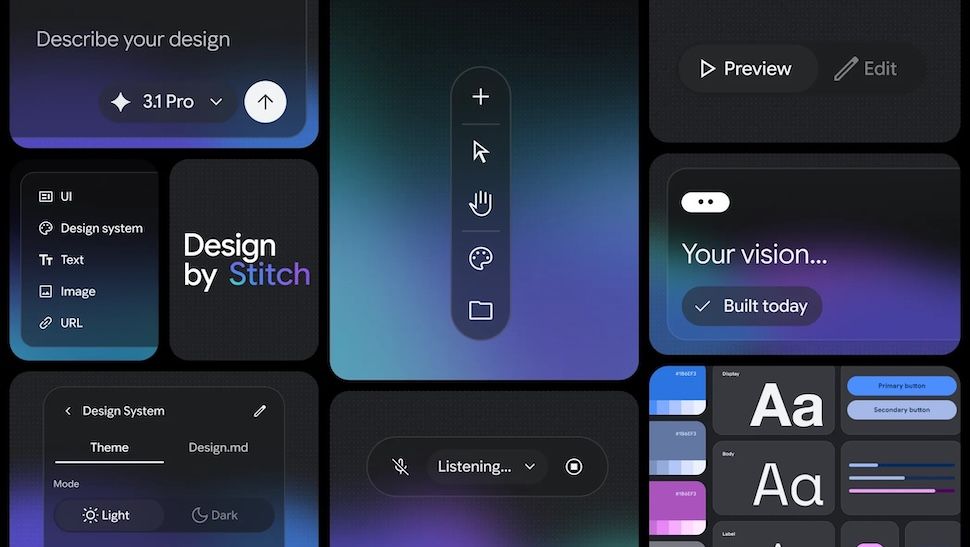
- Stitch's UI has been totally redesigned, turning it into a 'vibe design' tool
- Users can interact by typing, or even speaking, to Stitch
- Google hopes more brainstorming will lead to better products
Google Labs Product Manager Rustin Banks has lifted the wraps off the company's latest "vibe" tool – Stitch.
Stitch takes what we already know about vibe coding – the name given to generating code with artificial intelligence – and applies it to the entire concept of software design.
With Stitch, users can start by sharing their intent, feelings or business goals, rather than precise blueprints, and the generative AI tool gets to work turning those ideas into reality.
Stitch is Google's new vibe design tool
Google hopes that Stitch ultimately encourages users to explore multiple ideas, brainstorm and self-critique (with AI assistance, of course), which could lead to higher-quality outcomes.
Stitch itself is already an existing product, but the company has redesigned the UI and repurposed the tool as an AI-first 'vibe design' assistant. "It now features a new AI-native, infinite canvas that gives your ideas room to grow from early ideations to working prototypes," Banks wrote.
The product is also useful for turning static designed into interactive elements, so it's easy to visualize progress, and auto-generated next screens and user journeys give users more direction for later stages (which they can refine themselves).
But as if natural language prompting isn't enough, Google is also supporting voice commands for a truly collaborative system, making it feel like working with a colleague that's just far more efficient at generating outputs.
"By acting as a sounding board, AI helps you uncover your top ideas through dynamic critique and dialogue, ensuring you remain in your creative flow," Banks added.
Finally, the Stitch MCP server and SDK open up broader capabilities with third-party connections.
Users can try the new Stitch now, though the company has not confirmed how or wether pricing will change based on AI token usage.