
Google’s Project Ara modular smartphone is to go on sale in Puerto Rico this year as trial for what the company considers to be the next evolution of the smartphone.
The Ara smartphone shell consists of a frame into which nine or so modules can be inserted, adding, removing or upgrading functionality without having to buy a new smartphone. The frame is designed to last five to six years.
Over 20 different modules from connectivity including Wi-Fi and 3G or 4G modules, to a new screen, new cameras, new speakers, faster processors, more storage or even health-monitoring devices for measuring blood glucose will be available by launch.
The modules should make upgrading a smartphone over the lifetime of the frame cheaper than buying a brand new smartphone.
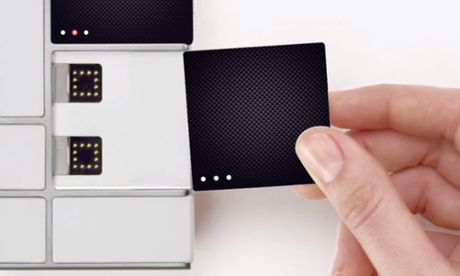
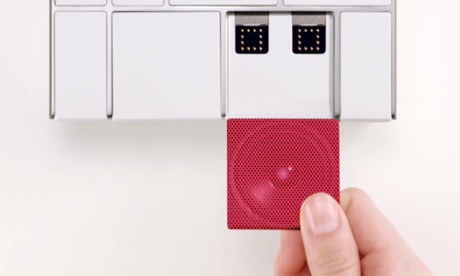
Each module will held in by magnets and swapped on-the-fly, allowing the functionally to be changed for what is needed at the time, whether that’s a smartphone with twice the battery capacity to last longer or one with twice the processing power for intensive applications.
The trial in Puerto Rico, a US territory that falls under the same regulatory conditions governed by the US Federal Communication Commission, will see the smartphones and modules sold from food-truck like shops. Google did not reveal how much the phone would cost.
The appeal of a modular phone is obvious for early adopters, but the appeal for the mass market, who regularly keep their devices unchanged for two or more years is unknown. The business model for the module manufacturers, who are unlikely to be able access the scale of manufacturing needed to produce components at a low cost, is also unclear.
• Project Ara: Google subsidiary aiming to develop ‘highly modular smartphones’