If you opened your Google Discover feed this week and thought, “That’s a strange headline,” you’re not just imagining it. Google is now testing a new feature that replaces publisher headlines with AI-generated ones, and the results are... not great.
While some of the new headlines feel off, some are misleading altogether. That's even on top of false AI-generated summaries, not to mention misguided AI Overviews. But in the case of the latest AI headlines, most are stripped of the tone, accuracy and context that real human editors like me spend time crafting.
Google calls it an experiment. But if you ask me, it’s a problem for those who rely on Discover for quick news hits. If the headlines are wrong or misleading, it could shape the way you consume information. You may recall, Apple Intelligence had to scrap its AI summaries because of false and misleading headlines.
Although the new headlines are labeled with a tiny AI label, at first glance, you'll find that when you tap “See more,” the headline appears to be written by a human.
The rewrites are rough

Some early examples reported by The Verge include an AI-generated headline of "Steam Machine price revealed,” but the original story did not reveal a price at all.
Similarly, another headline reads, "AMD GPU tops Nvidia,” but the article was about a retailer’s weekly sales data — not a sweeping GPU‑market verdict. The AI headline amplifies and distorts the coverage.
Another real headline was: “Schedule 1 farming backup,” got a similarly vague and nonsensical micro‑headline like “AI tag debate heats” / “Microsoft developers using AI."
Several of these headlines appear to carry no clear meaning, are out of context, or oversell minor points, which betray the journalistic integrity of the writer and the publications.
Understandably, it's clear the results of Google's AI headline testing could potentially lead to a feed full of short, punchy micro-headlines that are optimized for clicks, but completely miss the essence of the story entirely.
Why Google is doing this
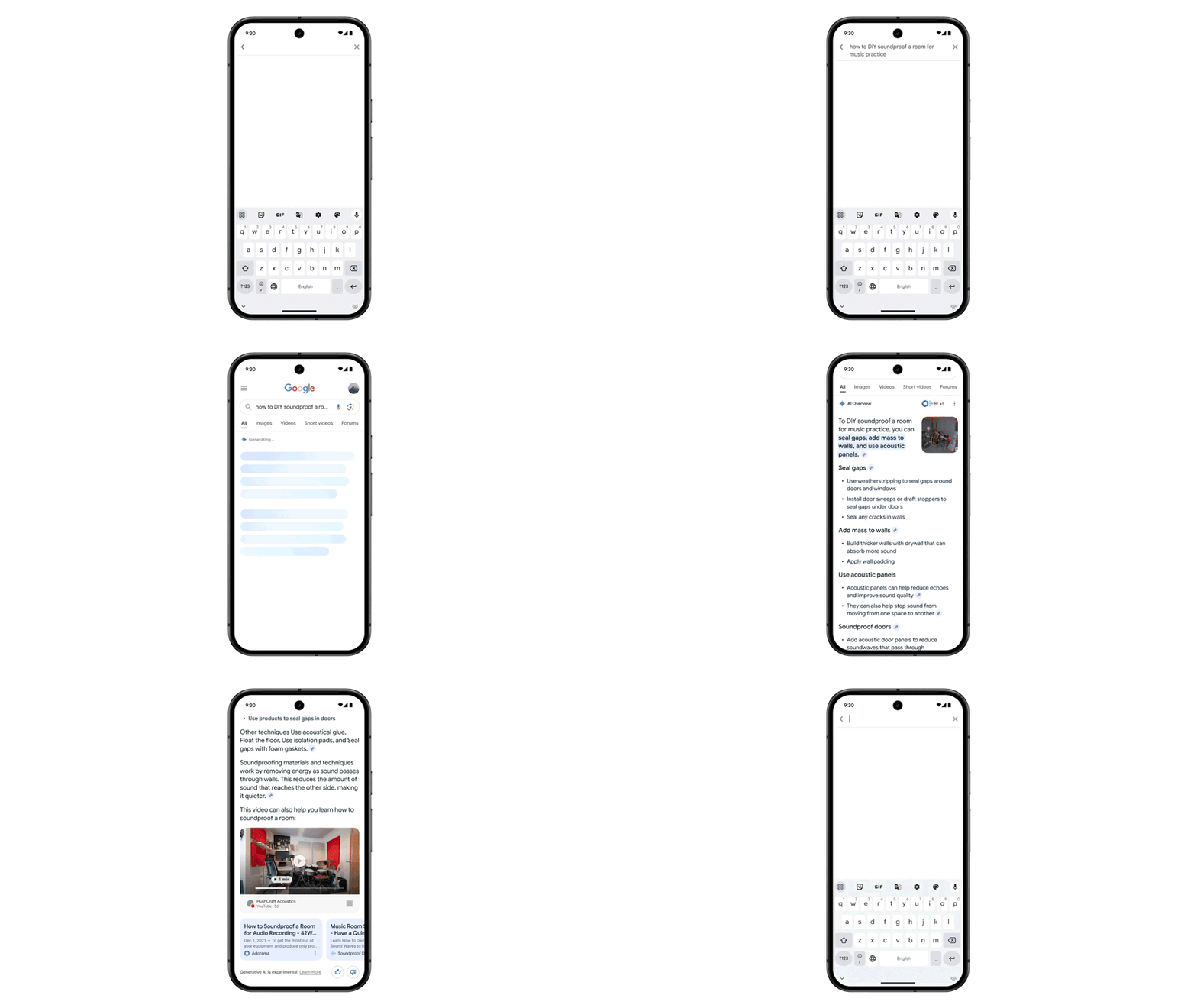
This change is part of a broader push to layer generative AI into the Google Discover experience, such as AI summaries that condense multi-source reporting, expandable “Overview” boxes and “See more” buttons that reveal AI explanations.
Yet now, the AI is coming for the headline, which, if you ask me, is arguably one of the most important parts of the article. According to Google, the goal is to make content feel more scannable and useful at a glance.
But here’s the problem, headlines carry voice, tone and inten,t and we all know AI doesn't always get that right. For me, my fellow journalists and those who simply enjoy reading the news, this raises two major red flags.
- Loss of editorial control. Google is rewriting headlines without publisher input. That means Discover might display a headline that misrepresents the original story, while still listing the publisher's name below it. Most users won’t know the difference.
- Broken trust with readers. If the AI headline is inaccurate, users don’t blame Google — they blame the outlet. Over time, this could erode trust in both the platform and the publishers, even when the reporting was solid.
And that’s a slippery slope. Because AI-generated headlines affect more than the publishers — they change how you consume news. When algorithms rewrite headlines, you may click on stories with the wrong expectations, encounter oversimplified or distorted context and struggle to tell what’s human-written versus AI-generated, all while Google Discover shifts from a newsfeed into a content curator.
It also pushes Google further toward a closed ecosystem where you stay inside Google instead of visiting the publisher's site. Although the AI-headline experiment currently appears limited to a subset of users, if engagement improves, a broader rollout seems likely.
The bottom line
With all of the ways Gemini 3.0 is integrated into Google, it's become more than a search engine. But if AI headlines continue, perhaps AI has become too baked into the platform. This might be the strongest signal yet that your news feed is about to sound more like AI slop than anything human.
If this trend continues, it won’t just influence how headlines are written — it’ll influence what we trust when we click.
More from Tom's Guide
- ChatGPT gave me business advice with a Taylor Swift twist — and the results were shockingly smart
- I found 5 shockingly helpful uses for ChatGPT you haven't tried yet — and they all make my life easier
- Anthropic has pulled ahead of Gemini and ChatGPT with its new update — here's why

Follow Tom's Guide on Google News and add us as a preferred source to get our up-to-date news, analysis, and reviews in your feeds.