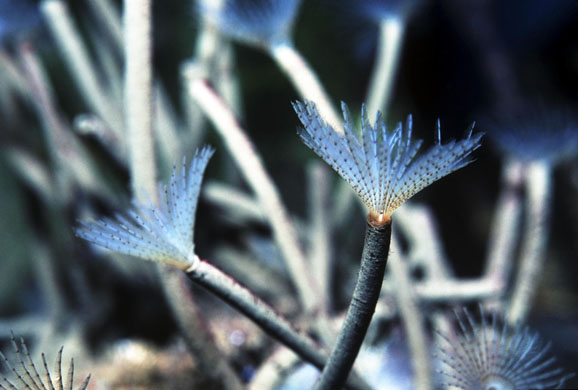
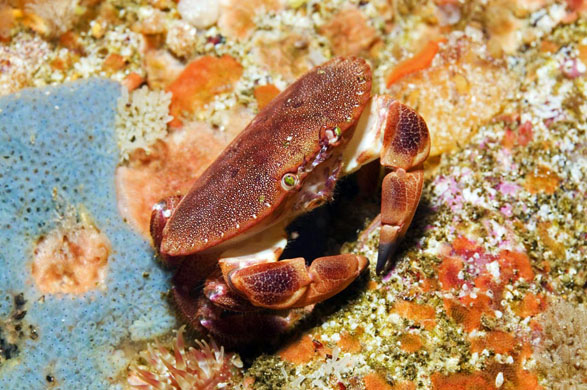
The peacock worm is found along the coasts of the UK, western Europe and the Mediterranean, in shallow, tidal waters with a bed of mud, sand or gravel and sometimes on rocks or shipwrecks. Web users will be able to find out more about the UK's protected marine zones through the new Google Earth 'layer'Photograph: Paul Kay/Natural England/Press AssociationA brown crab. One of the sites users can visit "virtually" is Lundy Island, off the north Devon coast, England's only statutory marine reserve where all fishing activities have been banned across a zone of 3.3 km sq, a move that conservationists say has enabled the undersea area the change to recover and thrive Photograph: Paul Kay/Natural England/Press AssociationOne of the zones that users can find out more about it the undersea landscapes of the north-east of England. This stretches from the sandy mouth of the Humber out to the Great Sandhills of the Dogger Bank, and northwards past the Farne Islands to the rocky shores of the border with Scotland. A mixture of Atlantic water swept down around Scotland and the nutrient-rich waters of the southern North Sea bring together southerly species with true northerners such as this wolf fishPhotograph: Paul Naylor/Natural England
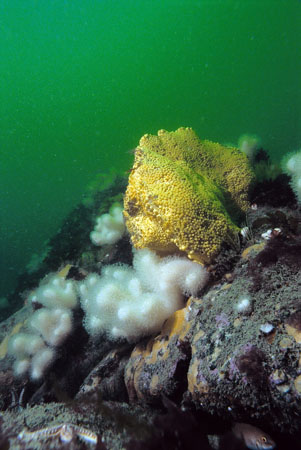
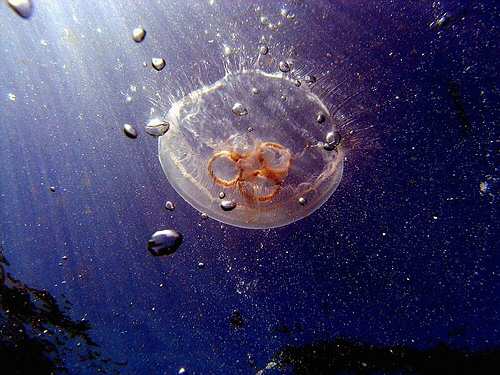
Another area that will be virtually mapped the chalk and limestone reefs off the coast of Yorkshire which extend underwater for up to 6km out to sea and are rich communities of seaweeds and invertebrate animals. This is the biggest underwater chalk reef in Europe and several characteristic species which bore into the soft rock are present, such as this large yellow-coloured boring spongePhotograph: Paul Naylor/Natural EnglandThe moon jellyfish, the most widespread species of jellyfish in the UK that is found along the entire coastline. The new tool was launched today at the IUCN world conservation congress in BarcelonaPhotograph: Natural England
Sign up to read this article
Read news from 100’s of titles, curated specifically for you.