
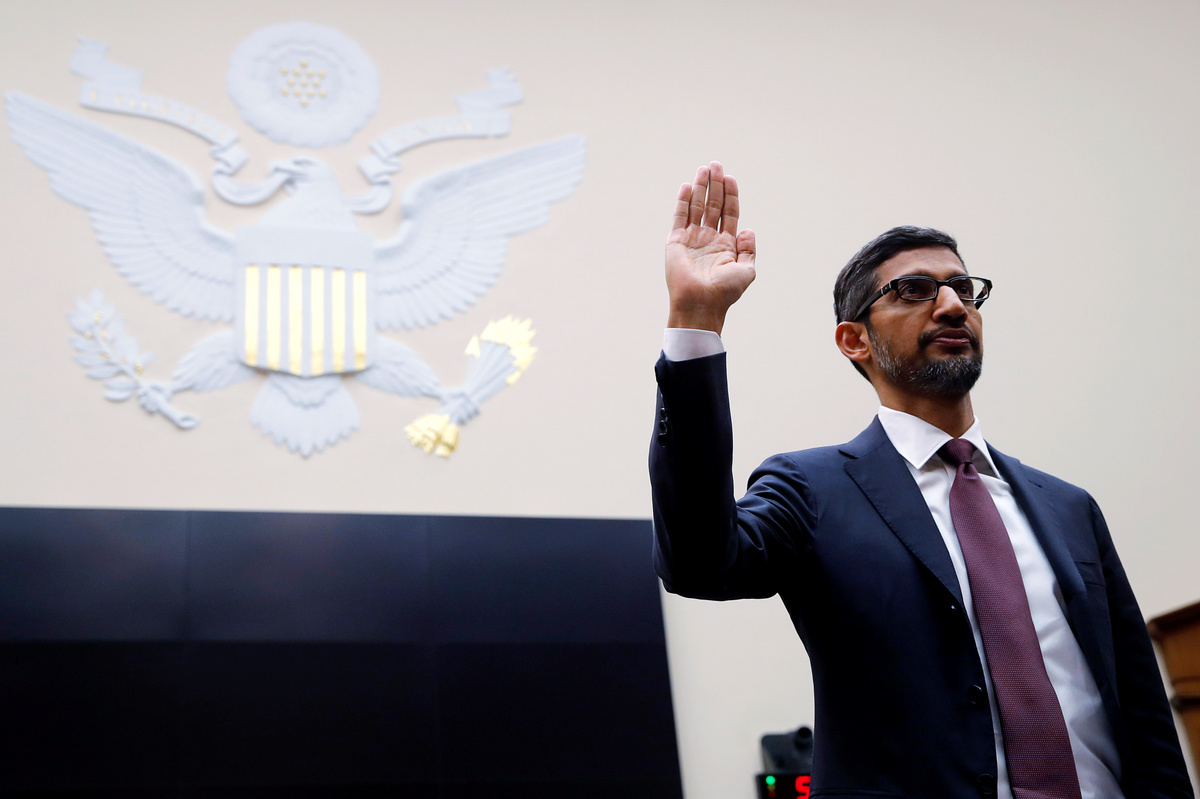
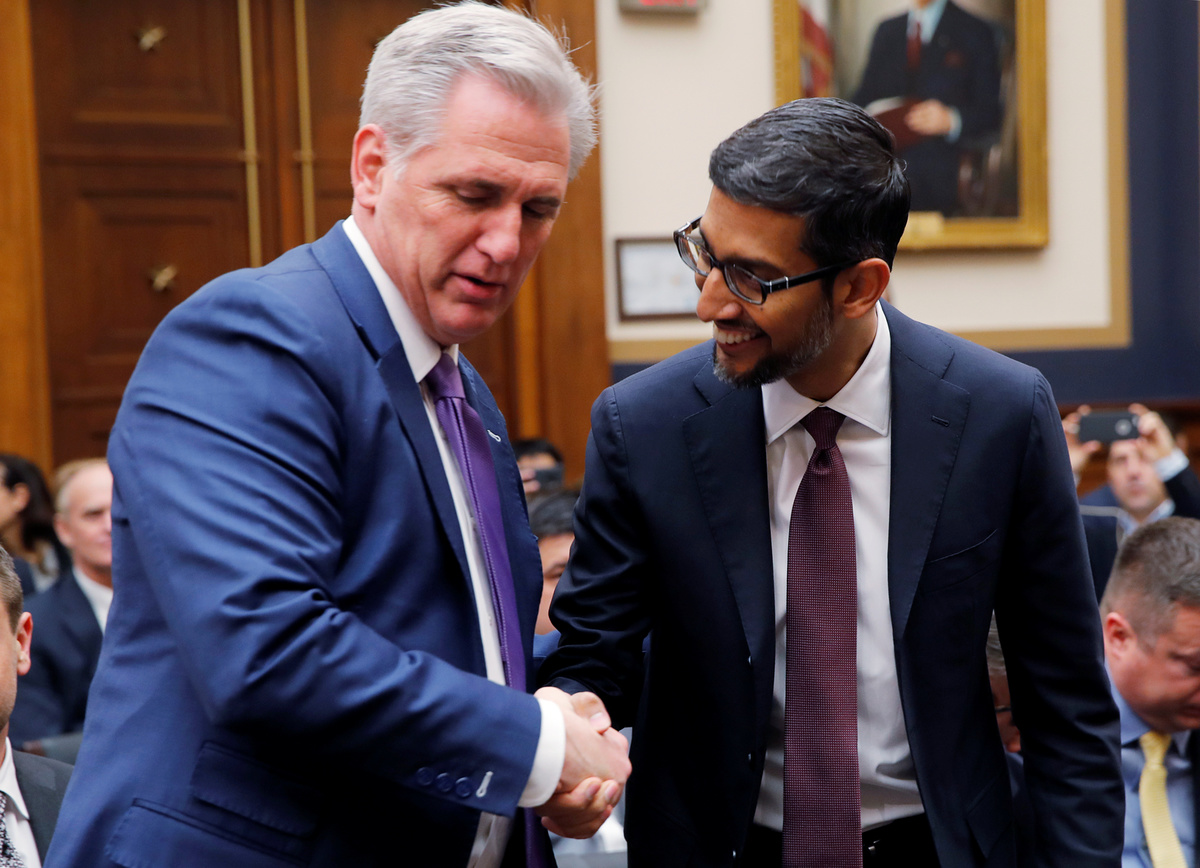
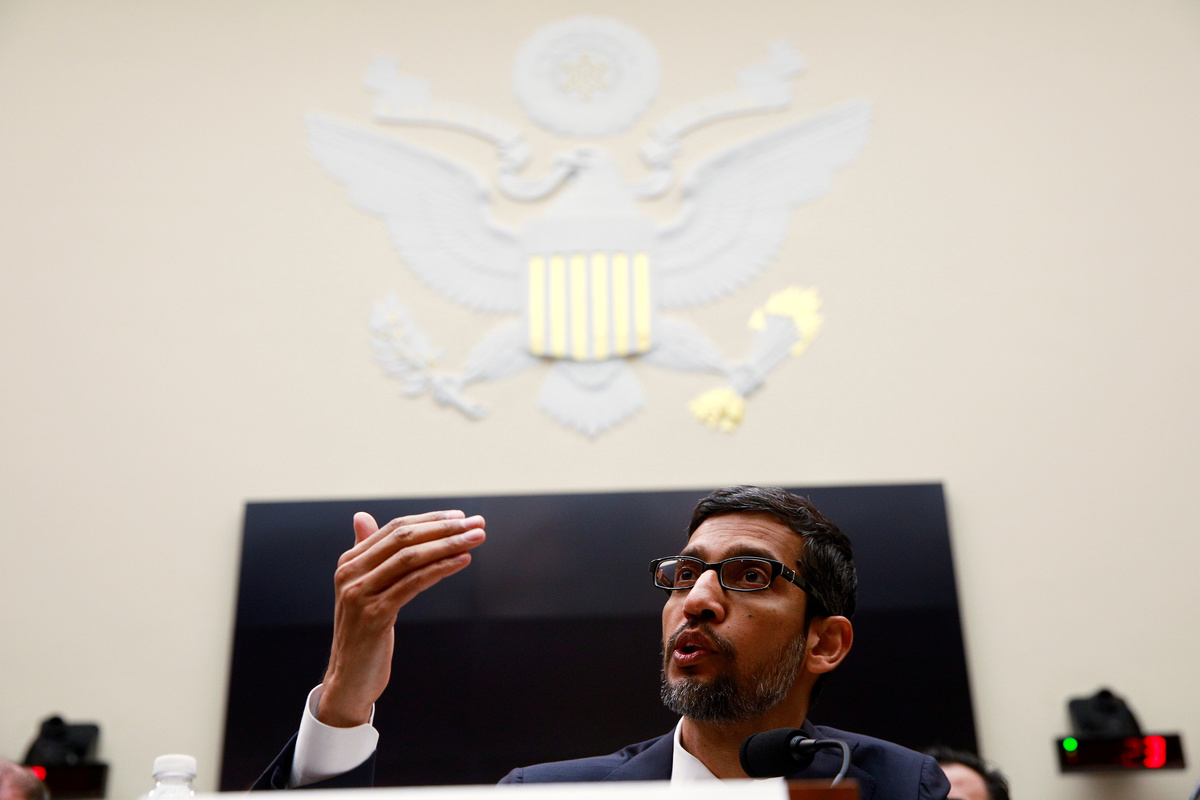
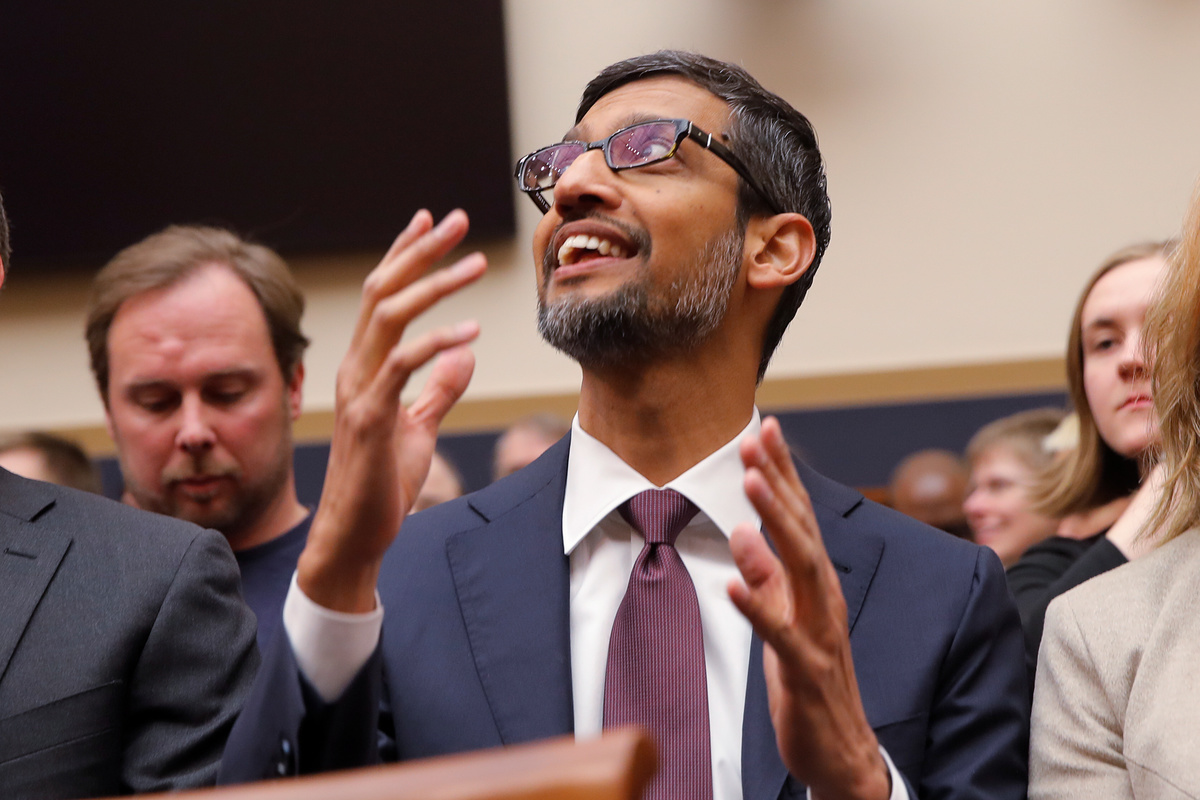
WASHINGTON (Reuters) - Google has "no plans" to relaunch a search engine in China though it is continuing to study the idea, Chief Executive Sundar Pichai told a U.S. congressional panel on Tuesday amid increased scrutiny of big tech firms.
Lawmakers and Google employees have raised concerns the company would comply with China's internet censorship and surveillance policies if it re-enters the Asian nation's search engine market.

Google's main search platform has been blocked in China since 2010, but the Alphabet Inc unit has been attempting to make new inroads into the country, which has the world's largest number of smartphone users.
"Right now, there are no plans to launch search in China," Pichai told the U.S. House of Representatives Judiciary Committee.
But he added that internally Google has "developed and looked at what search could look like. We’ve had the project underway for a while. At one point, we’ve had over 100 people working on it is my understanding."
Pichai said there are no current discussions with the Chinese government. He vowed that he would be "fully transparent" with policymakers if the company brings search products to China.
In a letter in August to U.S. lawmakers, Pichai said providing such a search engine would give "broad benefits" to China but that it was unclear whether Google could launch the service there.
A Chinese government official, speaking on the condition of anonymity, told Reuters last month that it was unlikely Google would get clearance to launch a search service in 2019.
Pichai did not say what steps Google would take to comply with Chinese laws if it re-entered the market.
Under questioning from Democratic Representative David Cicilline, Pichai said he would "happy to engage" to discuss legislation that would empower the Federal Trade Commission to address discriminatory conduct online.
Cicilline told Pichai it was "hard for me to imagine that you could operate in the Chinese market under the current government framework and maintain a commitment to universal values, such as freedom of expression and personal privacy."
The company's rivals in shopping and travel searches have long complained about being demoted in Google search results.
Much of the House hearing focused on Republican concerns that Google's search results are biased against conservatives and that the company had sought to influence the outcome of the 2016 presidential election.
Democrats rejected that claim as "fantasy," and at least one said the search results highlighted more conservative voices.

Pichai said the search engine attempts to help people register to vote or find a polling place, but rejected assertions the company paid for Latino voters' transportation to polls in some states.
"We don't engage in partisan activities," Pichai told the panel.
(Reporting by David Shepardson and Paresh Dave; Editing by Will Dunham and Paul Simao)