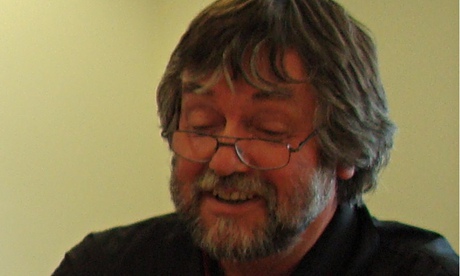
I was part of that huge demographic known as the “postwar bulge”. Born in 1947 to a working-class family, I was fortunate to have the support of loving parents throughout my education, even though they knew I was being educated out of my class origins. Moving through primary and secondary education I benefited from free orange juice and milk (often warm), the 11-plus, grammar school and free bus transport. Tertiary education was supported by a full student grant which covered fees and maintenance. These were the opportunities available to all kids, who in those days were called “gifted” or who worked very hard at school and college. I could hardly believe how lucky I was to live the university experience and this set me up for an interesting and successful career in research and academia.
Ironically, I first noticed the Guardian because it was the one newspaper that was never to be found in the university library (Senate House, London). It was usually out and being read by students. I soon realised that this was the paper that gave a broad, unbiased (even if a bit lefty), coverage of UK and world news. The emphasis and philosophy seemed to fit with most of my views and it wasn’t long before I would take serious note of the Guardian’s content on a daily basis. I used to look forward to reading it during breaks from wading through journals and periodicals as part of thesis writing. This led me to move more left of centre than I would have been based on my family upbringing.
The Guardian has been my constant companion since then, even during those times when I lived in the rural hinterland of the Pentland Hills between Glasgow and Edinburgh. The local shop didn’t stock the paper of course, but they could put in a regular order for collection the next day. I was a great fan of the big guns of comment, analysis and erudition such as Clive James and Polly Toynbee.
After a career in a research institute, I now have a professorial post at Nottingham University and it’s quite obvious that undergraduate and postgraduate experiences are different from my own. Many of our students rarely visit the libraries because they can get all the information they need about set course texts and lectures from virtual learning environment resources. Open electronic access to peer-reviewed journals provides everything needed to complement analytical and critical reading.
There have been many changes to this paper over the last 40 years, moving from the stolid black bannered broadsheet with origins and retained links with the Manchester Guardian to the Berliner format in 2005. The latter was a bit shocking then, but we soon got used to it.
So, for four decades I have been a reader of the Guardian and a few years ago I took out a subscription which saves me a few bob every week. Even at my age, I look forward to the friendly “ping” at about 11.05pm, telling me the front page has downloaded on to my iPhone and I can catch up with the headlines of tomorrow’s issue.
• If you would like to be interviewed in this space, send a brief note to good.to.meet.you@theguardian.com