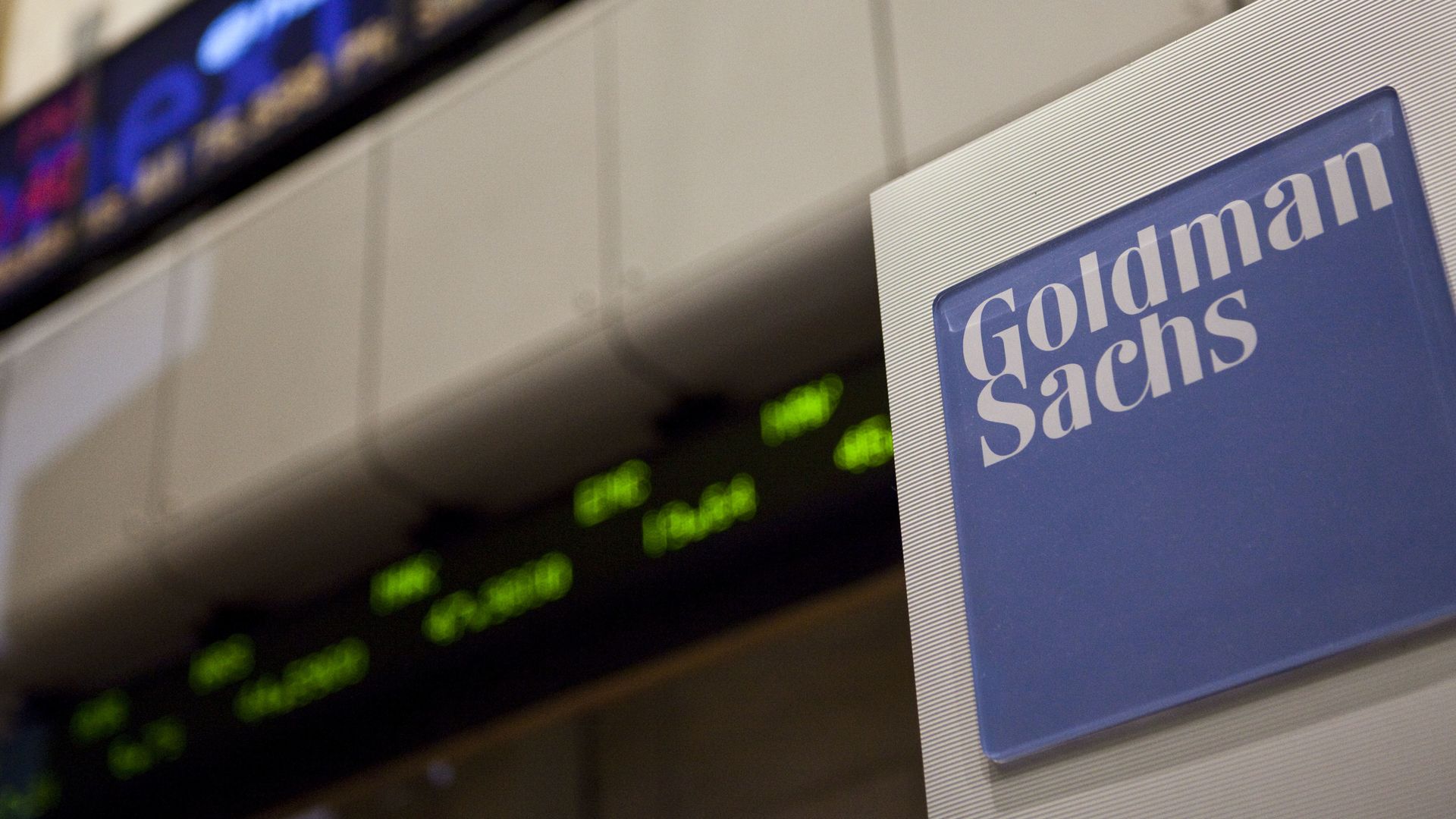
For the first time in its 151-year history, Goldman Sachs, the storied investment bank, opened its doors to investors and others for a day of presentations about its various business lines — and how it has been remaking itself.
Why it matters: David Solomon has been CEO for just more than a year, and under him, the bank has pivoted toward the mass market and making other strategic moves that could have a big effect on the evolution of modern banking.
The takeaway: For the first time, the firm released earnings targets and talked openly and in detail about its plans and aspirations — aiming in part to appease shareholders who want to see Goldman's stock price rise.
- Among the targets: at least 13% return on equity within three years (vs. 10% in 2019) and an efficiency ratio — a measure of how well banks manage costs relative to revenue — of approximately 60% (lower is better; the figure was 68% last year).
- Top priorities include expanding the 3-year-old consumer bank, Marcus, which has so far attracted 5 million customers, $60 billion in deposits and $7 billion in loans, which include balances on its Apple-branded credit card. (Those numbers are teeny in the world of big consumer banks.)
- This year, Marcus will introduce wealth management and investment options; checking will come in 2021.
- Other big GS plans: to expand payment processing for companies and other large institutions (a division called "transaction banking") and widen adoption of Marquee, an online data and analytics tool for institutional investors.
- Goldman is hiring hundreds of financial advisers globally to ramp up its money management business.
- The firm will spend $750 billion over the next decade on "sustainable economic growth."
"One Goldman Sachs," a motto and initiative that Solomon started on his first day as CEO, was a constant refrain among the day's speakers. In his opening remarks, Solomon called it a "firmwide effort to simplify the way to engage with our clients and deliver all of our capabilities in a more holistic fashion."
- "The whole industry grew up in selling products in silos," Solomon said, adding that this mentality has to change.
- "This is a very important pivot," not just for Goldman, but for the whole industry.
Yes, but: Some analysts asked Solomon whether tinkering with businesses like investment banking and M&A — where the firm is the market leader — made sense.
- Solomon said Goldman was aiming for "more consistent and durable revenues."
- And: "Investment banking is truly the front end of Goldman Sachs. And a key element of our firmwide strategy is improving the access that the rest of the firm has to this great corporate franchise."
Another question — addressed to a panel on sustainability — was how talk about enlightened policies squared with the Malaysian corruption scandal that cost the firm money and reputation last year.
- Solomon said earlier in the day that the so-called 1MDB scandal made him "acutely aware of how the actions of a few” could mar a company’s brand.
The bottom line: The "new" Goldman, with a relaxed dress code and a CEO who moonlights as a D.J., says it's committed to transparency, long-term growth and putting clients first.
- “Our purpose is to advance sustainable economic growth and financial opportunity," Solomon said. "We are proud advocates for capitalism.”
Go deeper: