Workers who collect household garbage are increasingly fearful of being infected with the new coronavirus amid heightened calls for people to stay at home as much as possible during the Golden Week holidays through early May.
If infections spread among garbage collectors, part of the daily infrastructure of local communities could collapse.
"I do my job with the assumption that I may be infected with the virus," said Yasuo Gunji, 47, who collects household garbage under a contract with a local government in Tokyo.
Masks are sometimes littered about when Gunji does his round of garbage-collection points. Garbage bags also break sometimes when he pushes them into his collection vehicle, because the bags contain too much garbage, including used masks and tissues, and so swell up like balloons.
Gunji wears gloves whose palms are made of rubber, but garbage still touches his skin. He wears a garbage collection suit, a helmet and a disposable mask, but this is not protective gear with goggles and a high-function mask to prevent infection with the new coronavirus.
Therefore, he can't shake his fears about contact infection with the virus via the garbage.
"At the least, I want people to put masks and tissue into smaller plastic bags, double bag the garbage, and throw it out frequently instead of letting garbage pile up," Gunji said.
In Suma Ward, Kobe, 13 garbage-collection workers were confirmed to be infected with the virus as of April 24.
Garbage collection in the ward had been done by 62 staff of the Suma branch office of the Kobe city government's Environment Bureau. Now the branch office has been closed, and the city's other ward offices have taken over the work.
It is unknown whether the workers became infected while collecting garbage.
However, "if a large number of infections occur in neighboring areas, garbage collectors will have to stop doing their job, and garbage collection could be hampered over a wide-ranging area. First and foremost, we want residents to bag and put out garbage in a proper manner."
Dangerous hospital waste
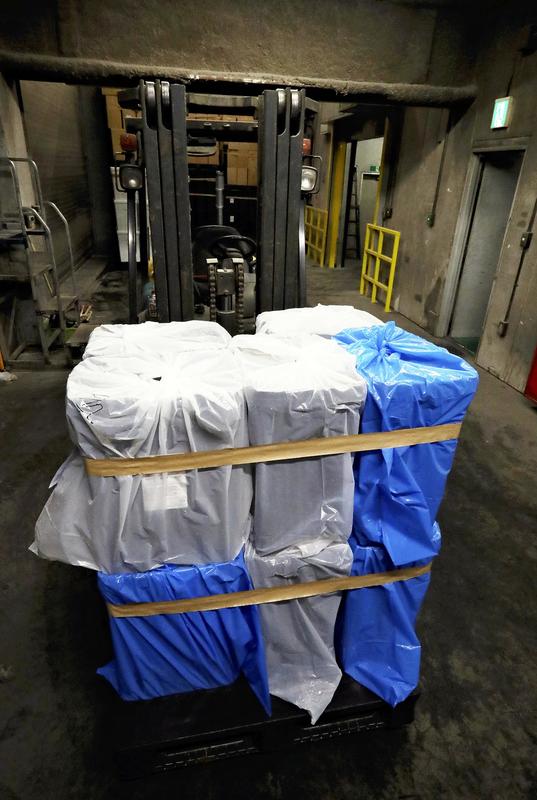
Garbage produced at mainly medical institutions, including gauze, blood and needles used for injections, is categorized as infectious waste, as it could spread infection. There are strict requirements regarding the handling of this kind of garbage -- infectious waste is collected by professionals who have been authorized to do so by prefectural governors and other local authorities, and who use containers specifically for that purpose.
Some companies handling this task let their employees wear protective suits exclusively for the work. The workers disinfect the garbage containers with spray as they do their job.
Masaru Tanaka, a professor emeritus of Okayama University who is an expert in waste-engineering studies, said: "Garbage created by patients who are recuperating in hotels or at home should basically be treated as infectious waste. Measures to handle this garbage should be considered, such as incinerating it after reducing as much as possible the number of people who come into contact with the garbage."
Read more from The Japan News at https://japannews.yomiuri.co.jp/