As Hollywood actor Michael Sheen takes his place at the fore of a St David’s Day march in Blaenau Gwent in support of the NHS, and his friend and fellow Welshman Matthew Rhys announces his new coaching job at the Royal Welsh College of Music and Drama, a clear, sonorous voice is calling out: don’t assume, it says, that Britain’s most successful leading men are all drawn from English public schools and the world of privilege.
“There has probably never been a better time to be Welsh, in terms of the appetite for performers in the profession,” said David Bond, head of actor training at the Royal College.
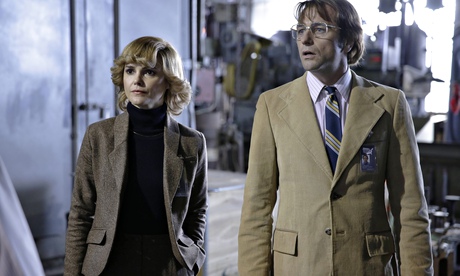
The two actors, both currently starring in hit transatlantic television shows, Masters of Sex and The Americans, are at the head of a rich new seam of Welsh talent being mined by film and television.
Alongside them is Rhys Ifans, about to appear as Dylan Thomas in the film Dominion, Paul Rhys, the acclaimed actor who recently starred in The Assets (a rival television spy show to The Americans), and Owen Teale, an admired stage actor who appears in Game of Thrones and Stella.
Only paces behind them are Ioan Gruffudd, star of Forever and Fantastic Four, Downton Abbey’s Tom Cullen, Iwan Rheon, who made his name in Misfits and now appears in Game Of Thrones, Merlin’s Alexander Vlahos, currently filming the new TV series Versailles in France, and the mid-Glamorgan coalminer’s son Aneurin Barnard, star of Cilla and Moonfleet.
“We held a showcase performance in London for our students on Thursday and some 200 agents came. There is a curiosity about Wales now and we certainly see ourselves as a major player,” Bond said, adding that word has spread to top casting directors in America.
“There is an expectation that we will deliver. The actors this country produces have a great work ethic and no interest in the nonsense and glitz of the business. They simply deal with all that if it comes along.”
Eton-educated leading men, such as Oscar-winner Eddie Redmayne, Tom Hiddlestone and Damian Lewis, or Harrow’s celebrated Benedict Cumberbatch, represent just one side of the current British domination of the market in leading men. A different kind of actor – one that may well come with a clear stamp of radical political engagement – is also available in Wales.
New stars in the making include Luke Evans, of the Fast and Furious franchise, Owain Yeoman, star of TV’s The Mentalist, Mr Selfridge’s Trystan Gravelle, Lee Williams, who appeared in Grantchester and The Tudors, and Tom Rhys Harries, who is about to play the eponymous role of Crow in the film of Tim Rhys’s play.
And it is not only the men who are in demand. Perhaps the most prominent Welsh actress since Catherine Zeta-Jones is Ruth Jones, the writer and performer behind both Stella and the BBC hit Gavin and Stacey. Also set for greater fame are Broadchurch’s Eve Myles, who made her name in Torchwood, Alexandra Roach, who stars in Testament of Youth, and Sophie Evans, who had the lead role of Dorothy in the West End production of Wizard of Oz and was seen last year in the miners’ strike film Pride.
“We are in a very good moment,” said John McGrath, the founding artistic director of National Theatre Wales in Cardiff. “The college and the national theatre are giving people a really good base for work in English and in Welsh. Actors and agents feel the work is here for them. It is no longer about hiding your Welshness, even when you work in other accents. It is a good and exciting place to be.”
The growth of the Welsh capital’s “thriving fringe theatre scene” has been crucial, McGrath believes. “People from the National Theatre and from the BBC can come to see the shows and there are playwrights creating the work, too. It all goes together to make for a feeling of confidence.” McGrath points out that, when Downton’s Cullen finished his training in Cardiff, instead of moving to London he stayed to put on shows in the city.
There is, however, also a healthy crop of young Welsh actors who have recently travelled to London to try to make it big in the West End.
Lloyd Everitt is playing Othello at the Globe, while Lewis Reeves is in My Night With Reg at the Apollo, where he plays alongside Old Etonian Julian Ovenden. The Broken Heart, also at the Globe, stars Mr Selfridge star and Welshwoman Amy Morgan, while upstream at the Southbank Cardiff-trained Anjana Vasan is appearing at the National Theatre in Behind the Beautiful Forevers. Appearing in the acclaimed YEN at Manchester’s Royal Exchange is Annes Elwy, described by the Guardian as “deeply moving” in her role.
This may be a heyday for the Welsh, but a career in acting is always a financial strain at first, points out Bond. “Of course, they struggle here in Cardiff, let alone in London. They share houses and live on cornflakes to get by, taking other work. Not many of our students are rich.”
What keeps them going, Bond believes, is a native love of performance that is born of the Eisteddfod tradition, coupled with a love of language. Most significant though, he thinks, is the commitment shown by famous actors to the next generation.
Matthew Rhys, who grew up in Cardiff, is a case in point. Last week, the New York-based actor revealed he is taking up a post as one of the Royal College’s new Jane Hodge International Chairs in Drama.
“To be asked by the college to travel home and impart what my travels have taught me is an enormous honour,” said the actor, who starred on British television two Christmases ago as Darcy in a BBC adaptation of PD James’s thriller Death Comes to Pemberley, a sequel to Pride and Prejudice. “Having been to the college recently to accept my fellowship, I’m looking forward to coming back to Wales and working with the students.”
The college’s academic scheme is designed to allow young students to work with leading professionals and is funded by the Jane Hodge Foundation, a grant-making charity established in 1962 by the late Cardiff banker Sir Julian Hodge, in memory of his mother.
Rhys’s friend Sheen already holds a similar post and takes the job seriously, says Bond: “When Michael [Sheen] comes down and holds a workshop for us, he is a rather good teacher who wants to work with the students, rather than just tell anecdotes.”
When Sheen joins marchers in Tredegar to celebrate the achievements of Aneurin Bevan, born in the town in 1897, he will also march in a long line of proud Welsh actors, from Richard Burton, to Anthony Hopkins and Jonathan Pryce.
McGrath sees Sheen’s attitude as characteristic: “It is part of Welsh culture to value your home. When Sheen came back here in 2011 to perform in the Passion Play at his hometown of Port Talbot, it was because he wanted to be involved, but also because it was the kind of work he could not do anywhere else. There is no sense of wanting to escape where you are from, but instead there is the idea of coming back here whenever there is a good opportunity, or you can help.”
WALES’S HISTORY OF ACTING TALENT
Sarah Siddons (1755-1831)
Welsh-born stage tragedienne, most famous for her portrayal of Lady Macbeth.
Ray Milland (1907-86)
Hollywood actor and director best remembered for his Academy Award-winning portrayal of an alcoholic writer in The Lost Weekend (1945) and as the murder-plotting husband in Hitchcock’s Dial M for Murder (1954).
Richard Burton (1925-84)
His Shakespearean acting career in the 1950s saw him dubbed “the natural successor to Olivier” by Observer critic Kenneth Tynan. Nominated seven times for an Academy Award, but never won.
Rachel Roberts (1927-80)
She played the mistress in two key films of the 1960s – Saturday Night and Sunday Morning and This Sporting Life. Also played Mrs Appleyard in Peter Weir’s film Picnic at Hanging Rock.
Siân Phillips (born 1933)
Born in West Glamorgan, she spoke Welsh in her childhood and learned English by listening to the radio. Best known for playing Livia in the television series based on Robert Graves’s I, Claudius.
Philip Madoc (1934-2012)
Best known for two very different television roles: as the politician in The Life and Times of David Lloyd George and as a U-boat captain in Dad’s Army.
Sir Anthony Hopkins (born 1937)
Graduated from the Royal Welsh College of Music & Drama in 1957 and was later spotted by Laurence Olivier, who invited him to join the Royal National Theatre.
Roger Rees (born 1944)
Known in US for playing the TV characters Robin Colcord in the sitcom Cheers and Lord John Marbury in The West Wing. He first won an Olivier and a Tony for his performance as the lead in RSC’s staging of The Life and Adventures of Nicholas Nickleby in the early 1980s.
Jonathan Pryce (born 1947)
Stage actor recently seen as Cardinal Wolsey in the BBC’s Wolf Hall who won awards as the Royal Court Theatre’s Hamlet in 1980. His screen breakthrough came in Terry Gilliam’s film Brazil.