Beijing: Last month, Narendra Modi asked citizens to postpone buying gold for at least a year. Instead, he should have called for a ramp-up in domestic production. India imported over 800 t in 2024, but produced only about 2 t. Wedding demand is not going away, so imports will remain a persistent drag on rupee.
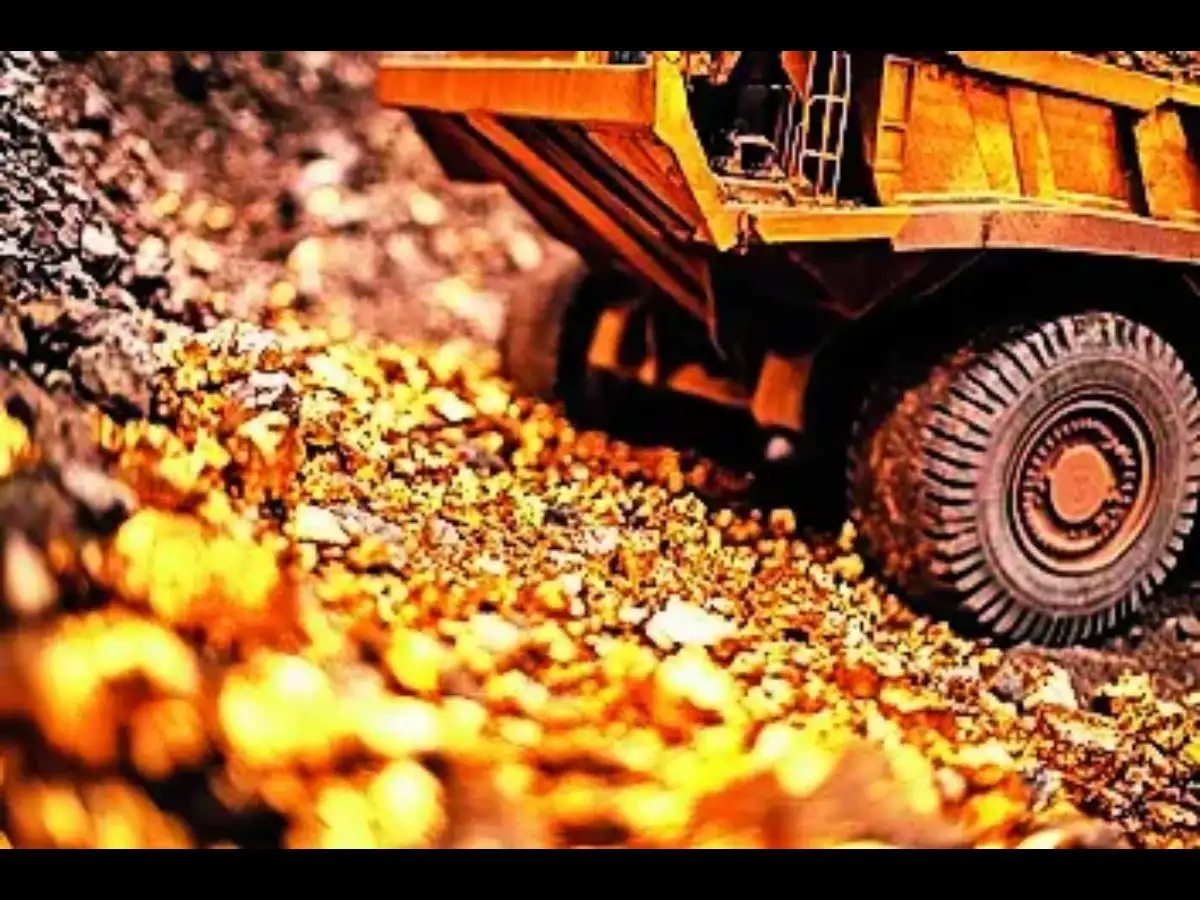
Iron ore mining in India shows what's possible. Supreme Court mining bans in Goa and Karnataka in the 2010s were eventually lifted, and production surged, making India the world's 4th-largest iron ore producer, and the sector the backbone of its steel industry, now the 2nd-largest globally.
Gold requires a different breed of geologists to discover deposits, investors willing to fund them, and metallurgists to extract dore from ore. There's no overlap between the world's top 10 iron ore and gold miners. India missed the gold rush and lacks deep expertise. It has only two gold mines: Hutti Gold Mines in Karnataka and the soon-to-open Jonnagiri Gold Mine in Andhra Pradesh.
China is the world's largest gold producer. Yet, none of the world's largest gold mines is Chinese. Working with low-grade deposits, Chinese miners have built a domestic industry on efficiency and exploration excellence. That expertise was on display in 2024-25 with major discoveries across three provinces: a deposit in Hunan extending 2 km underground, a 1,444 t find in Liaoning declared the largest since the founding of the republic, and an undersea extension of Jiaodong Peninsula gold belt off Shandong that pushed proven reserves above 3,900 t.
Like India, China is a voracious consumer of gold. Annual production of roughly 380 t reduces a deficit that would otherwise weigh on the trade balance. As Vedanta chairman Anil Agarwal has argued for years, privatising gold mines could yield strong results. Capital-rich and technically capable, Chinese miners experienced in JVs would be natural partners for Indian companies.
For policymakers concerned about dependence on China, it's worth noting that during Marco Rubio's recent visit to India, a framework agreement on critical minerals and rare earths was signed, and gold was not included. Gold mining requires large upfront investment and lengthy time horizons, making protection against expropriation critical.
Pakistan's Reko Diq copper-gold project illustrates the point. A JV between Balochistan and an Australian miner, established in 1993, it spent years delineating one of the world's largest undeveloped copper-gold deposits, only for Balochistan to deny a mining lease in 2011. The investor won a $6 bn arbitration award under the Australia-Pakistan BIT in 2019 and threatened enforcement against Pakistani state assets worldwide, bringing Islamabad back to the table and leading to a 2022 settlement that revived the project.
India and China had such a treaty, until India terminated it in 2018 as part of a broader withdrawal from more than 60 BITs following arbitration losses. The most significant involved Cairn Energy. India imposed retroactive taxation on Cairn's restructuring after its Rajasthan oil discovery, lost arbitration under the Britain-India BIT, and ultimately settled for $1 bn after enforcement action against Indian state assets abroad.
India has since been reluctant to sign new BITs. The latest test of its willingness to face arbitration is a $1.58 bn claim brought by Panthera Resources under the Australia-India BIT (terminated but still within its sunset period). Panthera alleges that after a promising gold discovery in Rajasthan, the state obstructed licence renewal for years, then used legislative changes to lapse the application and auctioned the deposit to a third party.
BITs impose discipline by raising cost of arbitrary action after valuable discoveries are made. In an all-or-nothing business like gold exploration, Chinese mining firms are unlikely to commit capital in India without similar protections.
India was once a significant gold producer. In the early 20th c. , Kolar Gold Fields in Mysore was among the deepest mines in the world. Nationalised from John Taylor and Sons in 1956, it operated until 2001. If India wants to reduce its dependence on imported gold, it should start digging again. With foreign capital and tech.