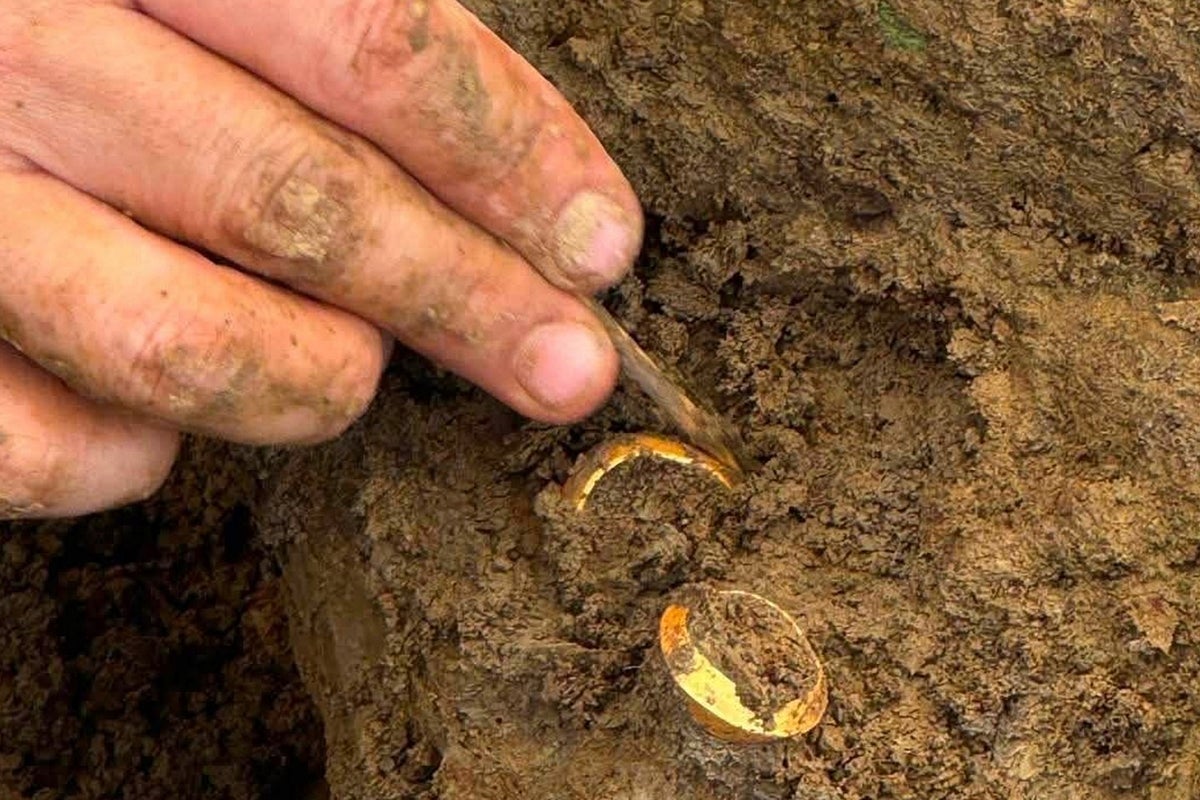
A remarkable archaeological discovery in western Thailand has unearthed two 2,000-year-old gold rings, found alongside human bones at a newly excavated site.
The rings were recovered last week during an ongoing dig at the Don Yai Thong archaeological site in Phetchaburi province, according to the Thai government's Fine Arts Department.
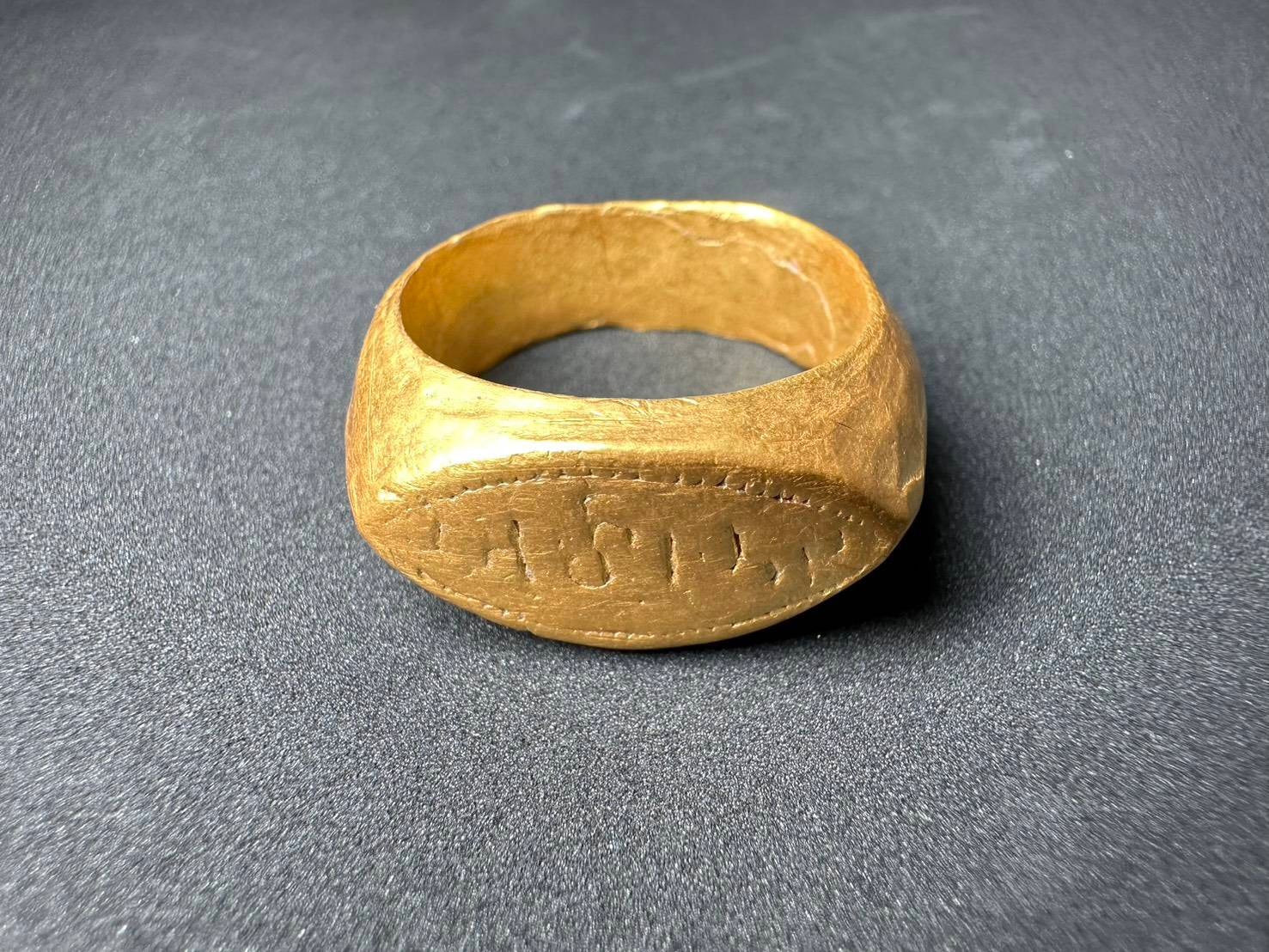
One ring features an inscription in Bhrami script, an ancient Indian writing system.
Experts identified the script as "pusarakhitasa," meaning "the one protected by Pushya," said to be one of the most auspicious zodiac signs in Indian astronomy.
The second ring, found with the same skeletal remains, is a plain gold band. Experts believe the rings’ owner may have been a merchant of the Indian ancient caste system Vaishyas.
The Don Yai Thong site, located approximately 130 kilometres (80 miles) southwest of the capital Bangkok, was only discovered early this year.
Its existence came to light after residents found pieces of ancient bronze drums in a rice field, prompting the current excavation efforts.
The site was dated to a late prehistoric era in Thailand, a period of human settlement also known as the Iron Age, established to be around 1,500 to 2,500 years ago.
Since February, archaeologists have discovered eight human skeletons, bronze and gold jewelry, pottery and other artifacts indicating a ceremonial burial of wealthy people or members of the society’s upper classes.
The excavation is expected to be complete in another month, with plans to showcase the archaeological finds to the public, the Fine Arts Department said.
In June, archaeologists discovered a huge Viking Age textile production site in Denmark that dates back more than 1,000 years and underlines the sophistication of Viking society.
Experts from the Moesgaard Museum said this week that the sprawling 100,000-square-meter (more than 1 million-square-foot) site features an area for processing flax as well as more than 80 pit houses — semi-buried huts that were used as workshops and dwellings in Viking times.
It's located in Søften, 10 kilometers (6 miles) north of Denmark’s second-largest city, Aarhus, on the Jutland peninsula. The site dates back to the late Iron Age and early Viking Age, sometime between A.D. 600 and 950.
Archaeologist Liv Stidsing Reher-Langberg, who led the 10-month dig, said that “we have a clear focus on textile production, which makes this settlement different from other kinds of settlements of this period.”