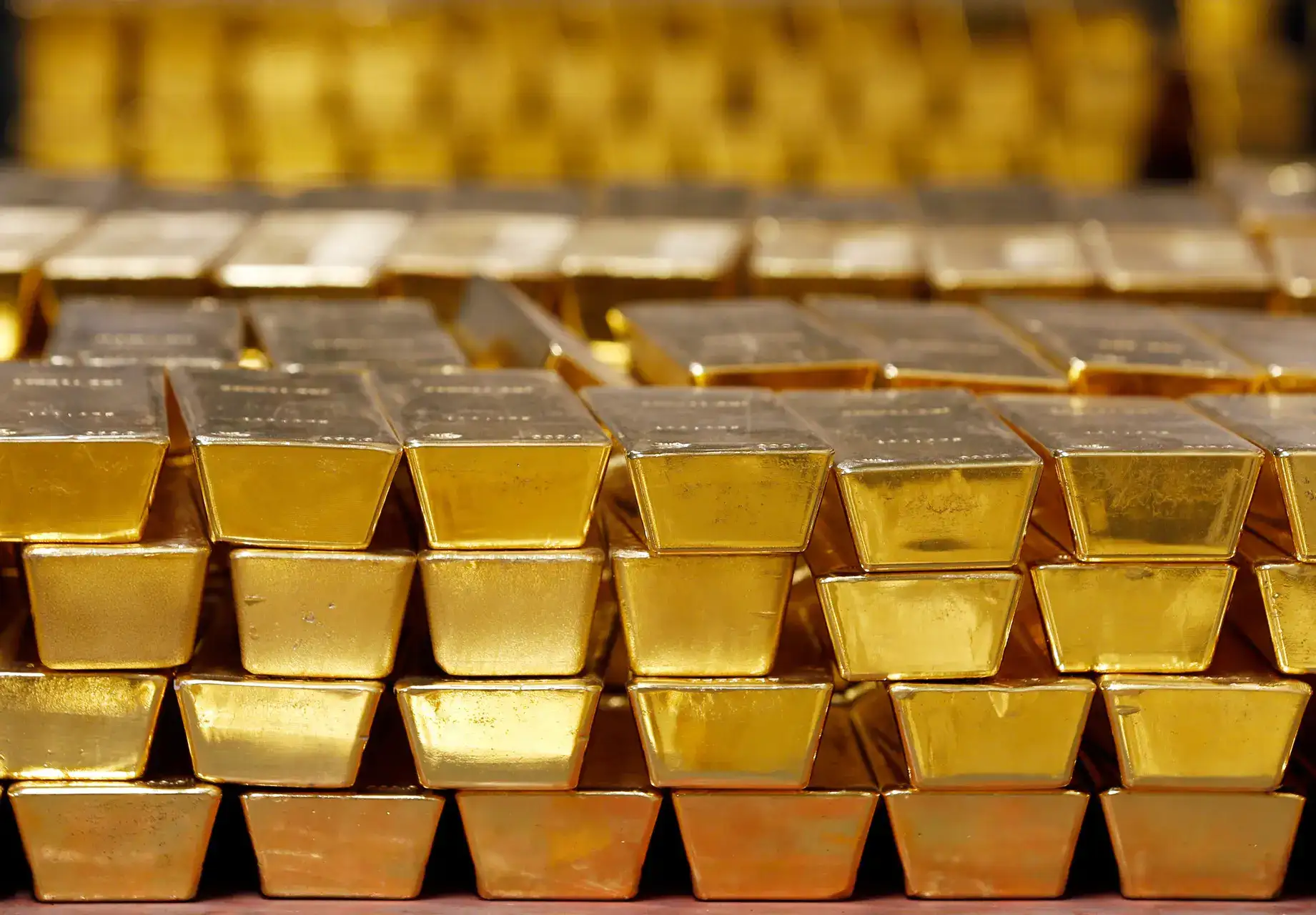
Should gold investors be disappointed that the precious metal has failed to kick on from its January record high above $5,500 an ounce, or should they be relieved the pullback hasn't been more severe? The price history over the past two decades suggests that strong rallies, such as the one from September 2022 to January 2026 when gold gained 245 per cent, are followed by substantial declines, even if the bulk of the gains are consolidated.
In the rally from a low of $697.45 an ounce in October 2008 to a then-record-high of $1,884.40 in September 2011 gold gained 170 per cent. It then declined by 37 per cent to a low of $1,191.35 by August 2018, Reuters reported.
From that low it jumped 74 per cent to a high of $2,072.49 an ounce by August 2020, before retreating 22 per cent to $1,620.20 by September 2022. It's worth noting that the bigger the increase in prices the bigger the subsequent decline, and a further point is that the rallies tend to happen over shorter time spans than the retreats.
From the September 2022 low gold went on a tear, rising to an all-time high of $5,594.82 an ounce on January 29.
Since then it has softened by 20 per cent to end at $4,473.89 an ounce on Thursday. Based on the previous rally and retreat pattern there would seem to be the possibility of a bigger decline in coming months and even years before the uptrend resumes.
But this assumes that the same dynamics that drove the previous rallies and periods of consolidation still exist today.
There is an obvious risk to saying "this time it's different," and markets are littered with examples of this kind of thinking ultimately proving incorrect. That said, the current rally was largely achieved by a combination of bullish factors, and it was unusual insofar as all of them were pulling in the same direction at the same time.
Three main factors stand out, namely increased central bank purchases, strong retail demand by the top two buyers China and India, and support from investors in what can broadly be described as the fear trade.
This includes fear of higher inflation, fear of adverse geopolitical developments, and since the return of Donald Trump to the U.S. presidency, fear that his policies will undermine the status of the U.S. dollar as the global reserve currency, and with that the associated loss of U.S. economic hegemony.