The problem with demergers, they say, is that the costs of separation – like tax bills and lawyers’ and bankers’ fees – are paid up-front whereas the claimed benefits tend to be ill-defined or prone to disappearing in the wash.
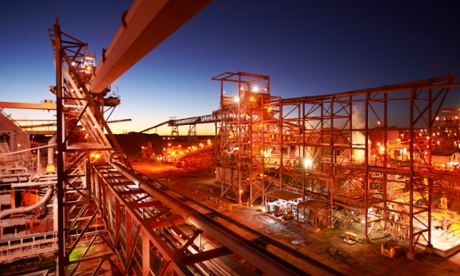
BHP Billiton is partly guilty on this score. It is in the process of spinning off a collection of aluminium, coal, nickel, manganese, silver, lead and zinc assets under the oddball name of South32.
The cost of the demerger is a mighty $641m (£435m) after tax plus $60m a year for South32 to set itself up for independent life. On the other side of ledger, apart from $100m of savings, the main purpose of the exercise is “greater focus”, an ambition where gains are notoriously hard to measure.
Does this make the great shuffle of mines a waste of time? Actually, no. This restructuring looks sensible. We grumble here regularly about companies that make themselves so large and complicated that they baffle even their own managements (think: the big banks, especially HSBC, and Serco etcetera), so BHP’s search for simplicity should be applauded.
Prospects for South32 – most of its assets are in Australia and South Africa, linked by the 32nd line of latitude – will not be transformed by the mere act of separation. But there is a fair argument that a newly-independent board will make cuter investment decisions.
Boss-in-waiting Graham Kerr can’t complain that his hands are being tied. BHP is shoving only $674m of debt on to South32. Kerr will have a company worth $14bn-ish, think the analysts, and the chance to increase its value, even if a bidder doesn’t show up.
BHP will still be colossal and remain the world’s biggest miner, spanning iron ore, copper, coal and oil, with a sideline in potash. But instead of having 41 assets in 13 countries, it will soon have 19 in eight. That must be easier to control.
The sweetener for shareholders is that BHP chief executive Andrew Mackenzie is sticking to his promise of a “progressive” dividend. Thus, from the point of view of shareholders who will get one South32 share for every BHP share they own, any dividend that flows from the liberated entity counts as an effective increase.
Plunging commodity prices could yet ruin both company’s hopes. But demerger seems the right way to confront the risk. For a decade and a half during the bull market, miners were obsessed with getting bigger; this looks a smarter approach.
Sainsbury’s doubts
So, Sainsbury’s has not been smashed by the assumed revival of Tesco. On current form, the chain is putting up stiffer resistance than, say, Asda. Sainsbury’s like-for-like sales fell 1.9% in the current quarter, a better outcome than doomsters had predicted.
But the problem with gauging progress against City estimates is that you miss the wider trend. This was the fifth quarter in a row of declines in like-for-like sales at Sainsbury’s and you would have to be an extreme optimist to believe the run ends now. Inflation on food is running at minus 2.5% and chief executive Mike Coupe expects more deflation for the rest of the year.
The unanswered question is what happens when Sainsbury’s has exhausted its £150m fighting fund of price cuts. Half has been spent, the rest will be dispatched over the next six months. There is no reason to doubt the boast that Sainsbury’s is as competitive on price as it has ever been, but the suspicion remains that more ammunition will be required if Tesco gets back on its feet properly, as opposed to merely staggering to its knees.
This was a 10-week trading update without profit or margin figures. It’s no basis from which to make definitive judgments. More price pain for shareholders may lie ahead.
Green stays silent
Those wondering when Stephen Green – Lord Green of Hurstpierpoint, former chief executive and chairman of HSBC – will recover the power of speech will have to wait a little longer.
Green was due to give a Lent lecture on Wednesday evening at the parish church of St Michael’s Cornhill in the City on the subject of how Germany’s past is shaping its European future. Unfortunately, cancellation notices appeared on Tuesday.
No explanation was given, so we don’t know if Green was worried that a parishioner might ask the obvious question: this German stuff is all very interesting, but what can you tell us about HSBC’s past in Switzerland and Mexico while you were the top man?
That question still needs to be asked by MPs after the general election. There are signals that will be, thankfully, otherwise the silence would be embarrassing – both for parliament and for Green.
Apologies to Lord Green. It was said here incorrectly on Tuesday that he had cancelled a speech the following day at St Michael’s Cornhill church in London. In fact, the former chief executive and chairman of HSBC gave the speech, as we reported. It was another speech next week at Queen Mary University of London that had been cancelled.