I suspect I’m not alone in feeling a little quiver of disappointment when I discover that the show I’m going to see has only one performer. It’s seldom that the bodies on stage outnumber those in the audience, unless perhaps the show features a massed choir or band. BThere is certainly something thrilling when you see a stage teeming with life, as if the sheer number of people are creating dynamics that one person might find hard to achieve.
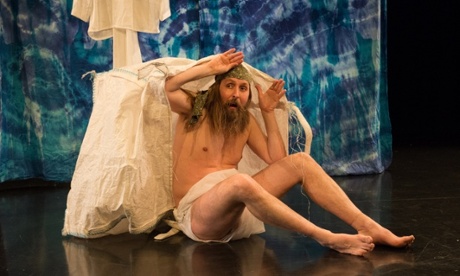
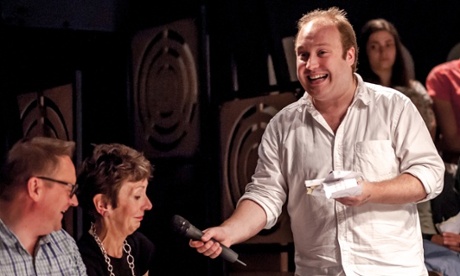
So my heart should probably have sunk to the bottom of my boots after spending three weeks in Edinburgh, where the one-person show is very much in the ascent. But one thing recent festivals have demonstrated is that these don’t just have to be monologues. Yes, the mega-hit Every Brilliant Thing only has one performer – the phenomenal Jonny Donahoe – but it’s a dialogue with the audience, who are craftily called in, to play alongside the performer. It’s an example of playwright Duncan Macmillan’s idea that, at its best, theatre is “incredibly direct and incredibly interventionist”. Jamie Wood’s brilliant O No! similarly can’t exist without the audience being present, active, willing and fully participatory.
These works feel no more like one-person shows than Simon McBurney’s remarkable The Encounter, which after its Edinburgh international festival debut goes out on a nationwide tour this month. McBurney may be the only person on stage during the two hours of the piece, but it’s no surprise that he brings the entire technical team on stage for the curtain call, because it is by using technology that McBurney creates an experience with dimensions that go far beyond the traditional one-person show.
There are still plenty of the more traditional shows: they’re either from literary roots, or plays in which a virtuoso performer gets to show off their ability to switch from one character to another. Audiences, and those who hand out awards, often love this kind of acting, although I have to confess few straplines fill me with more dread than: “One performer plays 132 characters!” It’s great when the dread is entirely misplaced, but too often such shows feel as if they are driven by economic imperatives rather than artistic desire. They may be cheaper and easier to tour, but they can be hard to programme and having too many of them can give the impression that theatre is a small, impoverished, navel-gazing form.
As Mark Fisher observed in an article towards the end of the fringe:
There was a point in the middle of the fringe when the number of me-me-me plays (not all of them monologues) was beginning to grate. It wasn’t any show in particular, just the cumulative impact of performer after performer believing themselves to be the most interesting person in the room. Such solipsism appeals to the willingness of audiences to identify with an actor’s emotions (‘How sad their illness made me feel!’), but is frequently a cheap substitute for a deeper dramatic dilemma.”
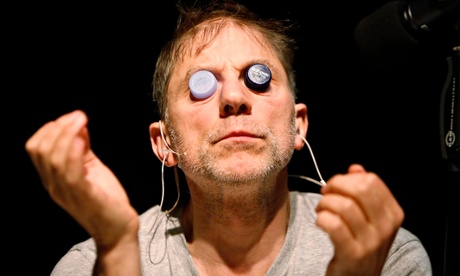
The one-person show is at its most interesting when it looks outwards rather than in, and, playing on the relationship between performer and audience, wants to be a conversation rather than a monologue. It’s what makes shows such as Daniel Bye’s Going Viral, Chris Thorpe’s Confirmation, or Joe Sellman-Leava’s Labels so interesting. The latter is a case in point, beginning with Sellman-Leava’s own experience of growing up with mixed heritage but broadening out to challenge our willingness to quickly label people. The show is not about him – OK, to a degree it is – but mostly about us.
What this suggests is that just as theatre is currently reconsidering what it is and might be, so the solo show is reinventing itself. That may include using technology, drafting in guest performers (very much a trend this year, in shows such as Manwatching and Michael Pinchbeck’s The Man Who Flew into Space From His Apartment) and most of all playing with ideas about the audience’s relationship to the work, placing us at the very centre of the experience. Daniel Kitson’s mighty Polyphony manages to do two out of the three quite brilliantly.
Old-style solo shows will go on even if nobody bought a ticket or turned up – but these new works make the term “solo show” redundant, because they cannot exist without an audience. They see themselves not as statements, but as part of a much wider conversation about who we are and how we live.