Even in the seaside paradise of the New South Wales south coast, politics in this election campaign is fuelled more by a list of grievances than a sense of hope or opportunity.
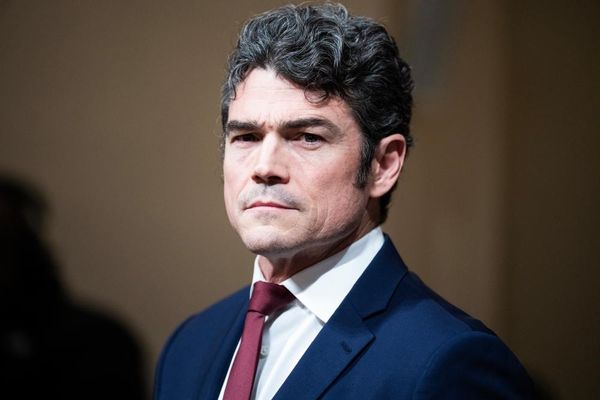
In the seat of Gilmore – the Coalition’s most marginal in the state – the Liberal party’s Warren Mundine is in the hot seat, fighting on multiple fronts.
“I predict over the next two weeks there will be a filthy, dirty campaign down here … It shows how desperate people are getting, and how angry people are getting,” Mundine says.
He has had an aggressive Labor candidate telling him he needs to go back to where he came from, Liberal members defecting to the Nationals and an independent, and now a subterranean campaign making allegations of domestic violence, which he strenuously denies.
The marginal seat, won in 2013 by retiring Liberal MP Ann Sudmalis, shot to national prominence in January when Scott Morrison picked Mundine as the Liberal candidate, prompting Grant Schultz, son of the former Liberal MP Alby Schultz, to quit the party and run as an independent.

A long skinny electorate on the NSW south coast, stretching 200km from Kiama in the north to Tuross Head in the south, Gilmore is made up of a string of seaside towns. On a margin of just 1,500 votes, or 0.7%, it is a must-win for Labor to form government.
With three conservative candidates on the ballot, you might expect Labor’s Fiona Phillips to be in the toughest position. But it’s Mundine, a former president of the ALP, who says he changed sides to help Australians fulfil their aspirations, who has taken the full force of a negative campaign.
Some locals will vote against Mundine due to perceptions he’s an outsider.
That line has been driven hard by Phillips, to the extent of telling Mundine he “needs to go back to where he came from” – comments Mundine labelled “quite insulting” to him as an Aboriginal man. His mother’s family is from Moruya, Broulee and Batemans Bay, and he has voting rights in the south coast native title group.
Indigenous studies teacher Nicole Moore, a Labor member, says she has “ideological differences” with Mundine but agrees it is “not appropriate to tell a traditional owner to go back to where they came from”.
“As an Aboriginal person I am proud and happy to see an Aboriginal person succeeding.
“Best of luck to conservative Aboriginal politicians – I have no doubt he wants the same end outcome for all people, we just have very very different, diametrically opposed views on the best way to get there.”
Despite ruffling feathers with the comments, Phillips did not resile from them. Central to her appeal is the claim she is the true local – she reminds voters at every opportunity that she grew up on a dairy farm and saved the Nowra swimming pool.

Voters appear to have got the message, but they relay it in more explicitly negative terms. Variants of “parachuted in” were raised again and again by voters expressing unwillingness to vote for Mundine.
Now he must also do battle with the spectre of a dirty tricks campaign – with stickers popping up in Moruya pointing voters to articles online containing allegations of domestic violence by his first wife Jennifer, which he describes as “totally false”.
Mundine tells Guardian Australia he is not surprised, because “this is the sort of dirty campaign you expect”.
‘There is a big class divide’
Sophie Ray, a local business owner, says Gilmore is a “microcosm of Australia” – except that it has a higher than average Indigenous population and lower than average multicultural migrant population.
With pockets of “enormous wealth” in the north of the electorate, as well as farmers, two defence bases, small business people, public servants and many retirees, it has “a hugely disparate range of interests, views, [and] needs”, Ray says.
The senior minister at All Saints Anglican church in Nowra, Geoff Thompson, says the Shoalhaven is one of the most beautiful places in the world but one that also has a “tragic underbelly”, citing domestic violence and “unacceptably high” youth unemployment levels.

GP Liz Cuninghame says homelessness and drug dependence are a “vicious circle” because “there are no services that really provide rehabilitation to people”.
“There is a big class divide in Gilmore.”
Cuninghame says GPs are forced to charge patients out-of-pocket costs because the Medicare rebate “hasn’t changed significantly in a decade, it hasn’t been indexed”.
“This is a serious issue for people in Gilmore who don’t have employment, because they literally can’t afford to access healthcare.
“I don’t think that’s addressed by any of the politicians.”
Thompson wants to see more investment in community groups delivering services, but “it’s hard to know at what point in a culture with so many problems … where is best to intervene”.
Youth unemployment should be the top priority, he says, because it is a “breeder for hopelessness”.
‘I’m wavering’
Fiona Phillips says the biggest issue is the level of disadvantage in the electorate, with some residents waiting years for elective surgery or dentures.
Labor went into the campaign with an almost unprecedented national platform to tackle disadvantage: from $14bn more for public schools, $2.4bn for seniors’ dental care and a commitment to double the Coalition’s $328m package to prevent domestic violence.
But in an alarming sign for Labor, very few of these expensive policies have filtered down to the local level in Gilmore.
The one policy that consistently rates a mention is Labor’s plan to raise $57bn by ending taxpayer-funded cash rebates for self-funded retirees with excess franking credits, which the Coalition has labelled the “retiree tax”.
At the Kiama farmers’ market, Roz Davies says: “I’m not happy with the Labor [party], I can tell you, because I’m a self-funded retiree and [Bill Shorten] is going to take our imputation from us.
“The tax has already been paid on that money, from the companies, so he’s actually getting double tax, and making it harder on us.”

The retiree tax label set Phillips off at politics in the pub at Huskisson last week.
In a stagy gladiatorial display, she hopped off her stool, roaming in front of the crowd before turning to accuse the Coalition candidates, Mundine and the National party’s Katrina Hodgkinson, of peddling “absolute lies”.
The Australian Council of Trade Unions is also helping Labor with a counter-attack, in the form of leaflets accusing Mundine of wanting Australians to “work until you drop”, citing comments in 2016 that the retirement age may need to be lifted.
On the progressive side of politics, the conservatives’ failure on environmental issues is the animating force.
Ray Price, a Landcare member and resident of Wattamolla in Kangaroo Valley, says climate change is his number one issue.
“We do live on the land [and] the impact of it we tend to see more,” he says. “The changes in rainfall patterns, the impact on the grass growth, the vegetation, the storms, the changing pattern of climate.
“We’re getting one-in-100-year storms five or six times a year.”
Lucy Hill, from Gerringong, says: “A lot of people are focusing on education, health or economic management, but for me economic management is a given, you don’t need to highlight that.
“But really – the environment – it’s the legacy we’re leaving for our little ones, and if we don’t have it there it doesn’t matter how good your economic management is, there won’t be anything to manage.
“With that in mind I’m wavering between going Labor and Green.”

‘People come here spreading lies’
But the biggest grievance in the race is still the way Mundine was chosen, which Ray Jarvis tells Guardian Australia prompted him to quit the Liberal party and join the Nationals to help Katrina Hodgkinson.
Hodgkinson is one beneficiary of Liberal disaffection and has secured endorsements from former Liberal members Sudmalis and Joanna Gash.
Hodgkinson’s pitch is that Nationals “only run in regional areas, so our focus is totally on coastal and country Australia”. Mundine doesn’t disagree, but suggests the Liberals have a broader national focus and better policies for small business.
Hodgkinson tells Guardian Australia farming “needs a break” from “red tape”, criticising Labor and Greens plans for a federal Environmental Protection Agency, because the state government already sets rules on land clearing.

With 16 years in the NSW government and ministerial experience, Hodgkinson is a highly polished performer.
Unfailingly polite in public forums, she takes questioners’ names as they lob grenades in her direction. At Huskisson she calls on her support for needs-based schools funding in the NSW government to suggest she is on one Labor supporter’s side, before skating away from any concrete commitment.
But Hodgkinson is less keen to run on her state record on water management. She bristles at the suggestion that as primary industries minister she was personally responsible for the NSW Barwon-Darling water-sharing plan, which benefited a few large landholders, blaming “a myriad of bureaucrats [and] scientists”, the water commissioner, the cabinet and drought.

“Water isn’t rocket science – it’s actually a lot harder,” she says.
At Huskission she notes the Murray-Darling Basin plan was a federal instrument agreed between multiple states and territories. But it’s an excuse that doesn’t wash with Grant Schultz, who describes the basin plan as a “disaster”.
“It wasn’t just her that made the decision, however she was the primary industries minister and she has to bear responsibility for that.”
Schultz is the disruptor of the campaign. He accuses the Liberal party of losing its “integrity and democracy” when it dumped him.
But there is no great philosophical break with the party. Beyond the grievance about process, Schultz’s campaign is focused on the $500m pledged by the major parties for the Princes Highway duplication – which he says is insufficient for the $15-$16bn project – and the Liberals’ failure to commit to 80/20 federal-state funding.

Guardian Australia found plenty of conservatives planning to vote for Hodgkinson and a few for Schultz, but Phillips insists Mundine is her real opponent.
Labor polling suggests it is too late for Hodgkinson to make inroads into the Liberal vote, and Schultz will be relegated to the status of also-ran come 18 May.
Mundine says his opponents “thought they were going to have a walk-in” due to infighting on the Liberal side. but “now they know they’re up for a battle”.
Phillips says she has tried to focus on Labor’s “great policies” to reduce disadvantage while the Coalition is a “four-ring circus”.
When voters seem fed up with politics she returns to the fact that she is a mother of four and a Tafe teacher.
“People relate to that, because they actually say ‘oh you’re a real person – you’re like us, you’re just like us’, and I say ‘that’s exactly right’,” Phillips says.
“That’s what makes me so mad when people come here spreading lies – lying to pensioners.”
There are substantive policy differences between the major parties that would have a big impact on Gilmore – but negative campaigning is never far away, the indispensable hammer in an electorate with problems so much more complex than a nail.