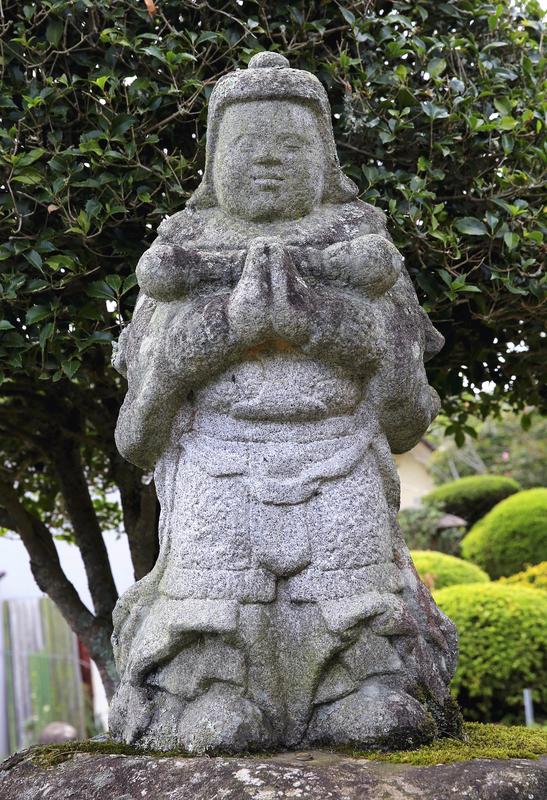
A 1.2-meter-tall statue of Idasonten, the god of running, stands at Shuzenin temple, which belongs to the Buttsuji temple school of the Rinzai sect, in Sera, Hiroshima Prefecture. On the base, the words of Sozen Ichinyo, which mean mastering the art of running can be compared to reaching the state of enlightenment of Zen, are inscribed. In other words, running a long distance requires accumulation of daily efforts as well as nurturing and training your mind.
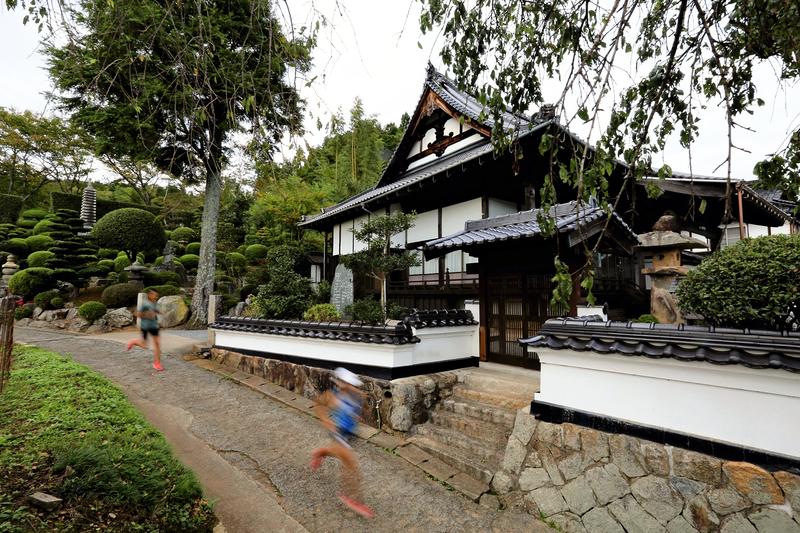
On the gravel road nearby the statue, high school students are running up toward the mountain. Finding a statue of Idasonten, also called Idaten, who runs faster than any god, installed outdoors is said to be rare. The statue stands at the corner of the temple's grounds as if watching over runners.
The town, with a population of about 16,000, is located at almost the center of the prefecture. It is known for ekiden road relay races rather than its local specialties, including rice and fruits.
The boys' track team of Sera High School, located about 500 meters away from the temple, won nine times at the annual year-end national high school ekiden championships, the record for the championships' history. Four years ago, the team won the race together with the girls' team from the school. In Sera, children and adults also enjoy running in ekiden relay races. Running activities have become its culture and a part of everyday scenes.
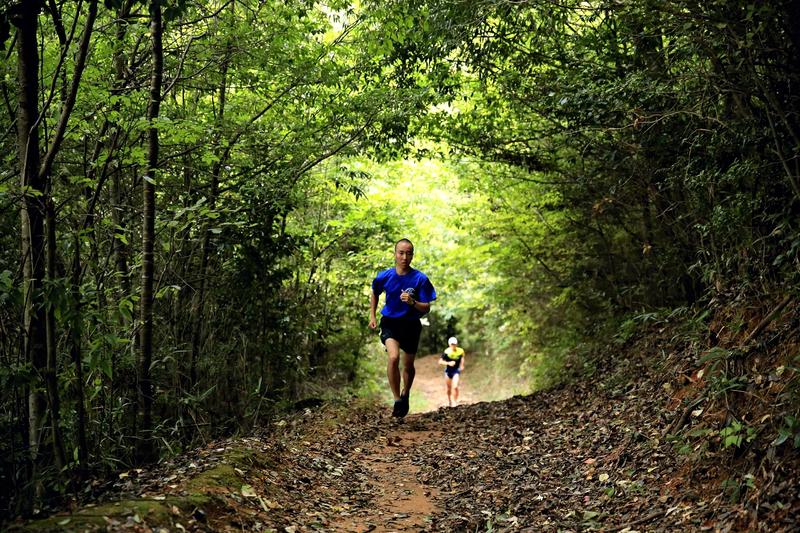
On the hill behind the temple, founded in 1414, a cross-country course stretches about five kilometers where Sera High School track team members practice.
"I wonder how I could make it running such a tough course for three years," said Susumu Hara, 52, a graduate from the high school who belonged to the track team. "But the course is a 'holy site' for runners," he added.
Hara has served as head coach of the Aoyama Gakuin University ekiden team and led the team to win the annual Tokyo-Hakone Intercollegiate Ekiden road relay race for four straight years.
In 2013, the Runner's Information Research Institute, established by the Japan Tourism Agency, certified the course as a "path where the god of running resides."
Shuzenin chief priest Keishu Kanda, 56, is another graduate of the high school's track team. Kanda decided to become a Zen monk after being persuaded by the temple's predecessor. At the temple, Kanda always feels connection to the people running nearby. By becoming a monk at the temple, he said: "My wish, to get involved in running activities all my life, came true. Pursuing the world of running can be compared to making a step forward to the Buddhist teachings."
About 2,000 people visit the temple every year for Zen sitting meditation. While Zen meditation and running represent totally opposite acts, common elements can be found -- facing oneself and restoring a proper mental and physical state.
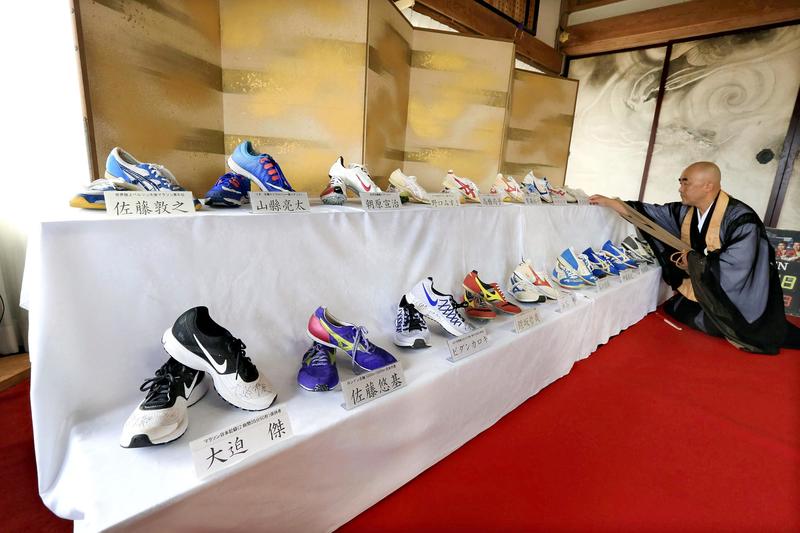
On the second Saturday of every November, an Idatenko Kutsu Kuyosai, or ceremony for offering thanksgiving to cherished shoes, is held at the temple. In the ceremony, started in 1983, people lay their favorite worn-out shoes to rest and also pray to be a better walker or runner. During the ceremony, shoes of the most successful athletes of the year also are left as ritual offerings. Those now include shoes from women's Olympic marathon gold medalists Naoko Takahashi and Mizuki Noguchi.
On one early morning before the sun fully lit the temple, a high school student was sitting for Zen meditation. As the morning mist was still covering the temple's roof and the sky was getting brighter, I heard running footfalls from the distance.
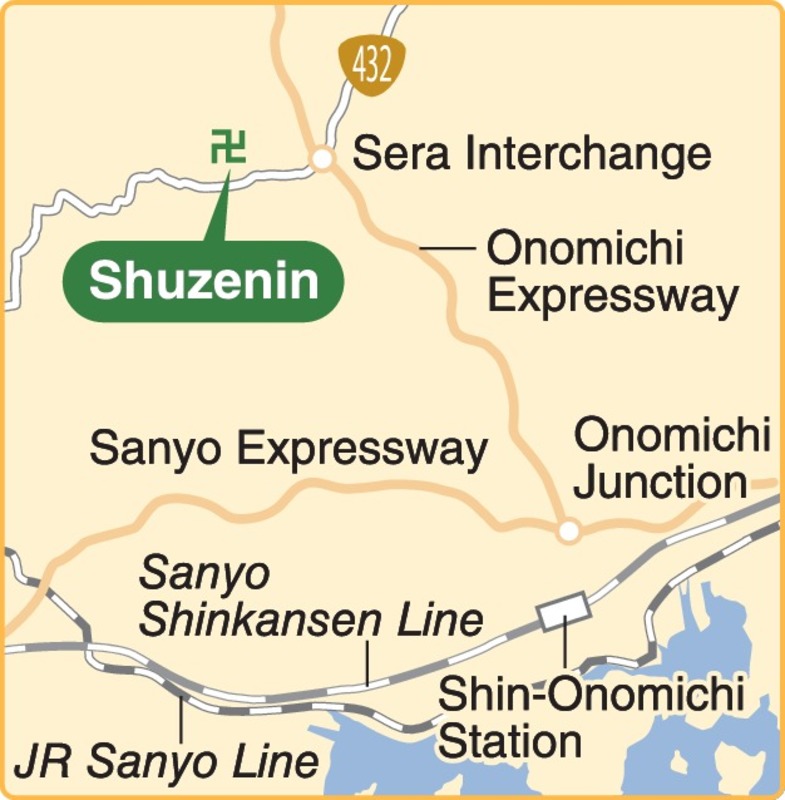
Access
About 10 minutes by car from the Sera Interchange on the Onomichi Expressway. A reservation is required to see the temple's collection of shoes.
For more information, call the Sera town sightseeing association at (0847) 22-4400. Closed irregularly.
Read more from The Japan News at https://japannews.yomiuri.co.jp/