The government's announcement regarding how many people took advantage of the Go To Travel tourism support campaign revealed regional differences in the effectiveness of the government-sponsored program.
The Land, Infrastructure, Transport and Tourism Ministry on Aug. 25 said at least 4.2 million people have used the program in about a month since its launch.
While tourist numbers have rebounded in some areas, some observers believe the effect has been limited, as there are still significantly fewer people in major tourist areas.
The program began on July 22, and the Japan Tourism Agency interviewed major operators and tallied the total number of overnight guests from July 27, when the sale of travel products at discounted prices began, to Aug. 20.
Many tourists are using the campaign to travel short distances, according to the agency. Kusatsu Onsen hot spring resort in Gunma Prefecture saw more tourists hailing from neighboring prefectures such as Saitama and Tochigi.
Overnight guests and sales at major lodging facilities in August have both recovered to about 70% of their year-ago levels.
"The Go To program is providing people with an opportunity to travel," said Yukio Kuroiwa, the head of the local ryokan inn association in Kusatsu Onsen.
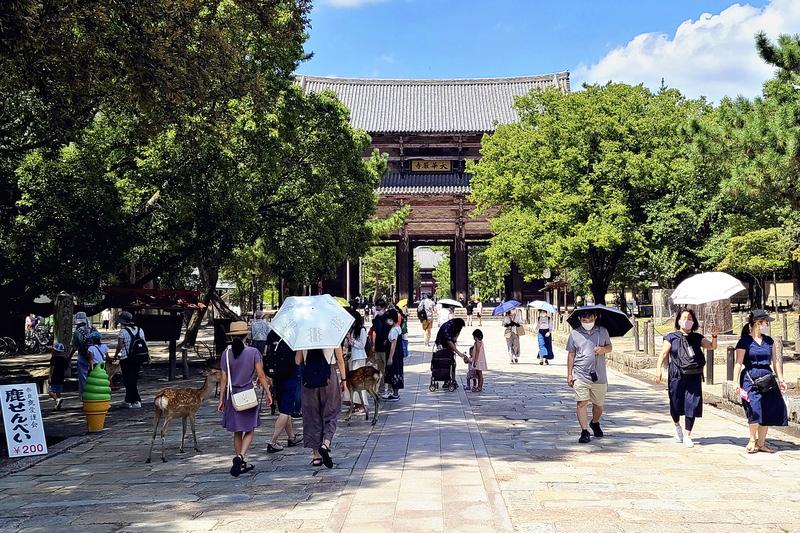
However, there are regional differences. For example, the flow of tourists staying overnight in Nara City has been sluggish.
"We haven't heard much about the effects of the program," said an official of the Nara City Tourism Association.
There was a slight increase in foot traffic at Kamakura and Hakone-Yumoto stations in Kanagawa Prefecture compared to last August's holiday average, according to an Aug. 14 survey by au mobile phone brand operator KDDI Corp. using smartphone location data to analyze the number of people visiting major tourist destinations. Meanwhile, many other tourist destinations relatively far from major metropolitan areas, such as those in Shizuoka and Mie prefectures, saw a significant decrease.
During last year's summer vacation period, the total number of Japanese people staying overnight was about 50 million per month. With many people holding off on travel this year due to the spread of the coronavirus, it is not clear how much the campaign has boosted travel demand.
"We're off to a good start," said tourism minister, Kazuyoshi Akaba at a press conference.
"It's still too early to evaluate the effects of the program at this point," he said.
The government has been exempting travel products to and from Tokyo from the discount program. There is no indication the restriction will be lifted in the near future.
Tokyo-based Hato Bus Co. has seen sales of its sightseeing bus business fall by more than 90% for five consecutive months since March. The operator plans to sell more than 10% of its buses. Even in the Kusatsu Onsen, which is seeing a return of visitors, the number of tourists from Tokyo, its main source of visitors, is said to be about one-fifth of the usual years.
"The public's appetite for travel has not been boosted, and the number of users is limited," said Akiko Kosaka of the Japan Research Institute Ltd. "The exclusion of Tokyo from the program also has had a significant impact."
Read more from The Japan News at https://japannews.yomiuri.co.jp/