20 years after the events of her childhood, Jean Louise Finch goes back to her childhood home (Maycomb, Alabama) to visit her family and friends – though she quickly begins to realise that everything is not as it seems and a lot has changed in Maycomb in the last 20 years.
But will Jean be able to take it when she finds out some things about the people who she thought she knew: her family and friends? And what is she meant to do when she can barely stand the people she once loved to be around?
Go Set a Watchman, the second of Harper Lee’s two books, is not a heart-warming, optimistic book, it’s more truthful and realistic. Maybe it’s not what people need to read, or hear, compared to To Kill a Mockingbird, but it is much more of an accurate representation of the South and what life is like in this world, especially at that time, as there was not that perfect humanist, white man who completely cares for justice and about people, whether they are white or black or wherever they were born or from. Harper gave people what they needed, not what they had.
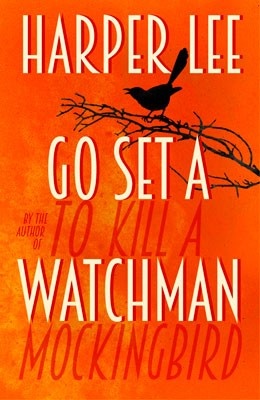
Harper Lee, using a more impartial, less biased third person voice, instead of the young child-like Scout (Jean Louise) of To Kill a Mockingbird, shows a great view of family and your perceptions of people and what they are, what you think they are. Scout Finch (which she is called in To Kill a Mockingbird and is her childhood nickname) sees her father, Atticus, as a god-like creature, someone who is inevitably better than everyone else, a separate entity. In Go Set a Watchman, Harper completely strips all of this away.
However, as with everything, there is fault in Harper Lee’s Go Set a Watchman. Towards the end of the story it seems like it was a bit of a cop-out, that old, white, racist men should be able to get away with all of the wrongs that they have done and should not be questioned, shouldn’t be punished for what they did.
To conclude, Go Set a Watchman was an interesting read which gave much more meaning to the first of Harper Lee’s books but, obviously, it could have used some tweaking and maybe it should have, towards the end, taught us more that you cannot get away with treating people differently depending on what country they were born in, the colour of their skin, their gender or their sexuality. For all of the above reasons I will be giving this book a 7.5 out of 10.
- Buy this book at the Guardian Bookshop