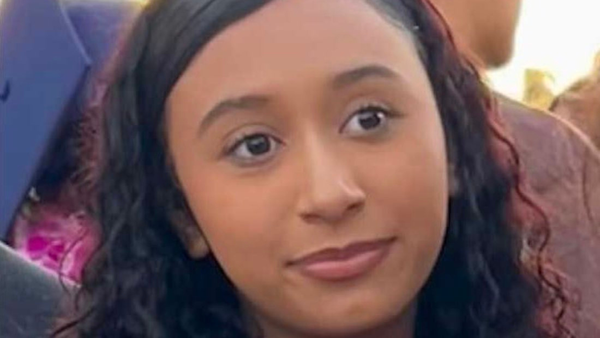
“Wipe your feet and tell yourself that you never coming back,” writes the mother of Tane Chatfield, a 22-year-old Indigenous man who died while awaiting trial in jail.
“You all know that you’re not loved in jail and the place is no good for you. Go back to your place of love, your hometown and take your place as strong Aboriginal men/women.”
Nioka Chatfield wrote her letter two months after her son, a Gumbaynggirr and Gomeroi man, was found unresponsive in his cell at Tamworth Correctional Facility.
It’s signed by his family and is being delivered to every Aboriginal and Torres Strait Islander prisoner in New South Wales.
The letter calls on the incarcerated Indigenous population to remember their community roots, to care for each other in a system that doesn’t, and to remember the legacy of Indigenous incarceration.
“You all come from a community and you have a connection with your loved ones, that you have left behind, take a minute now to think about your homeland wherever that may be,” it says.
“This is our message: in the spot where you stand or sit right now ... think about all the Aboriginal warriors lost to black deaths in custody, think about all the families left home grieving and suffering.”
The letter’s circulation, in cooperation with NSW Corrective Services, is an unprecedented event, but the story of Chatfield’s death in custody is all too familiar for Indigenous communities around Australia and other marginalised communities around the world.
Last year marked the 25th anniversary of the report by the royal commission into Aboriginal deaths in custody. The inquiry gave 339 recommendations, most of which states and territories have failed to implement.
Since that time about 340 Indigenous people have died in Australian custody.
Chatfield had been in Tamworth jail on remand for two years, awaiting trial for separate counts of home invasion. On 20 September, the day before he was due to appear in court, Chatfield was found unresponsive in his cell and rushed to hospital where he died two days later.
His death was not treated as suspicious and is being investigated by the coroner. Chatfield’s sister has previously told Guardian Australia the family does not believe he took his own life.
He was the 15th person to die of something other than natural causes in a NSW correctional facility since June 2016.
In October the Chatfields and family members of four other Indigenous prisoners who died in custody met with delegates from the international Black Lives Matter movement.
The atmosphere inside the small hall in Redfern was tense, the speeches were punctuated with sadness, and a palpable feeling of anger and injustice lingered, but one moment stood out with a message of hope.
“I don’t know if any other families did this, but before I buried my boy I wrote a four page letter to the men and women in the jail system, about the love that I have for each and every one of them in there,” Nioka told the crowd.
“Each inmate will receive my letter as they go into the jail system … and it will encourage our fellow brothers and sisters to come home and stay out of them places.”
It’s the first time a letter has been circulated in NSW facilities in this way, according to a Corrective Services spokesperson.
Chatfield’s mother says the outpouring of grief from the community in response to his death was so overwhelming that she had to do something to bring hope to other inmates and help prevent another death in custody.
“After Tane died, I had lots of people calling me and wanting to talk to me so I thought this would be a good way to thank them and to tell the [inmates] to give each other a chance to get out, and get back to their communities,” she told Guardian Australia.
She asked Corrective Services to help spread her message to other prisoners, and they agreed.
The family’s lawyer, Peter Kemp, says the long term goal of the letter is twofold: reminding Indigenous inmates that there is life beyond the walls, while also offering a glimmer of hope for the Chatfields in an otherwise tragic situation.
“By doing that, then maybe, Tane’s life has a different meaning – he’s gone but something positive can be made out of it.”
Kemp says the move to distribute the letter is a step in the right direction for Corrective Services, but criticised the department over incorrect statements to the Chatfield family and ABC regarding the moments leading to his death.
“To put it politely, they need to clean up their act,” he says.
According to the ABC, Corrective Services initially told Chatfield’s family the court had ordered he be separated from his cellmate. The Corrective Services commissioner, Peter Severin, then told the ABC they were separated at the request of the director of public prosecutions.
Then, in a statement made to the ABC, a spokesperson for Severin said it was in fact the prison’s decision to separate the men.
Chatfield was found unresponsive the morning after he and his cellmate were separated.
Among its recommendations, the royal commission said Indigenous inmates should not be left alone in custody and should be “under careful surveillance” if they are.
Indigenous people are still – and increasingly – jailed in overwhelmingly disproportionate numbers, accounting for almost a third of adult prisoners despite only being around 3% of the Australian population.
A joint Corrective Services and NSW Police force inquiry into Chatfield’s death is under way in preparation for a coronial inquiry.
Nioka Chatfield says her family won’t stop fighting for answers about her son’s death.
“I think [the letter] is a step in the right direction, but we come from a long line of warriors and there’s still a lot of fighting to do,” she says.