
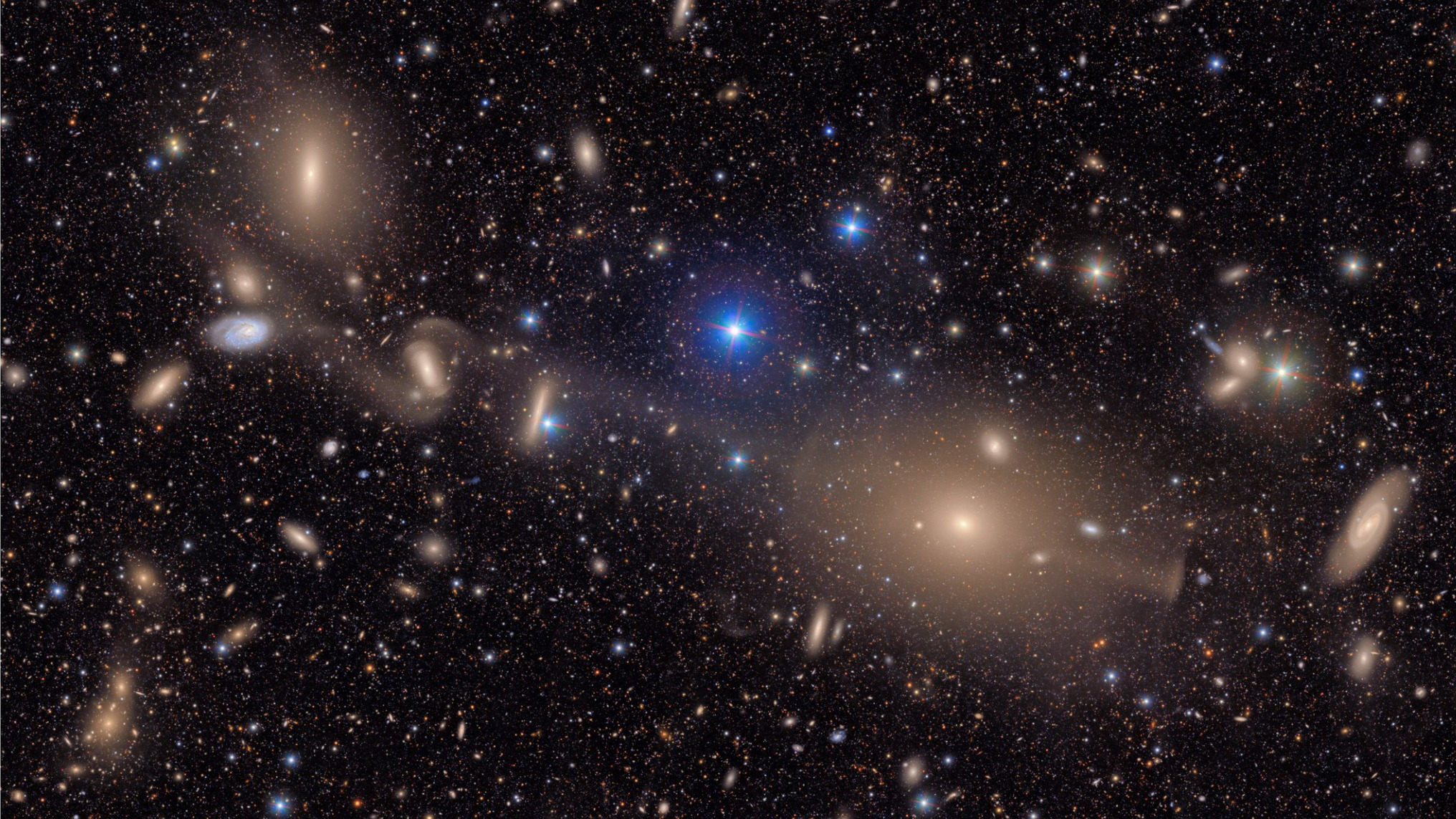
About the size of a car, the largest digital camera ever built has begun capturing high-resolution images of outer space – and the first images are mesmerizing. On June 23, the NSF-DOE Vera C. Rubin Observatory revealed the first images ever captured by the 3,200 megapixel, 6,200 pound / 2800 kg camera.
The first images are the result of just ten hours of observation during the new observatory’s test phase. Beginning later this year, the camera is expected to create a ten-year time-lapse of the night sky.
The first images include a shot shared in a Skyviewer app that allows space fans and photo gear nerds alike to pan around and zoom in on the image. In just those initial 10 hours of recording, the camera has already managed to capture millions of galaxies and stars, along with thousands of asteroids. Using the app, viewers can zoom in for detail on galaxies and other space phenomena that are thousands of light years from Earth.
The Vera C. Runin Observatory, which is a joint effort by the National Science Foundation and the US Department of Energy’s Office of Science, has also shared a shot that combined 678 images taken over several hours into an image of the clouds of gas and dust around the Trifid Nebula and the Lagoon Nebula.
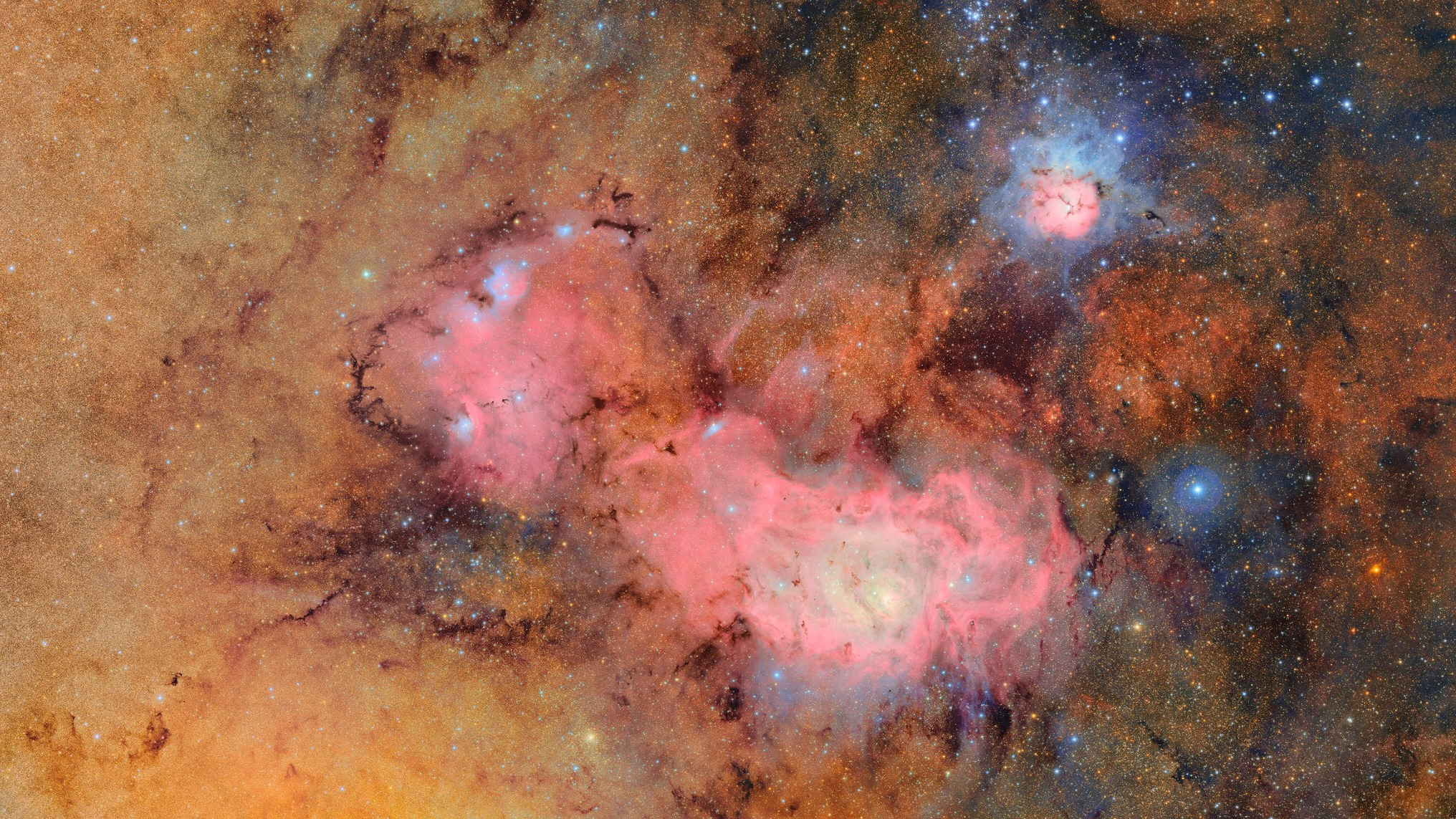
The observatory said that the first images encompass only around .05 percent of the 20 billion galaxies that the camera is expected to capture during its ten-year time-lapse project, which is called the Legacy Survey of Space and Time.
Organizers say that the new camera offers unprecedented depth and clarity, opening up possibilities for discoveries in observing the night sky. The observatory is located on the Cerro Pachón in Chile, where the mountain’s elevation, dry air, and dark skies aid in observing the night sky.
Constructing the camera was a team effort from the SLAC National Accelerator Laboratory. The 3,200 megapixel camera is expected to capture 20 terabytes of data per night, which over ten years will amount to 500 petabytes, which is 500,000 terabytes.
The camera’s lens alone is more than five feet (1.57m) across, projecting images onto 201 custom CCD sensors. SLAC Professor and Rubin Observatory Deputy Director and Camera Program Lead Aaron Roodman explained that that’s enough to photograph a golf ball from 15 miles away.
The camera is paired with the Simonyi Survey Telescope, which uses three mirrors – the primary mirror being 27.5 feet / 8.4 m – to look at the night sky.
The NSF-DOE Vera C. Rubin Observatory’s first images are the result of nearly 20 years of planning and ten years of construction.
The first images from the Vera C. Rubin Observatory are available to explore from the Skyviewer app.
You may also like
For more astro inspiration, browse the best lenses for astrophotography, or read these astrophotography tips.