
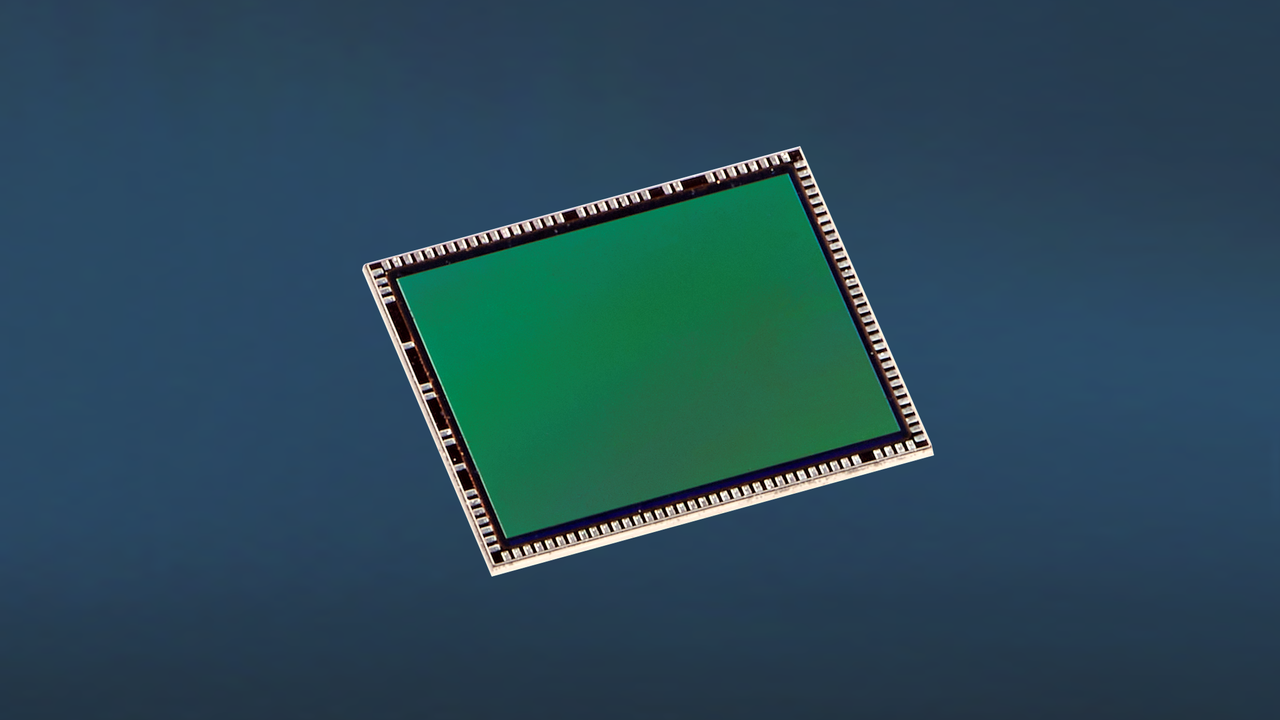
Global shutters have arrived in high-end camera tech – but global shutters still have some disadvantages compared to rolling shutter sensors. But what if cameras could shoot both? That’s the idea behind a series of sensors coming from STMelectronics, which can switch back and forth between global and rolling shutters.
Rolling shutters expose one row of pixels at a time, and, while this happens quickly, the fastest-moving subjects can appear distorted. Global shutters expose the entire image at once instead. This solves the fast subject distortion, but rolling shutters are often said to have better dynamic range and low-light image quality.
The line of sensors from STMicroelectronics can switch between a rolling and a global shutter by swapping modes, choosing a shooting mode based on whether eliminating motion distortion or dynamic range is more important. The company launched similar hybrid sensors in 2022 and recently began production of upgraded models, the VD1943, VD5943, VB1843, and VB5943.
When the sensor captures a rolling shutter image, it combines both a short exposure and a long exposure into a single HDR image. In the global shutter mode, the sensors upscale the image. Both these dual exposure HDR mergers and the upscaling are happening directly on the sensor chip itself, as the new sensors use a stacked design.
That’s not even the only dual purpose these sensors offer – the company also has RGB-IR versions of the sensors, which allow for capturing both visible light and infrared captures from the same device.
Now, before photographers get too excited, these are 5MP, 1/2.5-inch sensors designed for industrial purposes – these aren’t anywhere close to being a precursor to mirrorless tech. But the new sensors' existence begs the question, why can’t cameras have both global and rolling shutters?
The answer likely lies in the fact that the sensors require the combination of two images to get the rolling shutter image and, for global shutter, require upscaling to get the full resolution. The tech certainly doesn’t feel ready for high-end cameras yet.
But, with the amount of computational photography and HDR processing happening on a smartphone camera, mobile photography seems a more likely culprit if such dual shutter mode sensors ever migrate outside industrial use.
Still, I always find it interesting to see what tech industrial sensors get before high-end imaging tech – the idea of being able to choose a global shutter or a rolling shutter from one camera is certainly an intriguing one.
You may also like
For insight onto global shutters, read the Sony A9 III review.