With the global scenario making it increasingly necessary to convert waste into value, the agricultural sector will need to develop methods that convert organic by-products into clean and profitable energy.
On the continents, engineers and researchers are redefining sustainability, starting at the ground zero of the farm.
Scarcely anyone comprehends the balance of science and stewardship better than Senior Process Engineer Piyush Patil, whose work at Roeslein and Associates in the US redefines the boundaries of utilizing waste to power entire industries.
From his childhood curiosity at his family farm in Maharashtra to his high-tech work with anaerobic digestion and renewable natural gas, he has had a career grounded in innovation and a profound connection with the people who farm the land.
Piyush says: “What fascinates me most is how waste can become a resource when treated with the right design, data, and intent. Each digester or drying system we engineer can help reduce emissions, generate revenue for farms, and support circular economies. I've witnessed firsthand why an initially perceived problem becomes the starting point for a cleaner, more resilient future—and that potential is the source of my daily excitement.’’
This perception, born in rural India, is now the foundation of his professional philosophy—a blend of research-based precision and practical innovation that strikes a balance between efficiency and sustainability globally.
Drawing on decades of experience in rural waste management in India, Piyush synthesizes precision, innovation, and a concern for the people who populate every system he envisions. He has moved from rural Maharashtra to American engineering schools, and his journey is not only a personal development but also a significant shift in the global perspective on waste.
His worldwide travel experience, along with a strong technical background and an environmentally friendly engineering education, has made him one of the prominent advocates for the future of bioenergy.
First Influences and Training
Piyush, who grew up in Bhusawal, saw the conditions of rural life as a child—the food-producing fields that were also the source of waste, which, however, was not recycled at all. Those observations were early lessons.
He recalls: “My father managed both a government job and our small farm. Whenever I joined him in the fields, our conversations would often drift to the issue of how much crop residue and manure went unused. We always wondered if there was a better way to turn it into something valuable.” That curiosity shaped his path toward a career in engineering.
After receiving a Bachelor's degree in Chemical Engineering from the Vishwakarma Institute of Technology under Savitribai Phule Pune University, Piyush went to North Carolina State University for doctoral studies in Biological and Agricultural Engineering focusing on sustainable agricultural waste management.
His thesis was titled "Evaluation of Valorization Pathways for Swine Lagoon Sludge Management in North Carolina." The dissertation focused on the development of the methods to improve biogas yield and fertilizer production of this long-lasting waste stream.
Piyush reflects: “Those childhood conversations about waste shaped my path. They taught me to look at a problem from both an engineer’s and a farmer’s perspective. I wanted to create solutions that were effective technologies and provided economic benefits for the people managing these systems daily. Eventually, I understood that empathy and data are two sides of the same coin—understanding people is what allows you to measure the right things.”
His doctoral work ultimately resulted in several peer-reviewed articles, in which he assessed the influence of sonication on biomethane potential, explored pretreatment options for the composting process, and conducted a techno-economic and life cycle environmental impact analysis. These projects formed the connections between what happens in lab-scaled engineering to scalable applications.
Piyush graduated with a PhD in 2023, having built a solid foundation for truly connecting innovation with impact.
Global Career Path and Technical Leadership
Upon earning his Ph.D., Piyush seamlessly transitioned from academic research to large-scale implementation.
His work experience crosses over India and America, with each stage cultivating a particular facet of his capabilities in biological and agricultural engineering. He started at Methanica Pvt Ltd in Pune, where he worked at enhancing anaerobic digestion systems for farm residues.
Piyush explains: “My early work in India was a turning point. It provided me with firsthand exposure to the challenges of implementing waste-to-energy solutions in resource-constrained settings. You learn to innovate with limited infrastructure, and that mindset still influences how I design systems today.”
At Methanica, he contributed to the development of pilot-scale digesters that utilized accelerated anaerobic processes—research that informed his later patents and technical papers. These experiences also instilled in him the practice of evaluating each of these projects not just through their technical success, but also through their environmental and cost effects.
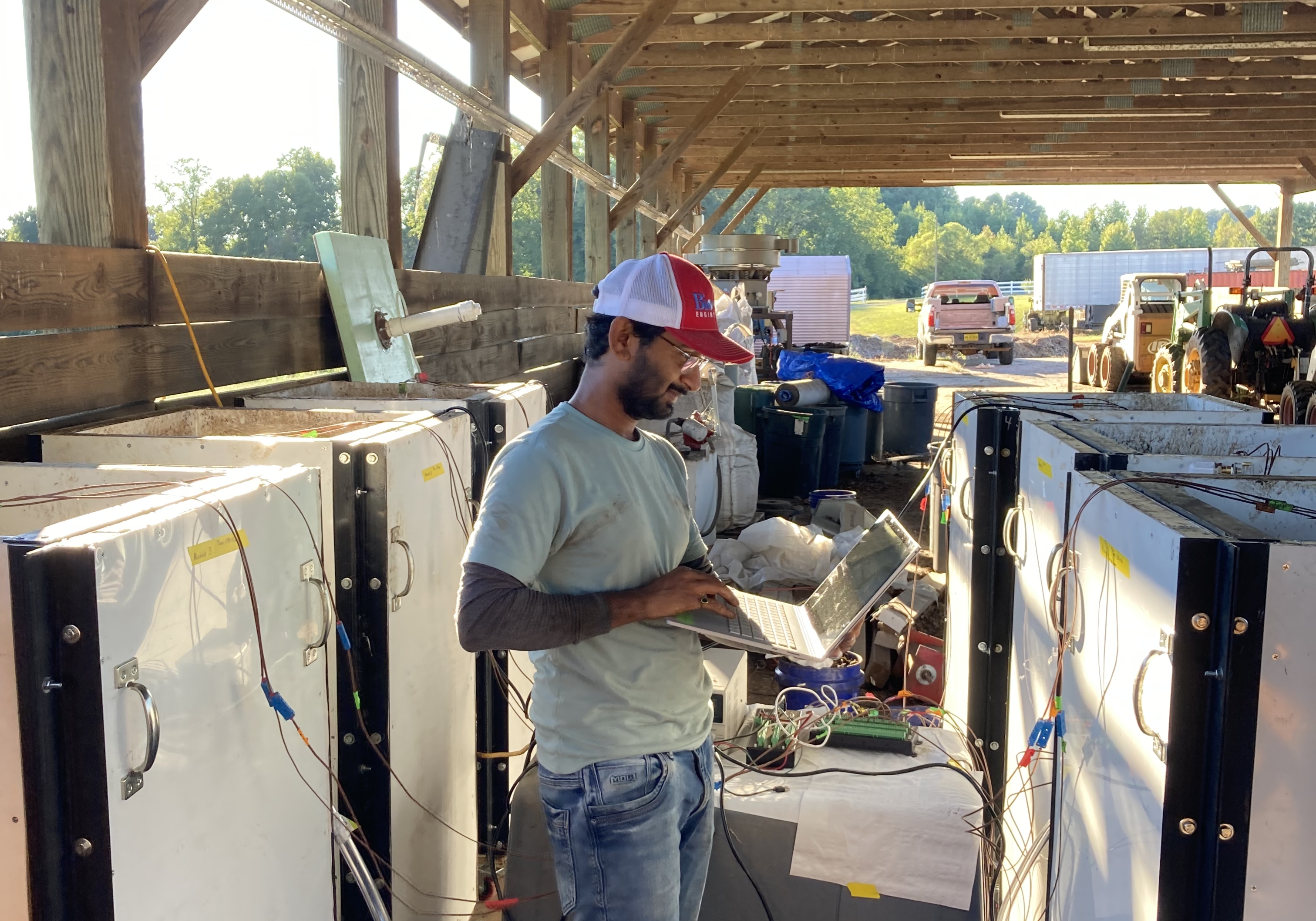
Piyush also honed his systems thinking capacities through his doctoral experience at NC State University, where he directed a multidisciplinary project for several years on the topic of valorizing swine lagoon sludge, which involves transforming a problemetic waste into a usable fertilizer and renewable gas. The project also involved designing an optimized greenhouse drying system and developing a mathematical model to predict moisture loss rates under variable conditions.
He recalls: “That work combined everything I enjoy—field data, programming, and experimentation. I wanted the outcomes to be useful for real producers and presented in a spreadsheet format. It taught me that the best models aren’t built for academic perfection—they’re built for operators who must make decisions in real-time. That insight continues to shape how I connect research outputs with operational reality.”
The transition to the US corporate bioenergy sector occurred without difficulty for Piyush.
He works as a Senior Process Engineer for Roeslein & Associates on projects that convert agricultural and industrial waste into renewable natural gas (RNG). His interests include the design of anaerobic digestion systems, process optimization, and performance benchmarking.
Piyush was assigned, in one of his main projects, to evaluate nineclient-site digesters that collectively generated more than $40 million in annual revenue potential. His analytical review revealed material inefficiencies that, once corrected, increased yield and operational uptime.
He explains: “It’s all about understanding where systems lose value. By digging into data, you can pinpoint whether it’s an input-quality issue or a process bottleneck. Once you fix those, the financial and environmental returns can be dramatic.”
Under his guidance, several clients achieved measurable improvements—onecan increase revenue by 25-30% after operational adjustments. Piyush defines success beyond profit—anchored in performance and purpose.
He says: “What excites me most is when a farmer or facility manager tells us the system now runs cleaner, with fewer blockages or emissions. That means we’re not only improving economics but also making sustainability practical.”
Dr. Prince Dugba, Director of Science and Technology at Monarch Bioenergy, emphasizes the importance of Piyush within Monarch’s US renewable natural gas portfolio: "Piyush’s technical leadership has been a seminal contributor to Monarch’s ability to achieve its carbon-negative targets at scale. His depth of knowledge of swine waste systems, paired with data-driven analysis, has produced optimized digester siting and performance across our multi-state projects.’’
He further says: ‘’His monitoring frameworks and modeling tools have streamlined construction, ensured federal compliance, and led to a substantial improvement in gas yields. The outcomes we have achieved in efficiency and emission reduction are a direct result of his expertise and collaborative approach.”
Through endeavors spanning both hemispheres, Piyush has shown how global experience can foster local innovation. He currently works for Roeslein, where he is developing technologies for the elimination of struvite and management of hydrogen sulfide, with in-house funding supporting the development of circular waste strategies.
His data-driven, intercultural approach is also reflected in his leadership— evidence-based, versatile, and grounded in the idea that engineering must benefit both humankind and the planet.
Innovation, Research, and Impact on Industry
Throughout all stages of his life, Piyush has considered engineering as an integrated combination of science, systems thinking, and social obligation.
His research, development, and fieldwork are driven by one overarching question:
Who will be able to turn waste from fields and factories into value-added products within the economy and the environment?
This overall question has served as a compass for years of experimentation, and thus far, has generated patented technologies and peer-reviewed papers that have helped to shape the waste-to-value sector.
Piyush also developed his systems thinking at NC State University during graduate work, where he led a cross-disciplinary effort that took several years to valorize swine lagoon sludge—from a problematic waste stream to a consumable fertilizer and renewable gas. This effort involved designing an optimized greenhouse drying system and developing a mathematical formulation to predict moisture loss rates under various scenarios.
He acknowledges: "I wasn't particularly born to program when I first started. "But the deeper that I went into the data, the more I found that I was able to replace hours’ worth of tedious calculations by solving them with just a few lines of code. This fundamentally changed the way I viewed engineered processes—data is not an afterthought, it supports smarter design."
Piyush’s research led to several presentations and a peer-reviewed paper, which was subsequently published in Environmental Technology & Innovation in 2025. The study also presented an actionable framework for the valorization of sludge, moving it from the lab to operations. That capacity to convert theory into usable systems would later define his work in the industry.
Dr. Mahmoud Sharara, Associate Professor and Extension Specialist at North Carolina State University, says he has witnessed Piyush’s development from promising researcher to accomplished engineer: “During his doctoral studies, Piyush demonstrated exceptional rigor and creativity in translating complex waste-to-value concepts into workable engineering solutions.’’
He further shares: ‘’His comparative modeling of sludge-valorization pathways combined technical, economic, and environmental dimensions—an ambitious effort that set a new benchmark for our research group. Beyond his analytical talent, he was a dependable collaborator whose professionalism and integrity enhanced the quality of our work.”
At Roeslein & Associates, Piyush also continues that experimental tradition with applied innovation. One major initiative has been the internal development of struvite-removal and hydrogen-sulfide-control technologies—projects funded by the company’s R&D division to address persistent challenges in anaerobic digestion facilities.
He explains: “We knew these issues were more than technical headaches. Some barriers slowed down the industry’s confidence in renewable gas systems. Addressing a recurring issue, such as scaling, corrosion, or maintaining gas purity, isn't just about solving the problem with a piece of equipment; it's about restoring confidence in the technology. That's what engineering means to me: reducing friction between the innovations we create and everyday use."
His team’s prototypes have since advanced to pilot testing, positioning the company to market proprietary solutions within the next project cycle.
Piyush’s innovative reach also extends to digestate management. He has introduced systems for greenhouse drying and biochar production that transform residual solids into marketable fertilizers and soil-enhancement products. These closed-loop concepts enable biogas operators to convert by-products into revenue while reducing reliance on landfills.
He says: “Every ton of waste reused is a ton of emissions avoided. That’s the metric I use to measure success: the extent to which the process minimizes waste along its entire chain.”
He gradually received recognition for his contributions. Piyush was awarded first place at the ASABE Bioprocess Start-up Competition in 2022 for an innovative idea involving the microbial enhancement of rumen gut health to reduce methane burps. He also received competitive fellowships while a graduate student for his innovation in sustainable bio-process design.
However, what his colleagues believe is most exceptional is his consistent performance.
Piyush reflects: “I try to make innovation routine rather than rare. Even small optimizations, when approached with care, can shift an entire system toward greater sustainability."
Eric Bancks, Vice President of the Roeslein Renewables Division within Roeslein & Associates, underscores the scale of Dr. Piyush’s impact: “At Roeslein, Piyush leads engineering workstreams that are central to our renewable energy portfolio. His assessments across nine swine-to-RNG clusters have yielded double-digit performance gains.
He further reveals: ‘’Piyush’s policy analysis for the EPA’s cover crop pathway and federal tax credit programs have shaped both our project economics and our sustainability roadmap. What sets him apart is the breadth of his insight—he can navigate from process-level optimization to national-scale policy evaluation with ease.’’
The fusion of systems thinking with technical knowledge has yielded tangible financial, operational, and environmental benefits for the United States.
At present, researchers and practitioners cite his paper and demonstration of the industry in academic and business contexts, respectively, highlighting how his holistic perspective—fusing the disciplines of engineering and environmental protection—continues to drive further progress in the field of waste-to-value.
Mentorship, Teamwork, and a Wider Influence
For Piyush, engineering innovations have been a lesson in collaboration. His mantra is straightforward: breakthroughs truly find value when they're shared, scaled, and handed to others.
Whether in terms of mentoring interns, optimizing team strategy, or collaborating on various applications, knowledge transfer is a professional obligation as well as a moral obligation in his eyes.
At Roeslein and Associates, he bases his leadership on clarity, form, and open communication. He manages projects that bring together chemical, agricultural, and mechanical engineers—all of whom bring unique knowledge but share a common mission: to turn waste into a resource.
He explains: “I’ve learned that collaboration works best when everyone understands the ‘why’ behind the task. When individuals grasp where their contribution is going, as it were, in the larger environmental landscape, their contribution is no longer of a chore-like kind but rather as a calling."
That same ethos defines his mentoring efforts. Piyush has supervised undergraduate researchers at NC State and multiple interns within Roeslein, guiding them through lab analysis, data management, and performance evaluation for biogas systems. He often describes mentorship as a form of applied engineering—an iterative process of guidance, testing, and refinement.
Piyush says: "I tell my mentees that precision is about both instruments and their mindset. You have to approach every problem with curiosity first and certainty later. That’s how real breakthroughs happen.”
Peers also praise proficiency in managing autonomy and accountability—an ability that he attributes to his own development as a learner. As a doctoral candidate, researchers trained him, assuming independence while exacting rigor, a pattern that Piyush in turn is replicating with his teams.
He says: "I do not micromanage. Instead, I build trust by establishing a clear structure and then leaving room for people to navigate within it. When they know you respect their process, they deliver their best work.”
Global Recognition and Legacy
Piyush's engagement as an active member of eminent professional organizations, such as the American Society of Agricultural and Biological Engineers (ASABE) and the American Association for the Advancement of Science (AAAS), enables him to actively participate in dialogues that influence policies related to renewable energy development and the education of engineers.
His involvement in numerous conferences, including several ASABE Annual International Meetings, as well as an award for first place at the ASABE Bioprocess Start-up Competition in 2022.
Piyush is also a member of the Waste to Worth symposium, exemplifying a life of innovation and scholarly leadership.
At the same time, Piyush's orientation is fundamentally rooted in humanity. He believes sustainability is everyone's global responsibility, not only a corporate objective for him: "If you're going to make lasting changes, you're going to have to develop ideas that are good for the planet as well as good for people. In other words, you'll want things that are workable for small-farm economies but big enough for larger enterprises, and equitable for global communities. It all needs to be available to all of us, or it's not necessarily sustainable."
Christopher Hopkiins, who is a Research Associate in the Department of Biological and Agricultural Engineering at North Carolina State University, still fondly recalls the close cooperative efforts with Piyush in his days in graduate school: "He is one of the most active engineers I have worked with, and he devoted himself to every task he was involved in, whether it was collecting samples from a hog waste lagoon or digging through greenhouse-drying data, with thought and creativity.’’
He also shares: "I have also witnessed him problem-solve in the field as nimbly as he does in modeling, for instance, one research project when some equipment broke while measuring in the lagoon, Piyush improvised and found a timely solution, keeping the research project on track.’’
In Chris’s view: ‘’That is, being a practical problem-solver, improvising as appropriate, while keeping his focus on the task at hand, is simply who he is. In parallel, Piyush is a great team member; he listens, talks, and works ideas into practical breakthroughs to problems you bring to him."
From training the engineers of the future to forging industry networks for environmental stewardship, Piyush's initiatives demonstrate the strength of technical leadership as a multiplier of shared advancement—where shared knowledge is a multiplier of impact.
Turning Insight into Impact
As Piyush's career unfolds, he remains steadfastly guided by the conviction that initially drew him to agricultural engineering—the belief that actual progress commences with reimagining what others tend to overlook.
From crafting predictive models for anaerobic digesters to leading the way in digestate management methods, such as greenhouse drying and biochar production, his efforts have gradually blurred the boundaries between research and tangible transformation in the real world.
When questioned further as to why he innovates, Piyush speaks softly but firmly: “It’s the idea that every project we complete can reduce emissions, improve farm profitability, or make waste management safer. While the movement may seem small initially, such enhancements grow steadily, together defining the performance of the industry."
Piyush's evolution, from the Bhusawal agricultural fields to the latest bioenergy plants in the United States, is a notable example of how individual observations can become the impetus for global development.
His story transcends geographic boundaries; it is interwoven with continuity: the same sense of curiosity that was the source of worry over piles of farmland waste is the same that propels the creativity transforming the face of renewable energy.
In parallel, Piyush measures success not only through systems built, but through people empowered: “If I can make someone else’s job easier—whether it’s a farmer managing waste or an intern learning process design—that’s a real outcome. In every person who understands these systems, there is another level of resilience for the total system."
In every project he leads and every mentee he supports, Piyush continues to convert experience into lasting change — proving that real sustainability begins by finding value where others see waste. This sets the scene for a conversation about larger transformations taking place in the waste-to-value space, where science, policy, and purpose collide.