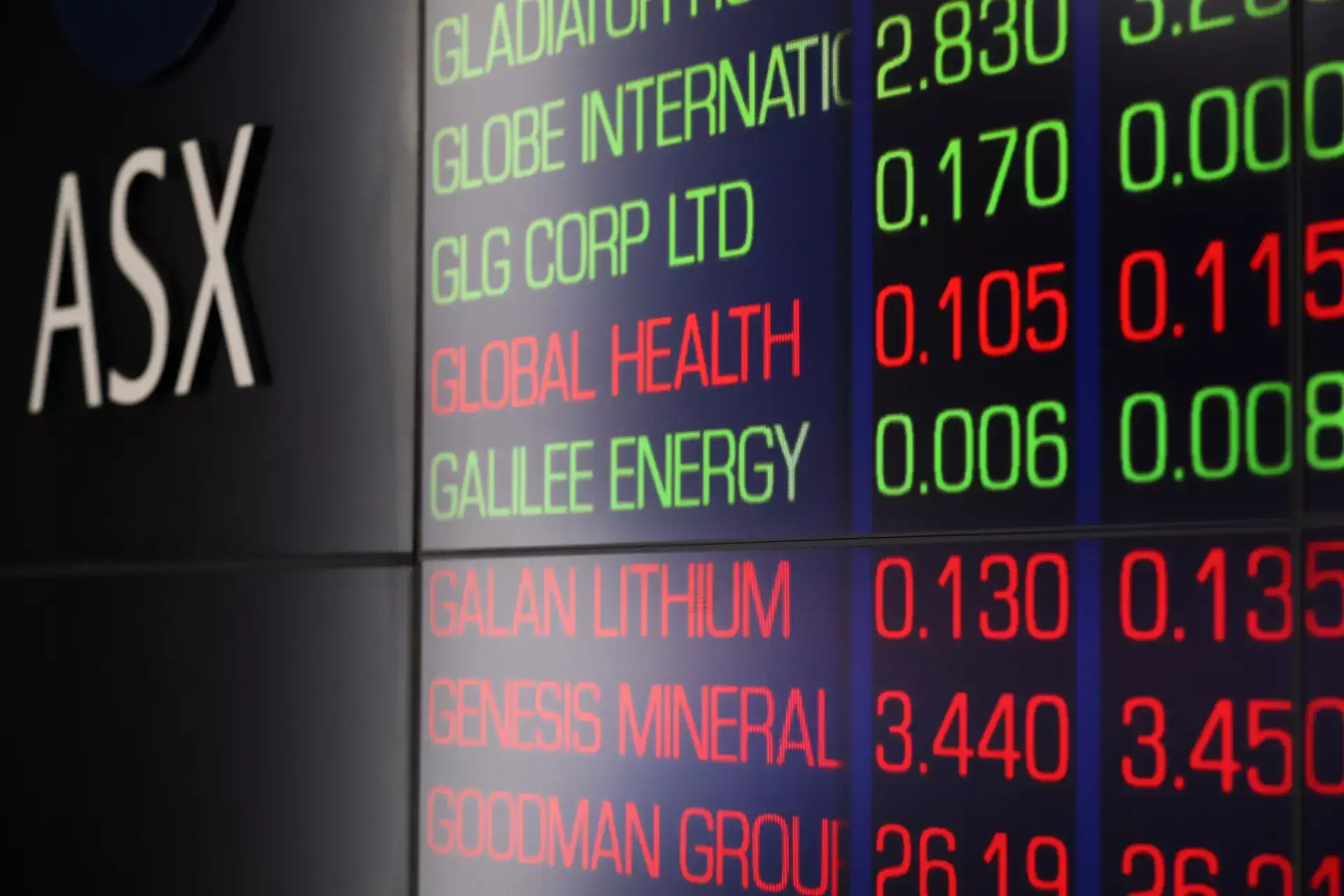
Australia's equity benchmark fell for a third straight session on Tuesday, with banks leading losses, as investors braced for a federal budget promising spending restraint and selective reform.
The S&P/ASX 200 closed 0.4% lower at 8,670.70, sliding 2.4% over the last three sessions. Australia is set to deliver a lower-than-projected budget deficit later in the day, buoyed by commodity windfalls, as it edges sensitive reforms forward without fanning inflation. Last week, the Reserve Bank of Australia was forced into a third rate hike this year as stubborn core inflation refused to ease.
The budget offers little immediate upside for rate-sensitive sectors, with tighter fiscal settings likely to prolong pressure, while leaving infrastructure, healthcare and resources relatively unscathed, said Heath Moss, portfolio manager at HLM Investments.
Broader risk appetite remained fragile as oil prices edged higher on fading hopes for a deal to reopen shipping lanes through the Strait of Hormuz.
In Sydney, financials slid 1.6% to a six-week low, with investors awaiting top lender CBA's results on Wednesday as a barometer for the sector's outlook.
The bank's smaller peers ANZ beat forecasts, while National Australia Bank and Westpac fell short.
These so-called Big Four banks fell between 1.4% and 2.1% on Tuesday. Healthcare sank 1.7% in a sixth straight session, with heavyweight CSL sliding 2.2% to extend Monday's rout. Buck-ing the trend, miners advanced 2.5% to their highest level in nearly 10 weeks, as iron ore traded flat after a six-day rally and copper prices firmed. Mining majors BHP and Rio Tinto rose 2.5% and 3.1% to record peaks. In company news, counter-drone tech firm DroneShield plunged 9.9%, its lowest in over two months, after disclosing a regulatory probe into its November share trading and disclosures. It dragged industrials down 1.2%.
New Zealand's benchmark S&P/NZX 50 index fell 1% to 13,080.33 points, logging its worst session in over three weeks.