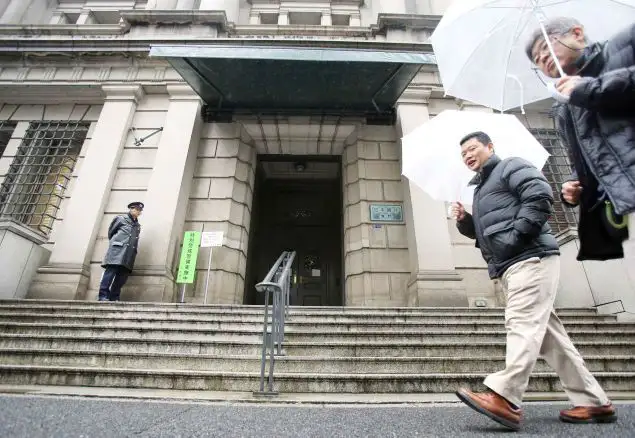
The Bank of Japan's June policy meeting revealed growing concern among policymakers over persistent inflationary pressures, with several members arguing for a faster pace of interest rate hikes to move borrowing costs closer to a level considered neutral for the economy, according to a summary of the meeting reviewed by Reuters.
The central bank raised its policy rate to 1% at the June 15-16 meeting, the highest level in 31 years, marking another milestone in its policy normalisation. The move also signalled the BOJ's willingness to tighten monetary policy further as it seeks to contain inflationary pressures exacerbated by the energy shock triggered by the conflict in the Middle East.
Most policymakers warned that inflationary pressures were building as companies increasingly passed on higher costs arising from the weak yen and elevated energy prices. Some members also noted that inflation expectations appeared to be shifting higher, while stronger-than-expected demand linked to artificial intelligence investment was providing an additional boost to economic activity and prices.
The meeting summary showed that some board members believed Japan's policy rate remained below its estimated neutral level and argued that the central bank should move rates closer to that level more quickly. One policymaker suggested the neutral rate could be around 2% and advocated raising rates every few months until that level is reached. Several members also supported maintaining the BOJ's guidance of continuing gradual rate hikes.
The discussions reinforced market expectations that the BOJ could raise interest rates again before the end of the year. A Reuters poll conducted before the June rate increase found that most economists expected the policy rate to reach 1.25% during the fourth quarter.
However, policymakers also acknowledged significant risks surrounding the economic outlook.
New board member Toichiro Asada opposed the June rate increase, arguing that the downside risks to output and employment from the Middle East conflict outweighed inflation concerns. One policymaker warned that weaker production and employment could disrupt the cycle of rising wages and prices and, in an adverse scenario, push Japan back toward deflation. Although the summary does not identify individual members, the view is widely believed to reflect Asada's position. He is the first board appointee under Prime Minister Sanae Takaichi, whose administration is considered relatively dovish on monetary policy.
The meeting also highlighted the government's cautious stance toward additional tightening. Reuters reported that a Cabinet Office representative urged the BOJ to respond appropriately to excessive economic fluctuations while taking into account the government's broader growth initiatives when conducting monetary policy.
The conflict in the Middle East has complicated the BOJ's policy outlook by simultaneously pushing up imported energy costs and weighing on an economy heavily dependent on fuel imports. Despite this month's rate hike, the yen has remained close to four-decade lows, keeping import costs elevated.
Although easing geopolitical tensions and a U.S.-Iran peace agreement have helped lower crude oil prices, inflationary pressures remain evident. Japan's wholesale inflation accelerated to a three-year high of 6.3% in May as companies passed on higher input costs. Fresh data released on Wednesday showed services producer prices rose 3.3% year-on-year in May, driven by rising freight and air transportation costs linked to higher fuel prices.
Core consumer inflation has remained below the BOJ's 2% target due to government subsidies aimed at limiting fuel costs. However, analysts expect inflation to move back above the central bank's target in the coming months as the impact of those subsidies fades.