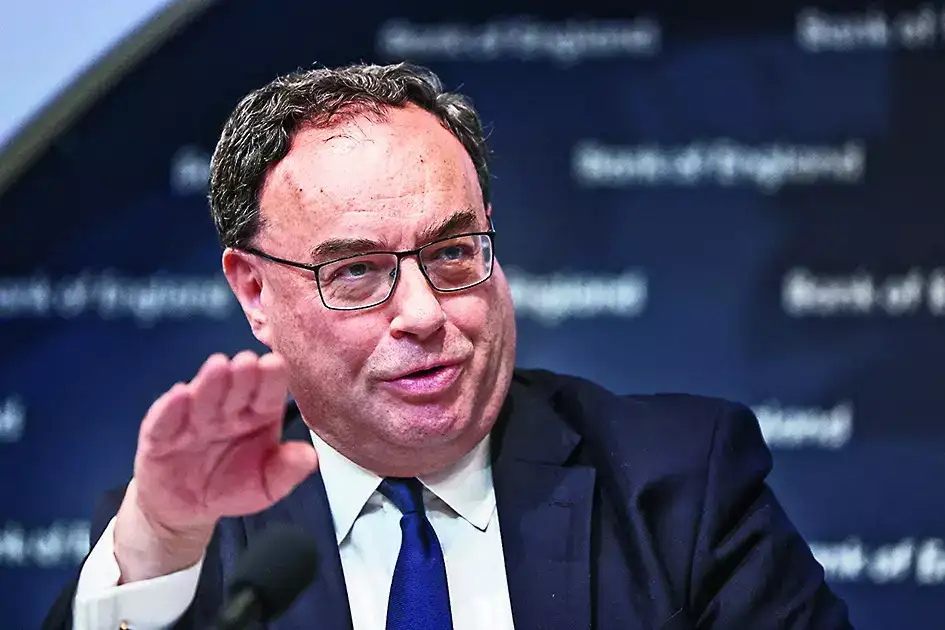
Bank of England (BoE) Governor Andrew Bailey underscored the importance of bringing inflation back to the central bank’s 2% target, saying maintaining public confidence in the inflation-targeting framework remains a key priority, as per a report by Reuters.
Speaking before the House of Lords' Economic Affairs Committee, Bailey indicated that the BoE’s focus should remain on managing the path back to the inflation target rather than reconsidering the framework itself, according to the report. He also rejected suggestions that the central bank should respond to repeated target misses by raising its inflation goal.
UK consumer price inflation eased to 2.8% in April, but the BoE expects it to climb close to 4% by the end of 2026 under its baseline projections, assuming energy prices gradually decline over the coming months.
The central bank’s more adverse scenario envisages inflation rising above 6% in early 2027 if energy costs continue to increase and broader price pressures spread across goods and services. Even under that scenario, inflation would remain below the peak of more than 11% recorded in October 2022.
Bailey acknowledged the challenges faced by policymakers in returning inflation to target and suggested that recent geopolitical developments in the Gulf had been a major factor behind the latest inflation overshoot. However, he also pointed to emerging signs that the impact of energy-related shocks stemming from the Middle East conflict may be less persistent than initially feared.
Data released earlier this week showed that public expectations for inflation over the coming years moderated in May after reaching their highest level since 2023 in March, although expectations remain elevated compared with levels seen before the conflict.
Bailey was among the overwhelming majority of policymakers who voted to keep the BoE’s benchmark interest rate unchanged at 3.75% in April. Reuters noted that he recently indicated higher market interest rates were providing policymakers with additional time to assess whether further rate increases would be necessary in response to inflationary pressures linked to the Iran conflict.
Financial markets currently expect the BoE to leave borrowing costs unchanged at its upcoming policy meeting. Investors are also pricing in the possibility of one or two interest-rate increases before the end of the year as policymakers monitor inflation risks and evolving energy market conditions.