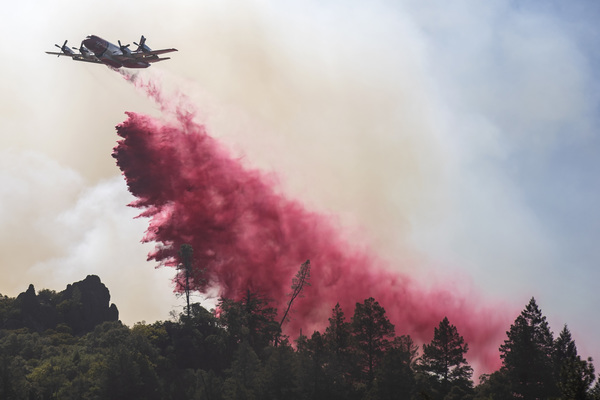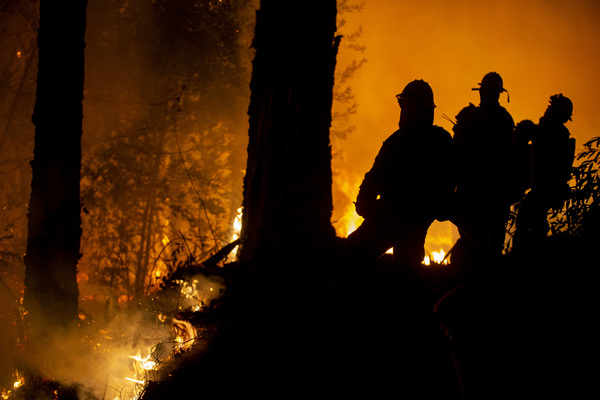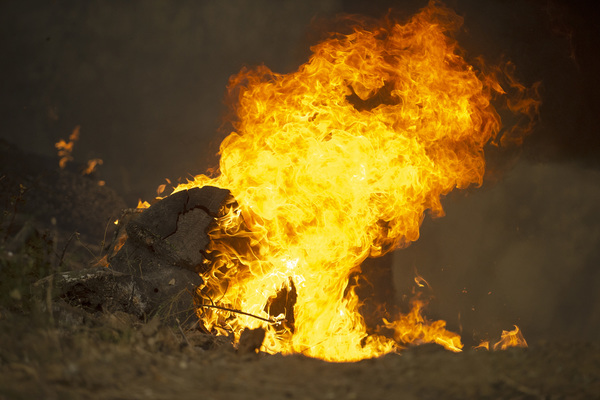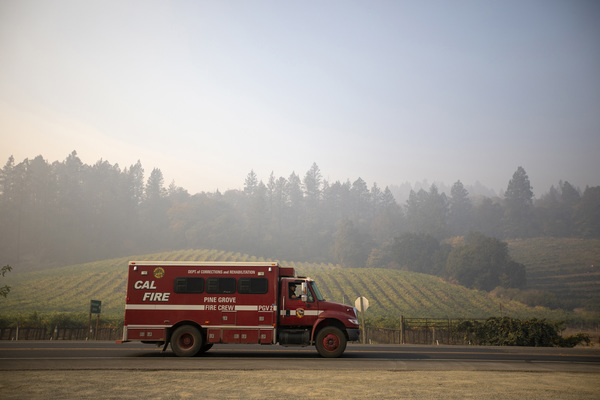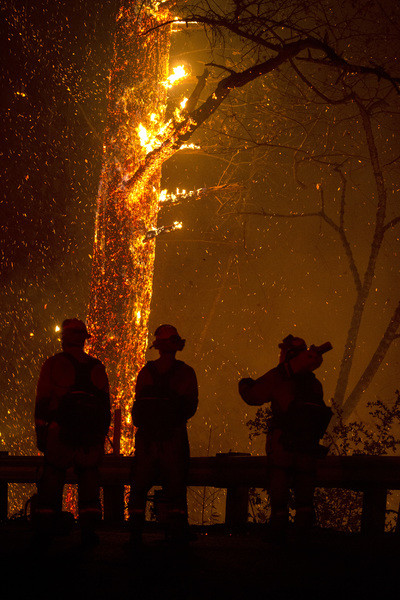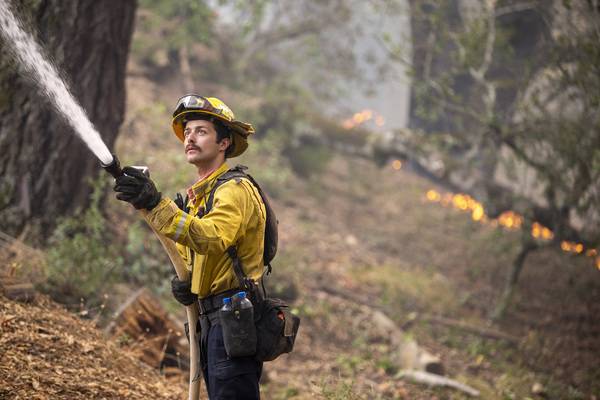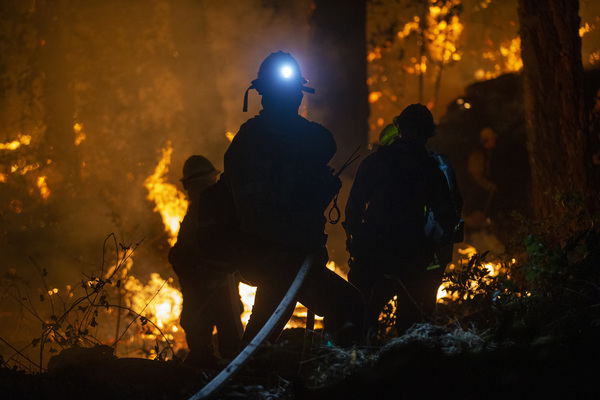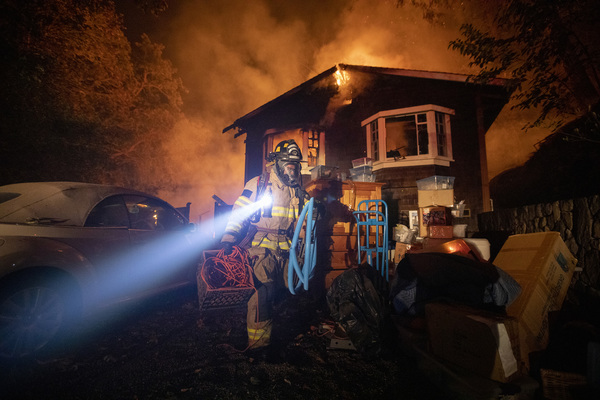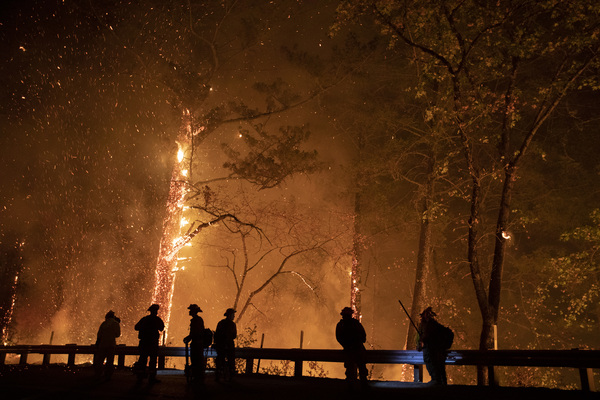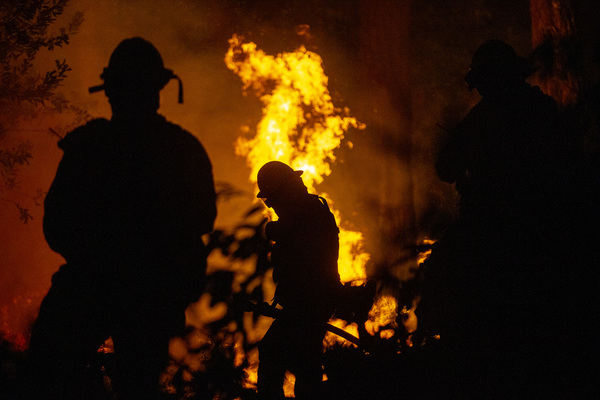
SAN JOSE, Calif. _ Fire crews braced for another hot, dry day Sunday in northern Napa County as they continued to try to stop the stubborn Glass Fire, which forced new evacuation orders in California's Wine Country.
Previous evacuation orders were expanded to include the area from the west bordered by Highway 29 at the Robert Louis Stevenson trailhead, the north by Livermore Road, and the east by Aetna Milne Road.
So far, 63,885 acres have burned in Napa and Sonoma counties, destroying homes and vineyards north of Calistoga and east of St. Helena. As of Sunday morning, the fire was 17% contained, CalFire reported.
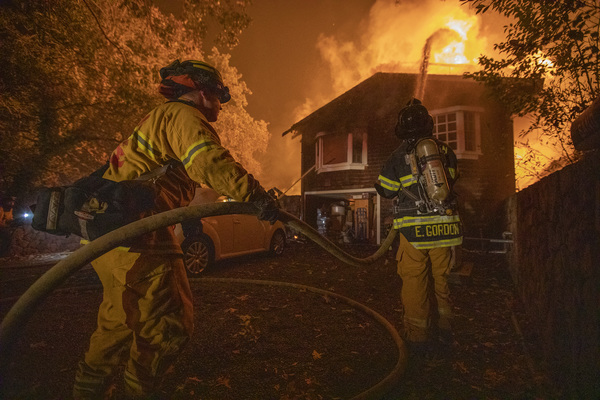
"It was very active overnight," said Brian Newman, a fire behavior analyst with CalFire. "The fuels are extremely dry, critically dry, right now allowing the fire to progress even overnight."
Newman, speaking on a recorded video provided by CalFire, said the current hot spots were along Highway 29 near the Hennessey Fire burn area. The Hennessey Fire ignited Aug. 17 because of lightning and forced more than 17,000 people to evacuate, according to fire officials.
Newman said the current blaze is moving toward the Hennessey Fire scar, "which is helping our efforts there."
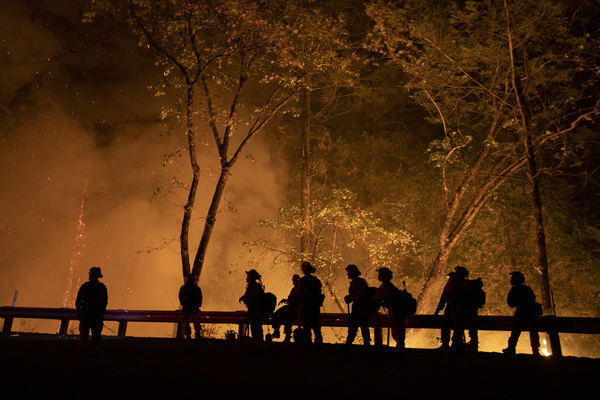
The Glass Fire is one of 23 major fires burning throughout the state during a historic fire season that has drained resources and frayed people's nerves. The active blazes have consumed some 3.6 million acres, CalFire said Sunday, in a fire season that has set a staggering record, nearing some 4 million acres burned so far.
Even as weather conditions began to moderate, Sunday remained a dangerous day of hot weather, strong breezes and low humidity.
Tom Bird, a CalFire incident meteorologist, said in a video that a persistent upper-level high-pressure ridge over the West Coast has led to temperatures 15 degrees to 25 degrees above normal.
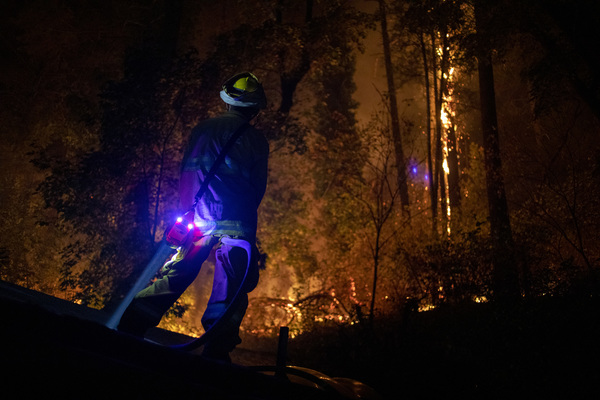
"It cooks the fuels and dries them out and if it gets any kind of wind on it it really helps the fire move," he said.
Temperatures were expected to decrease into the 80s and 70s this week as a marine layer moves in, raising moisture levels. Rain could strongly aid the firefighting efforts later in the week, especially at higher elevations, the National Weather Service said, though that forecast remained far from certain.
The National Weather Service's San Francisco Bay Area office reported Sunday morning that warm and dry weather conditions would continue across the interior whereas coastal areas were cooling with a deepening marine layer. Bay Area skies were also noticeably clearer Sunday morning, with air-quality levels in the good to moderate range over much of the South Bay and East Bay.
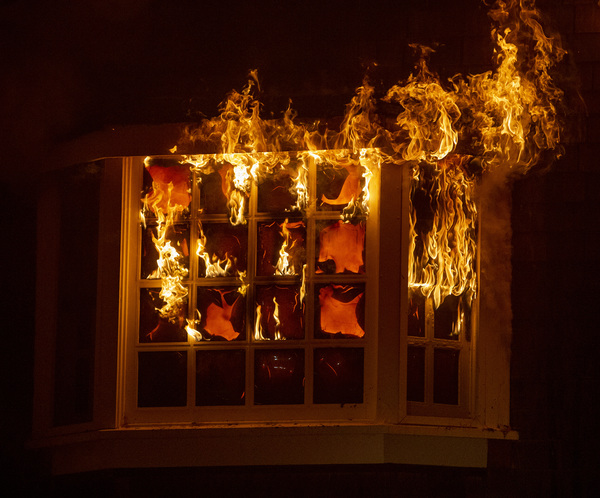
In Sonoma County, south of Santa Rosa, crews have been aided by some control lines left behind after the deadly 2017 Tubbs Fire, which destroyed thousands of homes in that city and caused 22 deaths.
Since it started on Sept. 27, the fire has destroyed 120 single-family homes, four multi-family residences and one mixed residential and commercial property in Sonoma County. Eight commercial structures have been destroyed, as have 131 minor structures and outbuildings. Meanwhile, 173 single-family homes and one mixed residential and commercial property have been destroyed in Napa County, along with 264 commercial buildings and 123 minor structures.
Further north, the deadly Zogg Fire in Shasta and Tehama counties continued to burn a mix of grass, oak and timber fuels. The fire, which has caused four civilian deaths, has burned 56,305 acres and was 68% contained as of Sunday morning. It has destroyed 196 structures and damaged 26 other buildings. Some evacuation orders along Plantina Road were lifted Sunday morning.
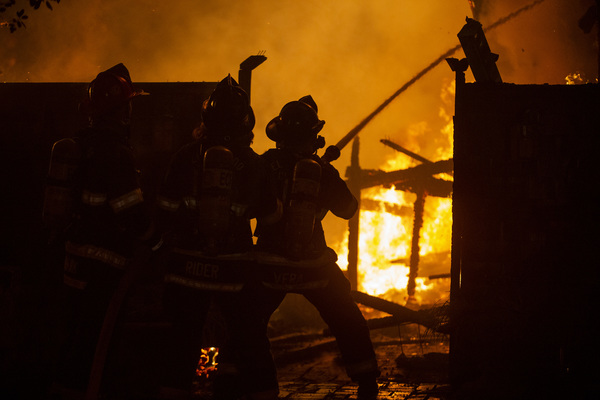
The Dolan Fire, which has burned almost 125,000 acres south of Big Sur since it sparked in late August, was near 90% containment as of Saturday. Fresno County's Creek Fire was reported at 62% containment at more than 315,000 acres.
The massive August Complex, two huge zones burning in Mendocino, Humboldt, Trinity, Tehama, Lake, Colusa & Glenn counties, was at roughly 50% containment, having consumed almost 1 million acres of land.
Bay Area News Group writers Fiona Kelliher and Leonardo Castaneda contributed to this report.